

Saltwater Crocodiles and Estuarine Reptiles
Cruise the tidal frontier where ancient reptiles patrol mudbanks and creeks.
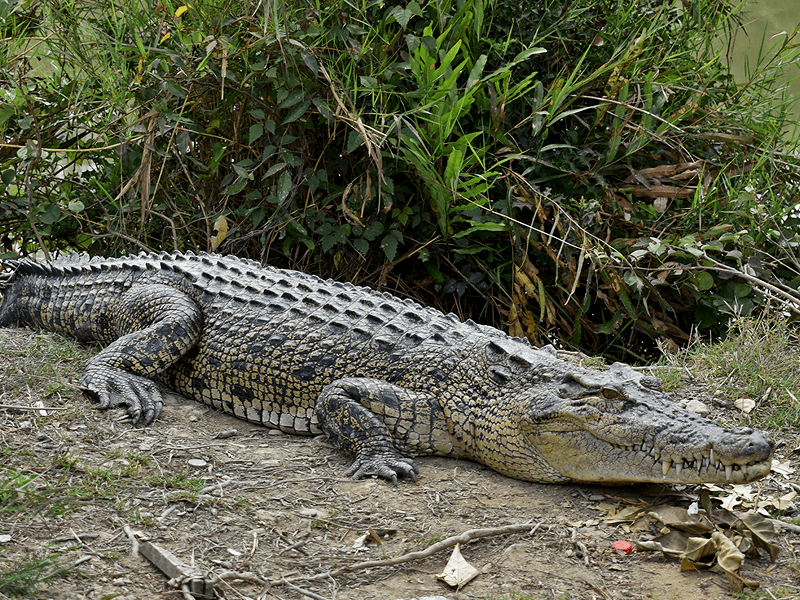
Watch from the boat—this wild edge demands distance.
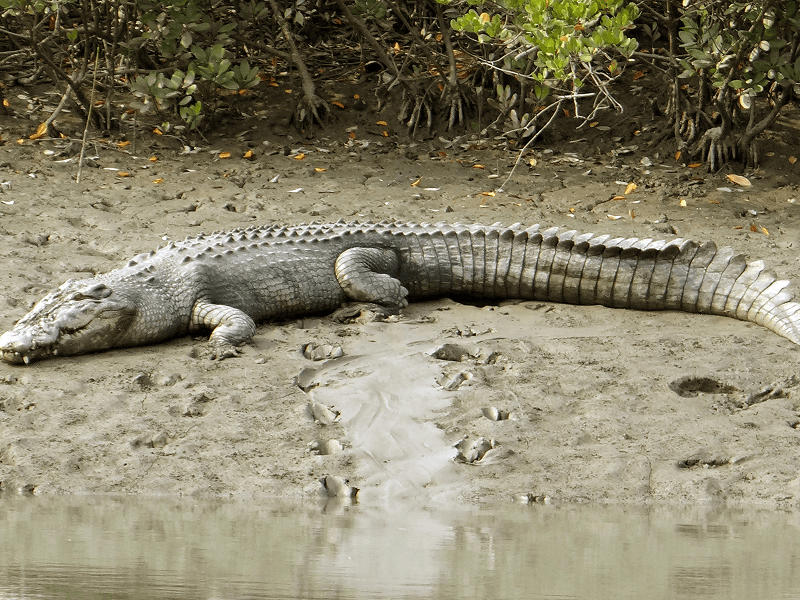
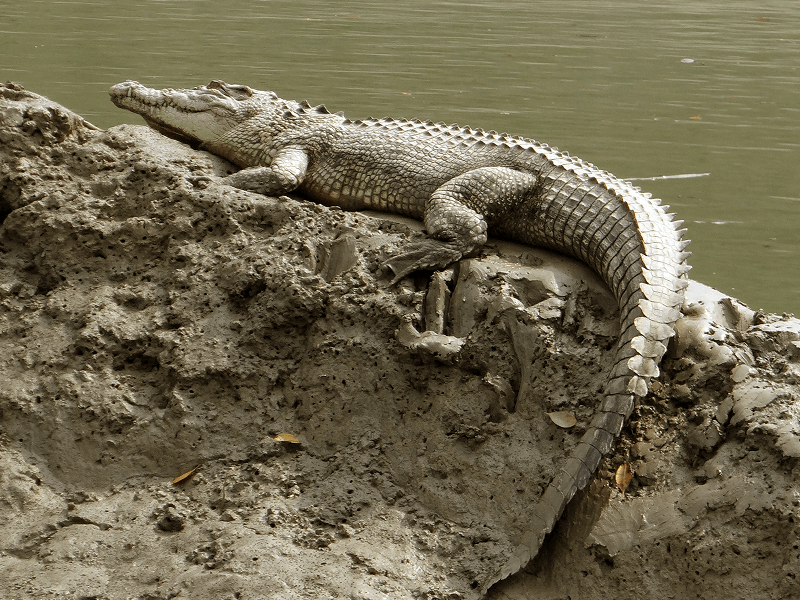
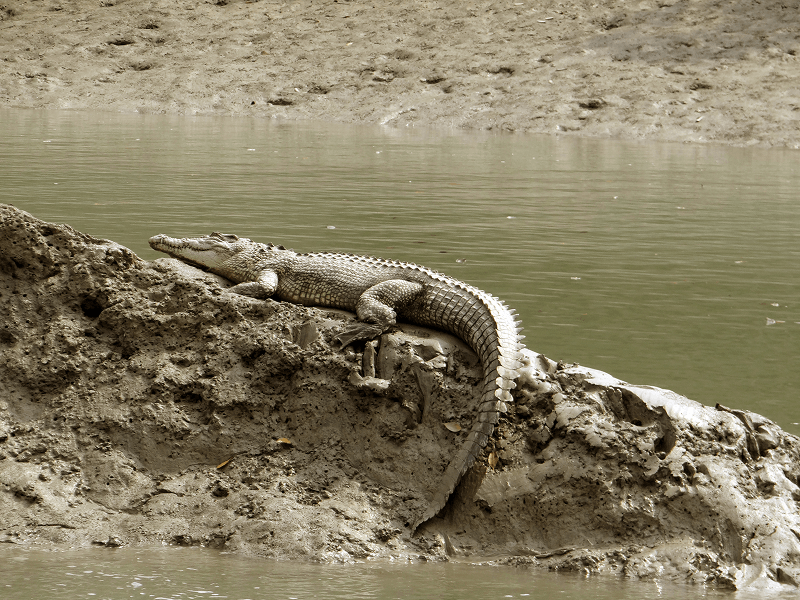
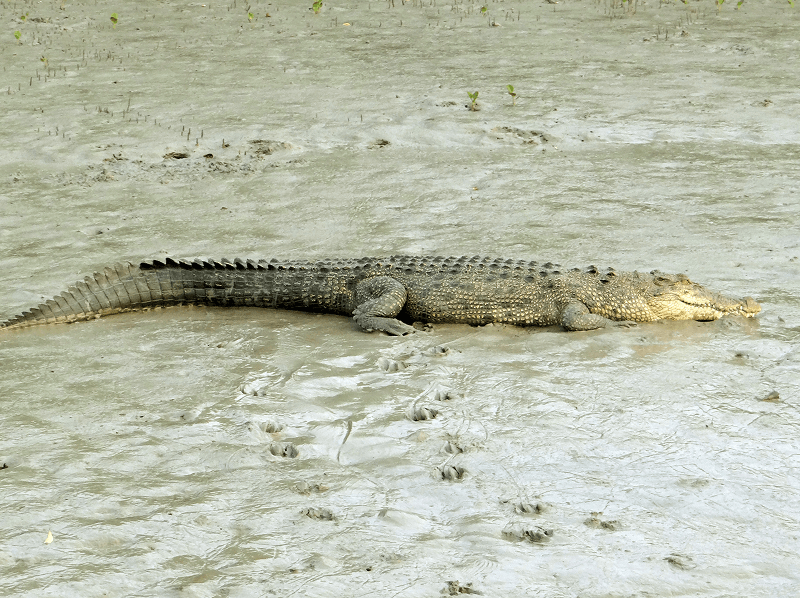
The Sundarbans is one of Bangladesh's strongest settings for understanding estuarine reptiles, including the saltwater crocodile. These powerful animals use tidal channels, creeks and mudbanks, where they may bask or disappear almost invisibly into brown water. Monitors, snakes and other reptiles add to the sense of an ancient, highly adapted ecosystem. Sightings are uncertain, and that unpredictability should be preserved rather than replaced by baiting or close pursuit.
An authorised boat journey offers the safest context. Scan exposed banks at low tide with binoculars and listen to the forest guide's interpretation. Karamjal is a commonly visited Forest Department site where travellers can learn about the Sundarbans and conservation management; it should not be confused with a guaranteed wild encounter. A crocodile seen from a distance in open habitat is fundamentally different from an animal in managed care, and captions or guide commentary should make that distinction clear.
Never swim, dangle hands or feet overboard, land on an unapproved bank or approach a reptile for photography. Keep children supervised and follow crew instructions. Operators must not feed crocodiles, throw bait or manoeuvre so closely that an animal changes direction. Snakes should also be given space; do not touch, corner or attempt identification at close range.
The wider journey reveals why estuarine reptiles matter. Mangrove roots shelter young fish, tides move nutrients, and predators help structure the food web. Plastic, damaged banks and reckless boat behaviour weaken the same system visitors come to experience. Travel from September to March after the annual closure, choose a registered vessel and accept that an empty mudbank is still part of a genuine wilderness. In crocodile country, distance is not a disappointment—it is the condition that keeps people safe and wildlife wild.
Use binoculars even from a watch point and keep food secured on deck. The safest encounter is one in which the animal shows no response to the presence of the visitor.
Immersive Experience
No 360° Videos available
Destination Gallery
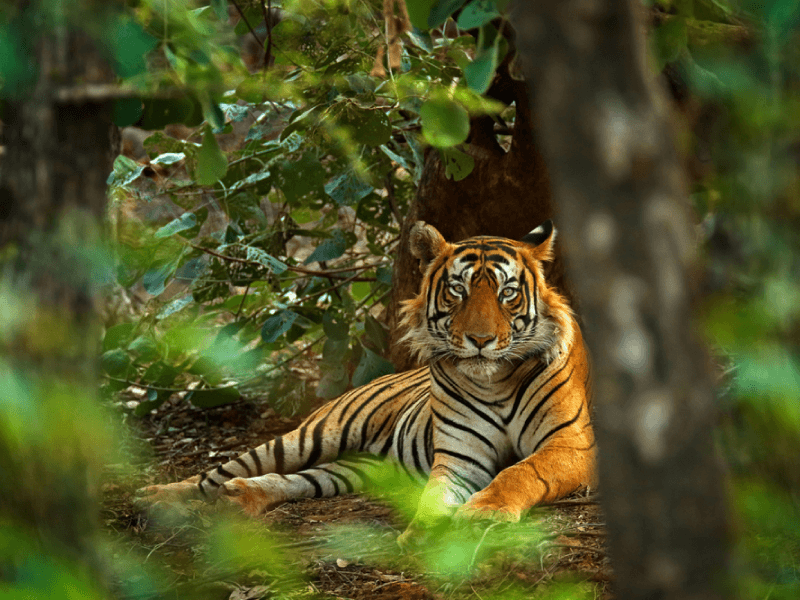
The Royal Bengal Tiger of the Sundarbans
Enter the mangrove realm of a legendary predator—felt more often than seen.
Explore More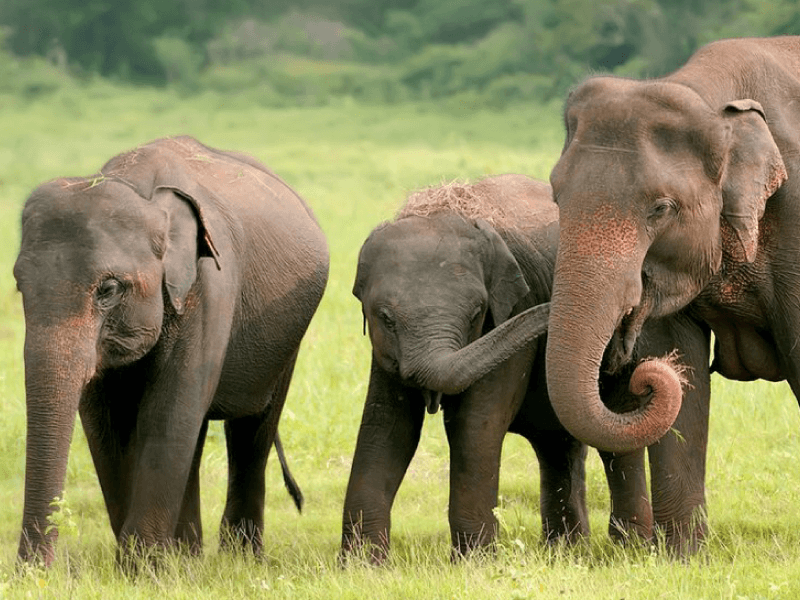
Asian Elephants of the Chittagong Hill Tracts
Discover elephant country across forest corridors where distance and restraint matter.
Explore More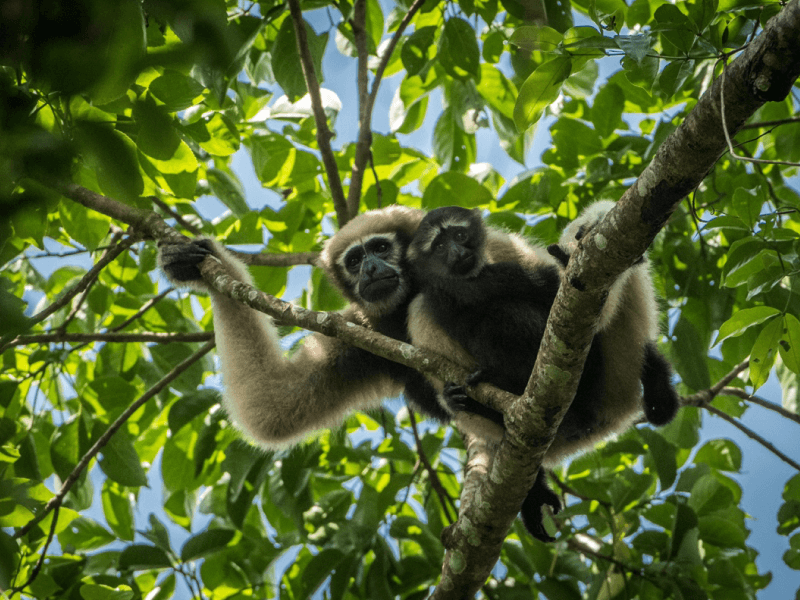
Hoolock Gibbons: Bangladesh's Only Ape Species
Wake to a wild duet rolling above the rainforest canopy.
Explore More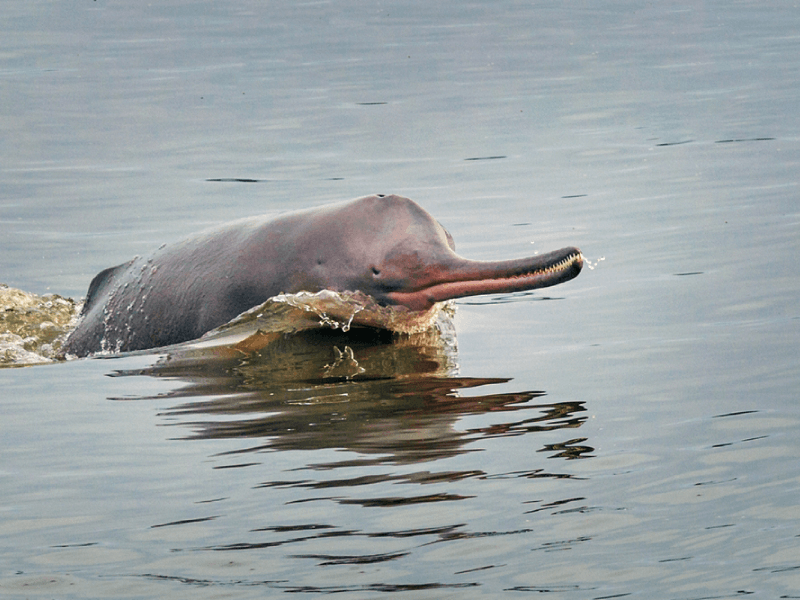
Ganges River Dolphins and Delta Aquatic Life
Scan the tide for a breath, a curved back and the hidden life of the delta.
Explore More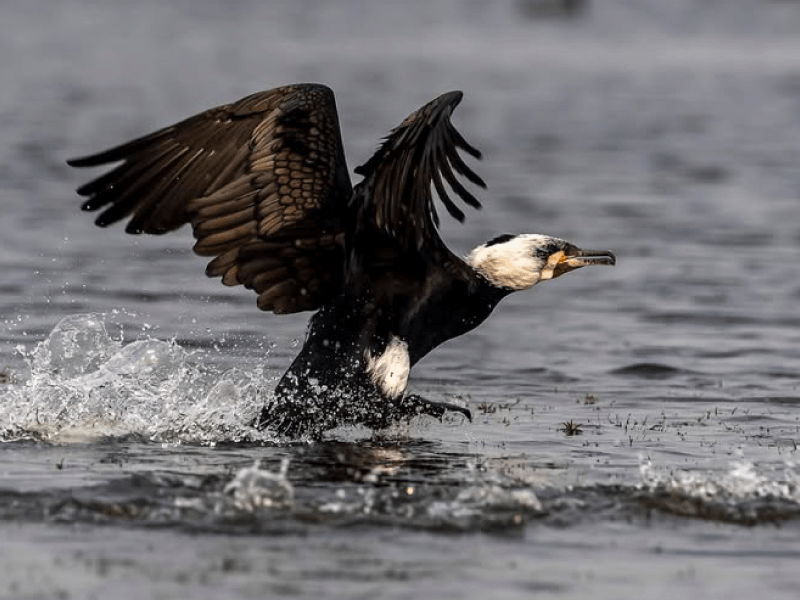
Migratory Birds of Tanguar Haor
Watch winter skies fill above one of Bangladesh's great wetland sanctuaries.
Explore More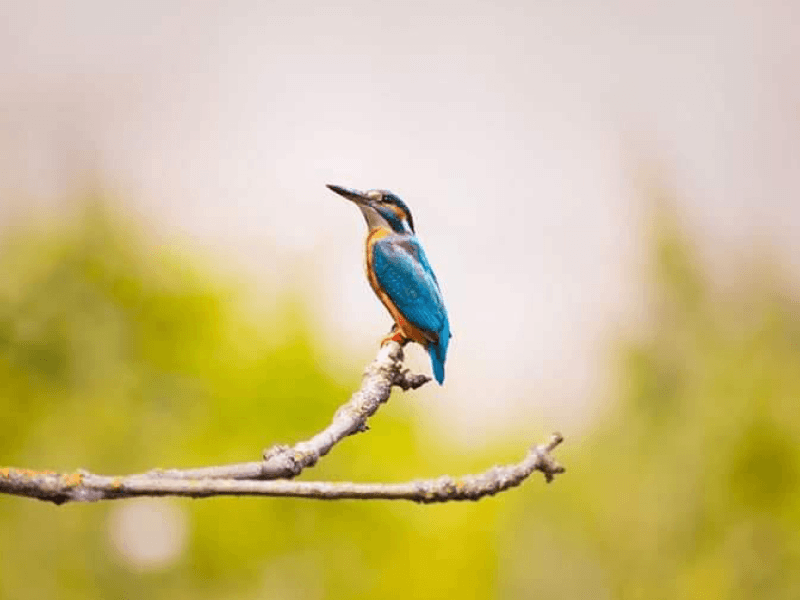
Kingfishers and Avian Diversity of Bangladesh
Chase flashes of electric blue from rainforest streams to mangrove creeks.
Explore More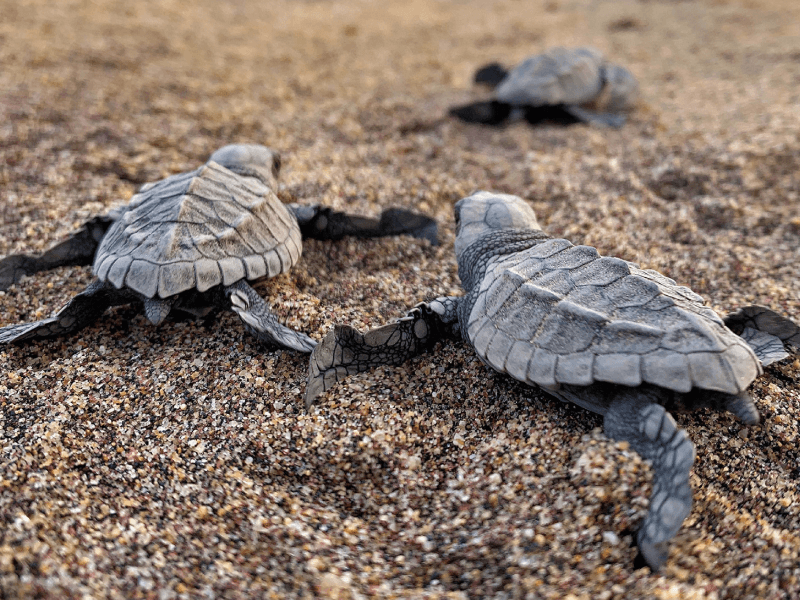
Olive Ridley Sea Turtles of St. Martin's Island
Meet a fragile island night where turtles, tides and strict protection converge.
Explore More