
Somapura Mahavihara
In the vast, alluvial plains of
northern Bangladesh, the ruins of Somapura Mahavihara rise like a man-made
hill, a silent monument to the greatest intellectual and spiritual center that
South Asia has ever known. More than a thousand years ago, this was not a ruin
but a humming "Great Monastery," a UNESCO World Heritage Site and a
crucible of Mahayana Buddhist thought. Built in the late 8th century by
Dharmapala, the second king of the Buddhist Pala dynasty, Somapura Mahavihara
was the jewel in the crown of a vast empire that stretched across Bengal and
Bihar. For nearly four centuries, it was a beacon of knowledge, attracting
scholars and pilgrims from across Asia, its influence radiating as far away as
the temple architecture of Cambodia.
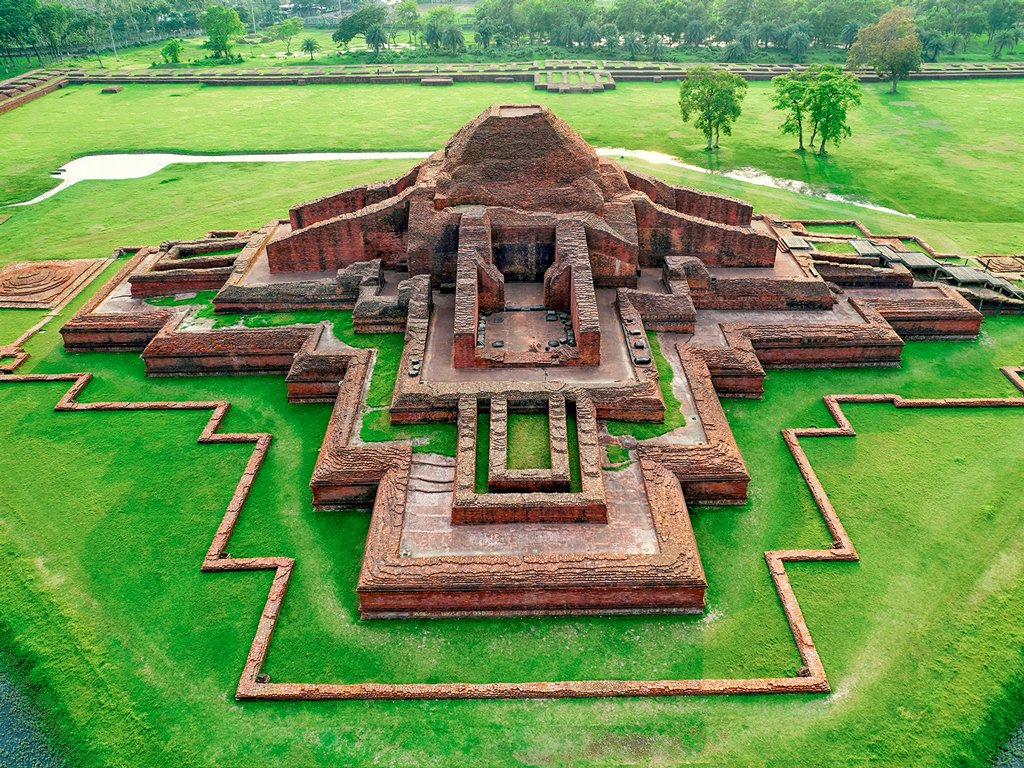
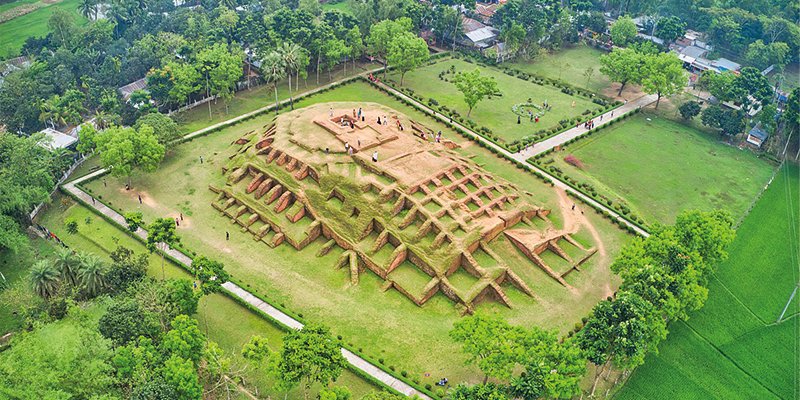
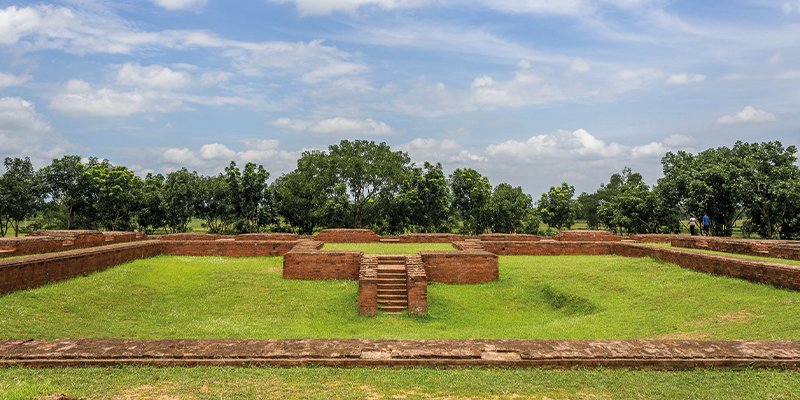
Approaching the site, your eyes are immediately drawn to its central, defining feature: a massive, towering stupa that once served as the spiritual and physical heart of the complex. This colossal brick structure is enclosed by the orderly, symmetrical remains of 177 monks' cells, arranged around a vast open courtyard that measures an astonishing 900 feet on each side. The sheer scale of the design is overwhelming, a clear statement of the monastery's immense importance. Beyond its size, the true treasure of Paharpur lies in the thousands of exquisite terracotta plaques that once adorned the base of the central temple. These unglazed fired-clay tiles depict a breathtaking variety of scenes from everyday life, mythology, and nature—musicians, dancers, animals, and divine figures, all frozen in time. To walk among these ancient cells and gaze upon these weathered plaques is to connect directly with the spiritual aspirations and artistic genius of a civilization that flourished long before the Mughals, a profound and humbling reminder of Bangladesh's pre-Islamic glory.
Sites to visit within Somapura Mahavihara-
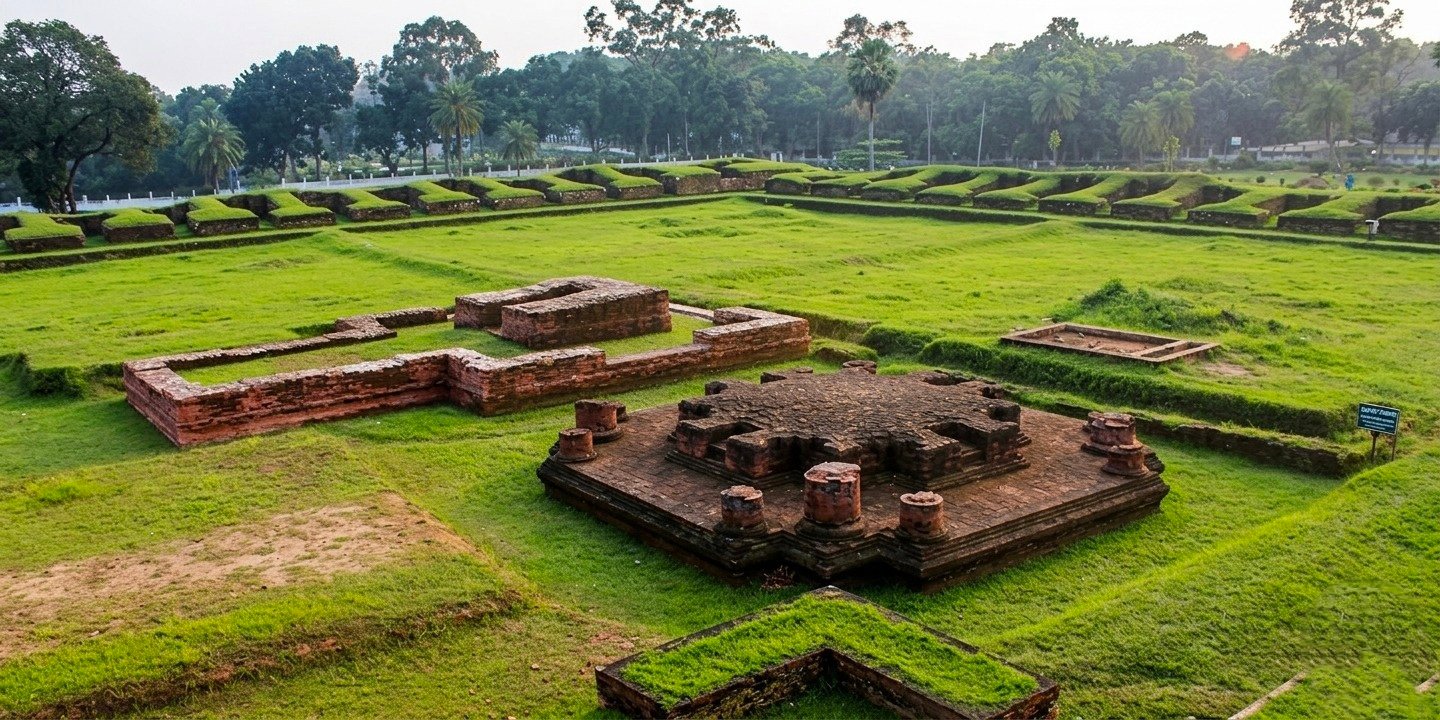
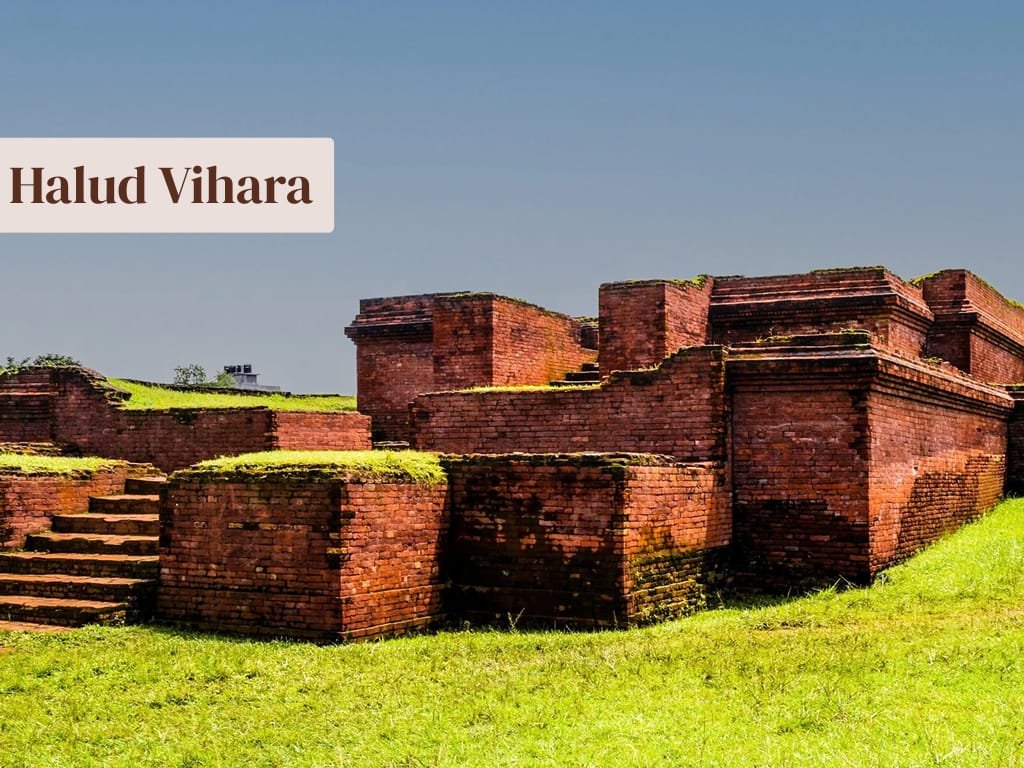
- Halud Vihara- Less than fifteen
kilometers west-southwest of the world-famous ruins of Paharpur, the site
of Halud Vihara offers a quieter, more mysterious chapter in the story of
Bengal's Buddhist past. Halud Vihara is an ancient Buddhist archaeological
site located near Paharpur in Naogaon district. Dating back to the 8th–9th
century AD, it flourished during the Pala period, a time when northern
Bengal was a major center of Buddhist learning and monastic culture. The
site consists of the remains of a monastery and temple structures built
with brick, along with scattered mounds that indicate a once-thriving
religious complex. Archaeological findings, including sculptures and
architectural fragments, suggest strong artistic and spiritual connections
with the nearby Somapura Mahavihara. Though less monumental than Paharpur,
Halud Vihara offers visitors a quieter yet historically significant
glimpse into the rich Buddhist heritage of ancient Bengal.
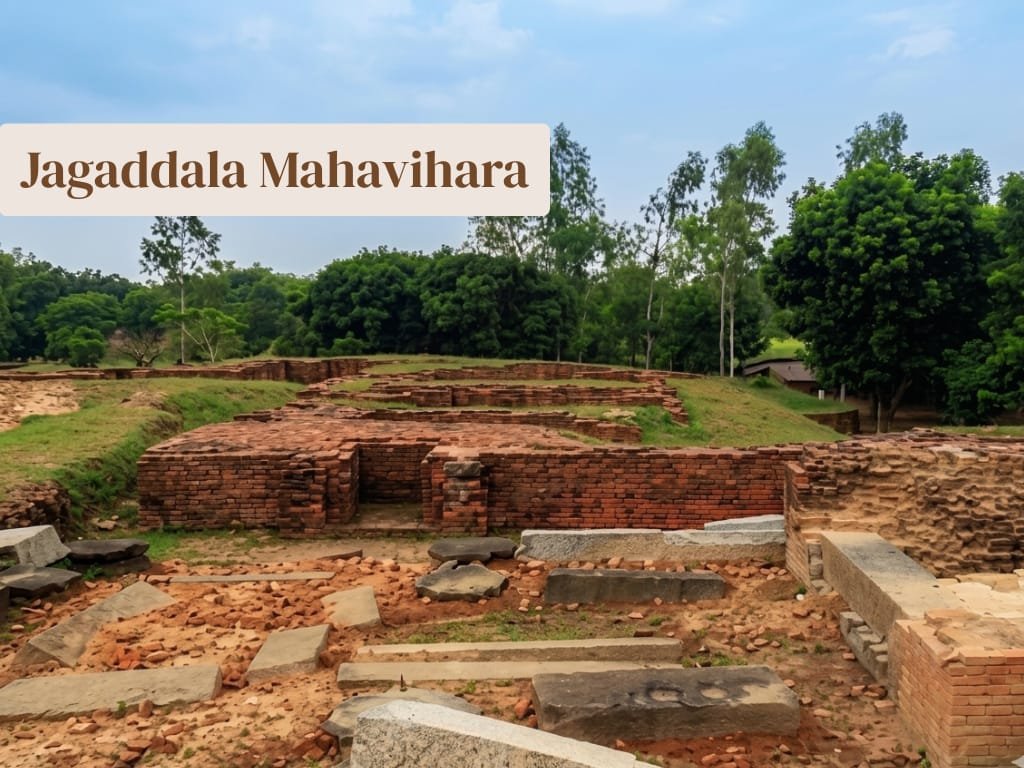
- Jagaddala Mahavihara- Jagaddala
Mahavihara, located in Naogaon, was one of the last great Buddhist
monasteries and centers of learning in Bengal. Established in the
11th–12th century AD by Pala King Ramapala, it flourished as a prestigious
university-like institution specializing in Buddhist philosophy, logic,
and Tantric studies. The renowned scholar Atish Dipankar (Atisha) is
believed to have studied and taught at Jagaddala before traveling to
Tibet. Though less excavated than Somapura Mahavihara, the site holds immense
historical importance as a final stronghold of Buddhist scholarship in the
Indian subcontinent before its decline in the region. Jagaddala Mahavihara
stands as a significant symbol of Bangladesh’s intellectual and religious
heritage during the final flourishing phase of Buddhist monastic culture
in the region.
On-site museum at Paharpur
https://beautifulbangladesh.sbldevteam.com/subjects/paharpur-museum/details
Immersive Experience
No 360° Videos available
Destination Gallery