
Gokul Medh
Just a short journey southwest of
the ancient citadel of Mahasthangarh, the landscape gives way to an enigmatic
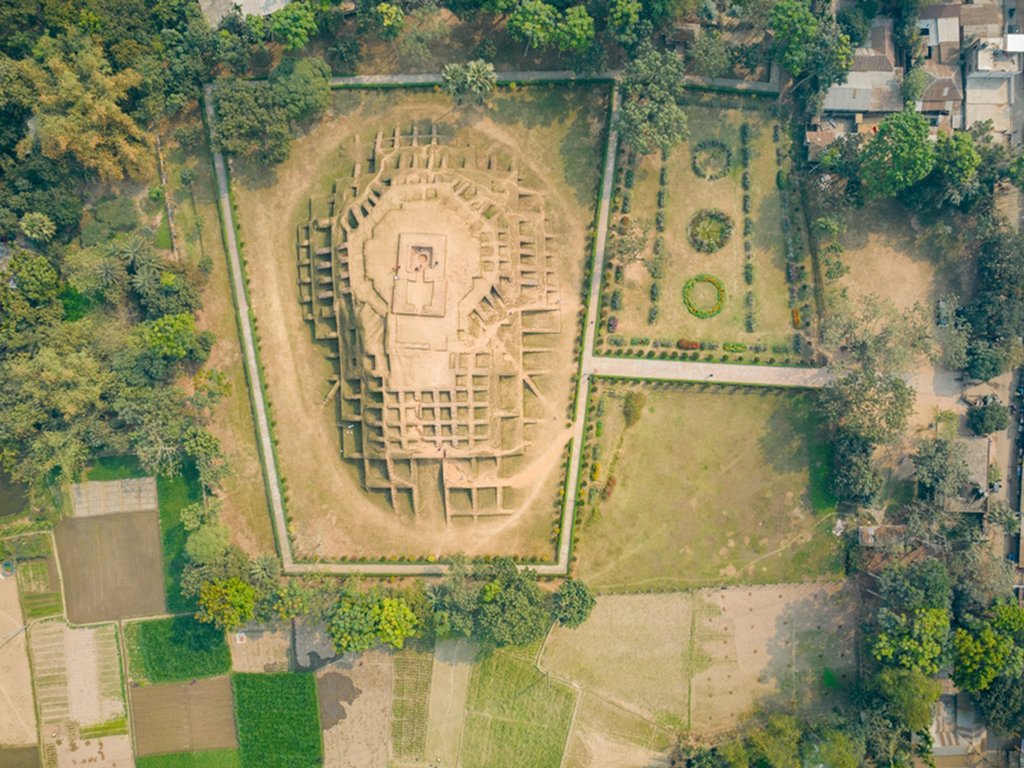
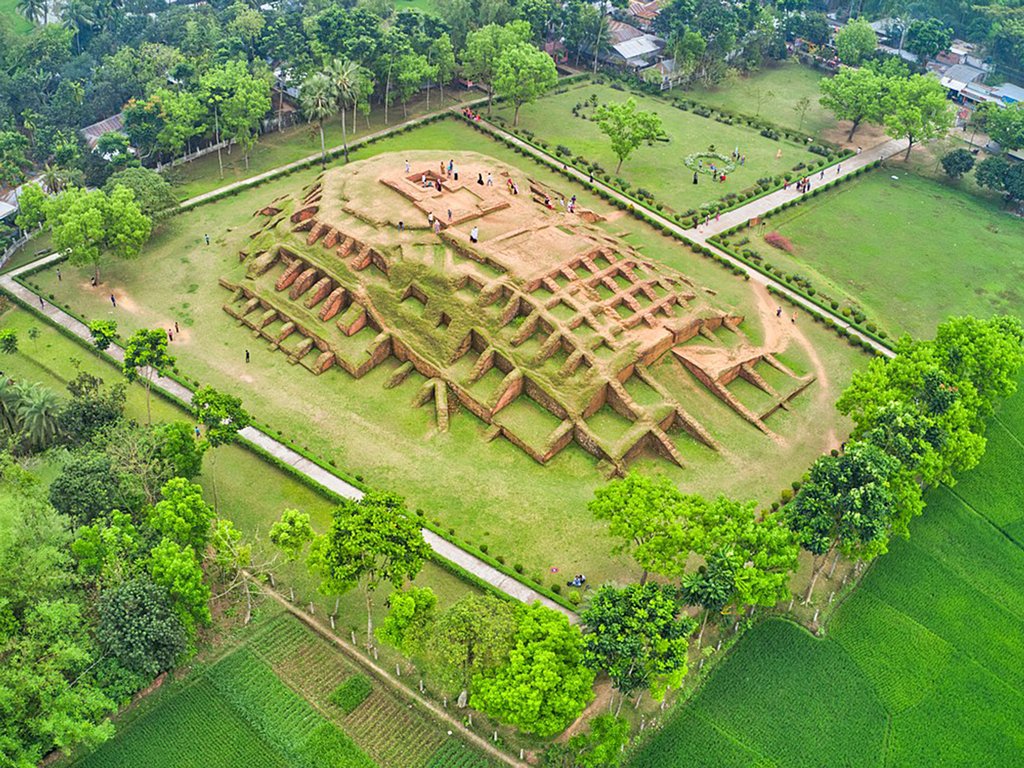
and beautifully preserved mound known as Gokul Medh. While archaeology reveals
it to be the base of a Buddhist shrine or stupa built between 7th-8th century
AD, the local folklore that cloaks this site is far more powerful and romantic.
For centuries, the people of this region have known Gokul Medh
as Lakshindar Medh or Behula-Lakshindarer Basar-ghar—the bridal
chamber of the legendary heroine Behula and her doomed husband, Lakshindar.
This poignant association connects the ancient bricks to one of Bengal's most
beloved ballads, a tale of love, death, and a wife's undying devotion that
ultimately triumphs over fate and gods.
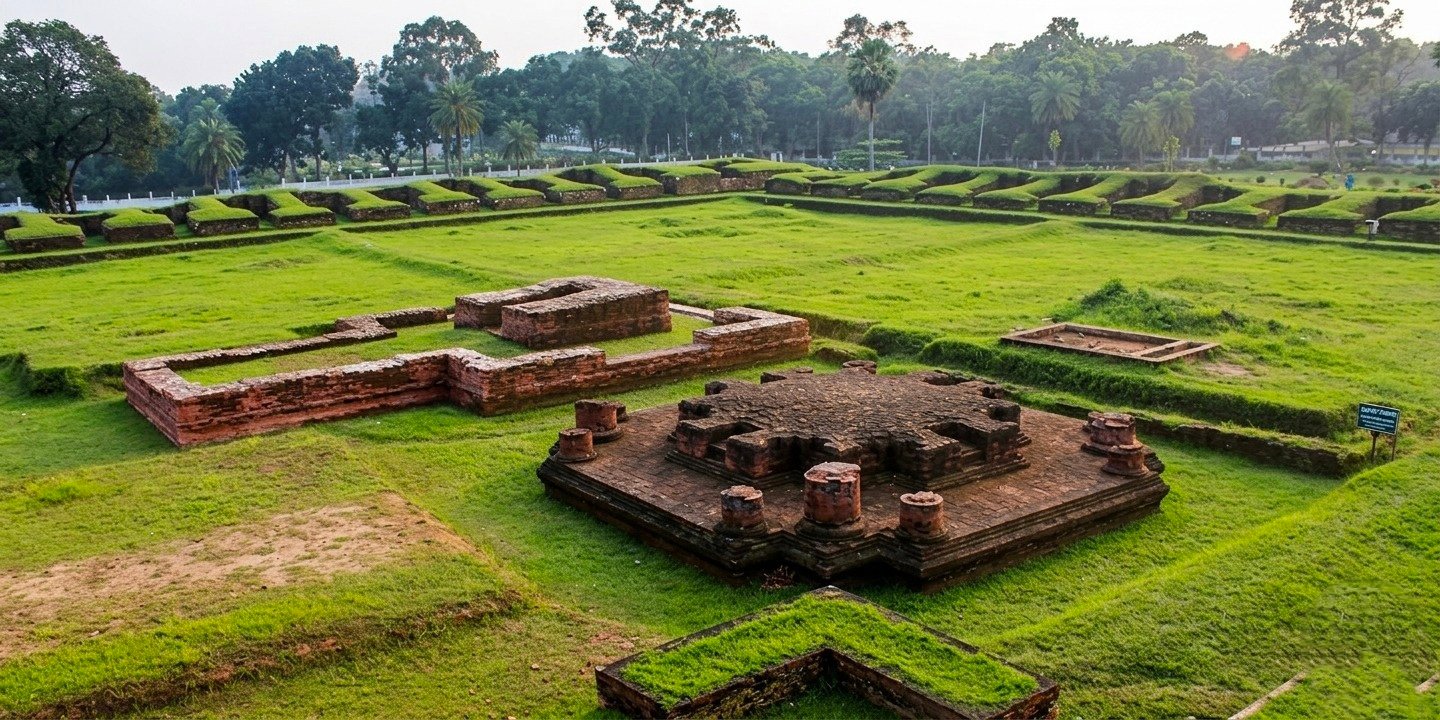
This fusion of history and myth is what makes Gokul Medh so uniquely compelling. Excavations in the 1930s revealed that the mound was built using a fascinating terraced cellular style of construction, with 172 tightly packed blind rectangular cells forming the core of the structure. At its center, archaeologists found a stone slab with twelve depressions around a central hollow, which contained a tiny gold leaf depicting a recumbent bull—evidence that the shrine was later rededicated as a Hindu Shiva temple. The site thus embodies a layered history of religious adaptation, having served as a Buddhist holy site before being absorbed into the Hindu tradition, and then being woven into the fabric of local folklore. Standing atop this peaceful, grassy mound, it is easy to forget the dry archaeological facts and instead hear the echo of Behula's anklets as she danced on a boat made of banana stems, navigating the heavens to win back her husband's soul.
Immersive Experience
No 360° Videos available
Destination Gallery