
Santal
Earthen Architects of the Barind Plains
The Resilient Keepers of the Sacred Sal Groves
Discover an ancient, egalitarian community renowned for hand-painted mud palaces, deep nature reverence, and thunderous harvest drums.
The Santal community holds the distinguished position of being the largest small ethnic group residing in the northern plains of Bangladesh. Predominantly inhabiting the greater Rajshahi, Dinajpur, Naogaon, and Thakurgaon districts, they are an incredibly resilient people whose lifestyle is inextricably bound to the earth. The vast and flat terrains of the Varendra region provide the perfect canvas for their rich agrarian heritage. Exploring their way of life reveals a society that has mastered the delicate balance between human habitation and ecological preservation, standing as a profound testament to ancient territorial roots.
For centuries, the Santal people have shaped the agricultural landscape of the northern territories. Their social framework is staunchly patriarchal, yet it operates on a highly egalitarian foundation where communal decisions are made collectively. Every village is guided by a respected headman known as the Manjhi Haram, who presides over a local council to ensure harmony and uphold customary laws.
Perhaps the most visually arresting aspect of their culture is their exceptional traditional housing. They construct their homes using the rich red clay of the Barind tract. These earthen dwellings are not merely shelters but extraordinary works of art. The walls are meticulously smoothed and polished using a mixture of clay and cow dung, creating a pristine and durable surface. Women take immense pride in decorating these walls with striking natural pigments, painting elaborate floral motifs, geometric patterns, and depictions of wildlife. This continuous beautification of their mud houses turns entire villages into living and breathing art galleries, showcasing an unparalleled aesthetic devotion to their living spaces.
The spoken word of this community is Santali, a remarkably ancient and melodic tongue belonging to the Austroasiatic language family. This linguistic lineage connects them to some of the oldest aboriginal populations of the subcontinent. While the language boasts a vast repository of oral literature, it also possesses its own unique writing system called Ol Chiki. Cultural advocates and educational authorities actively work to preserve and promote this distinct script among the youth, ensuring their ancestral voices remain strong.
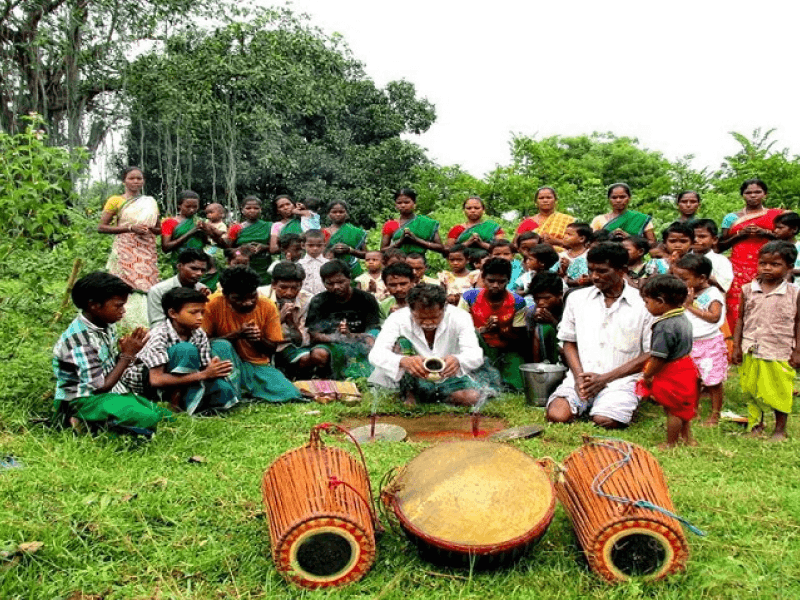
In matters of faith, their worldview is profoundly centered around the environment. The Santal people hold a deep and unyielding reverence for nature, perceiving the divine in forests, rivers, and mountains. Their supreme deity is Marang Buru, the Great Mountain, worshipped alongside Jaher Era, the protective Lady of the Sacred Grove. Every traditional village maintains a designated cluster of ancient Sal trees known as the Jaher Than. This sacred grove serves as their outdoor sanctuary, a peaceful place where the community gathers to offer prayers, seek blessings for their crops, and express their eternal gratitude to the natural forces that sustain their existence.
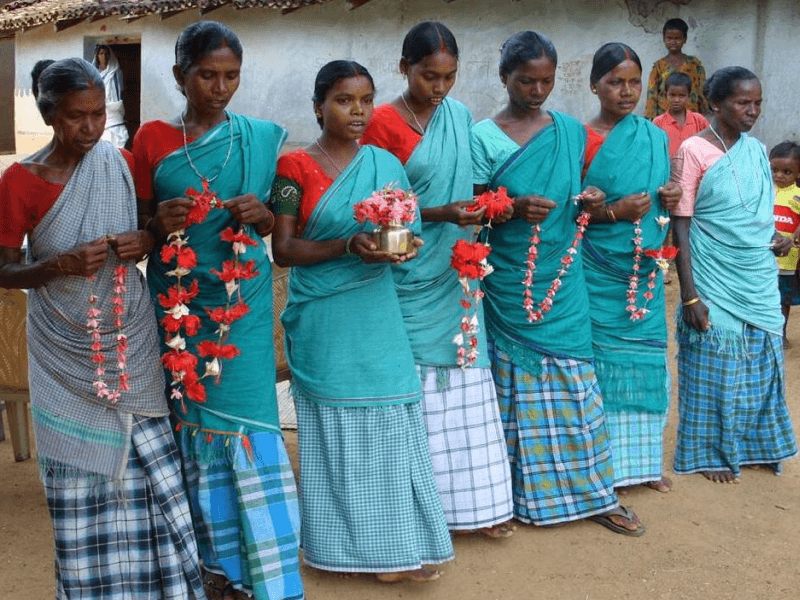
The agrarian calendar dictates the rhythm of their lives, culminating in their most magnificent annual celebration known as Sohrai. Held during the crisp winter months following the primary rice harvest, Sohrai is a profound expression of thanksgiving dedicated to nature and the livestock that make their farming possible. Cattle, considered the most valuable asset to a Santal farmer, receive royal treatment during this festival. They are carefully bathed, anointed with mustard oil, and beautifully adorned with vermilion and floral garlands.
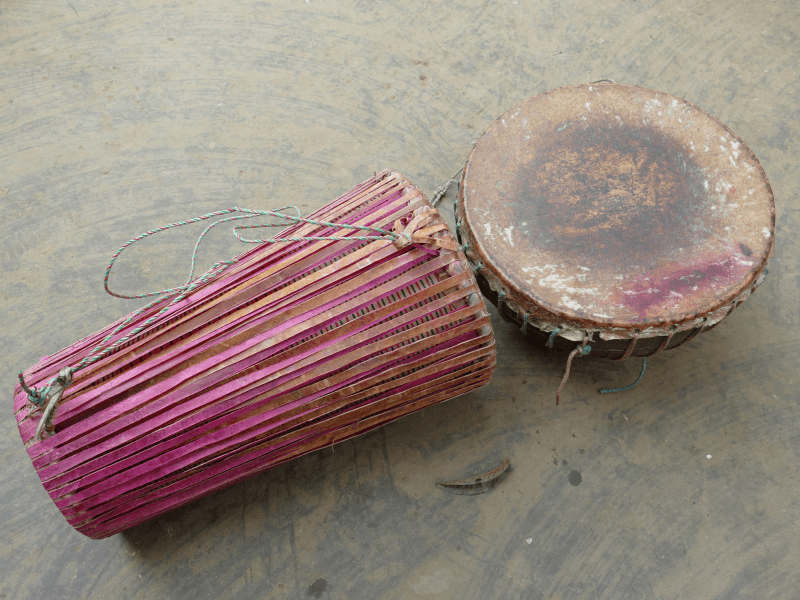
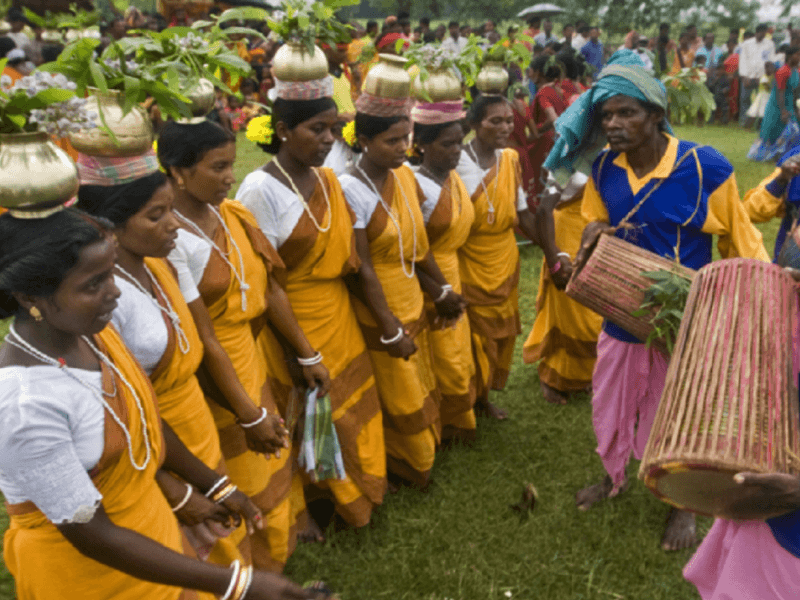
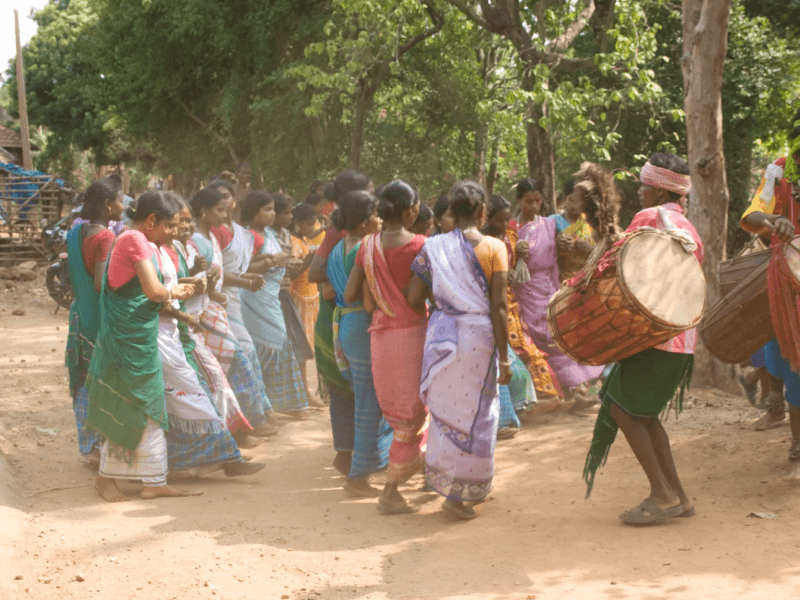
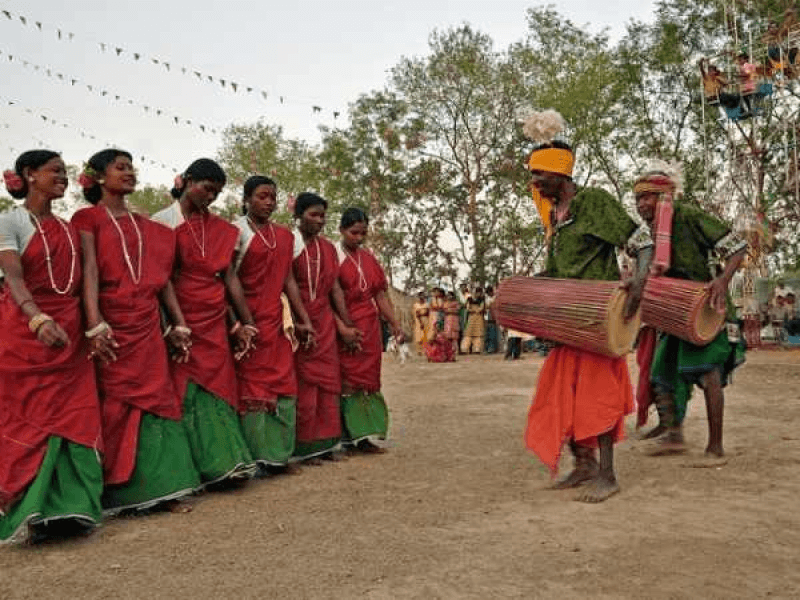
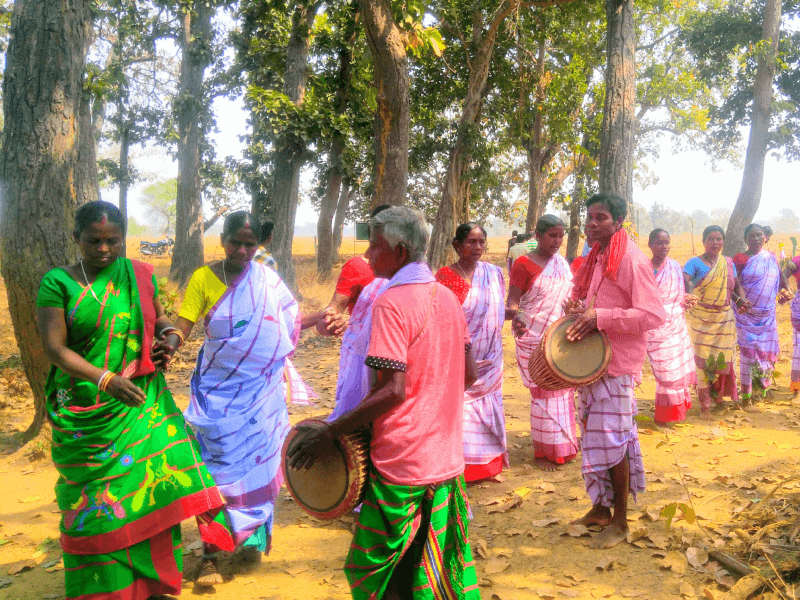
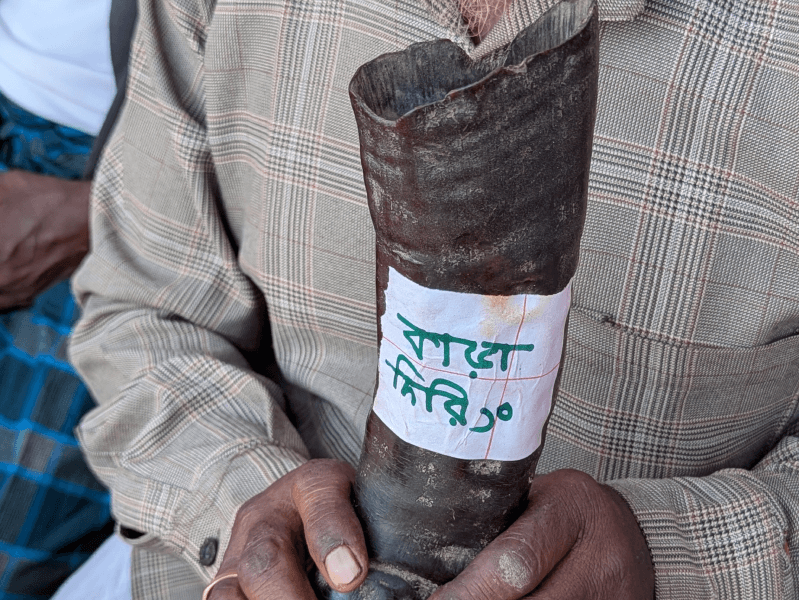
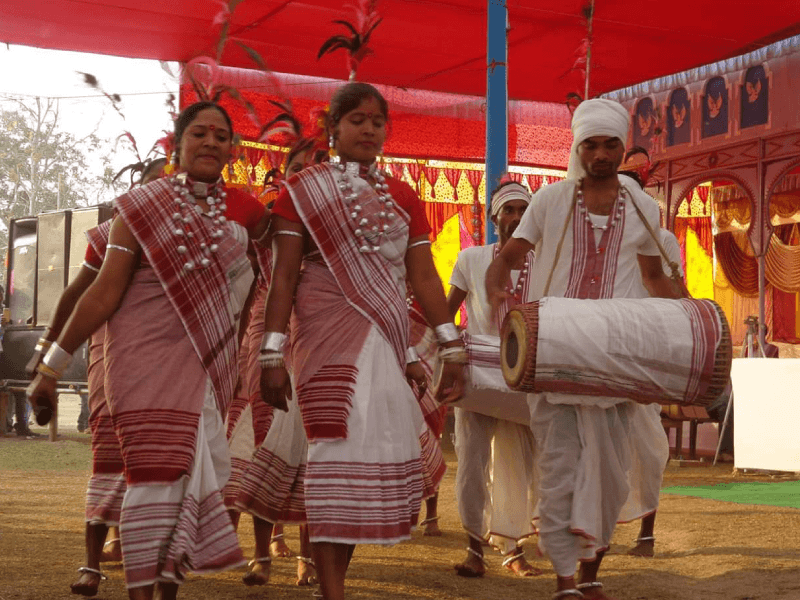
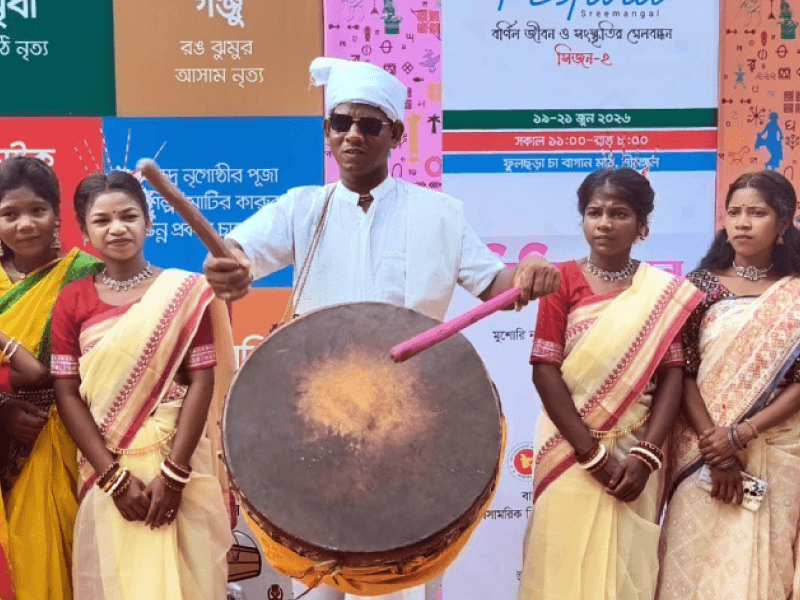
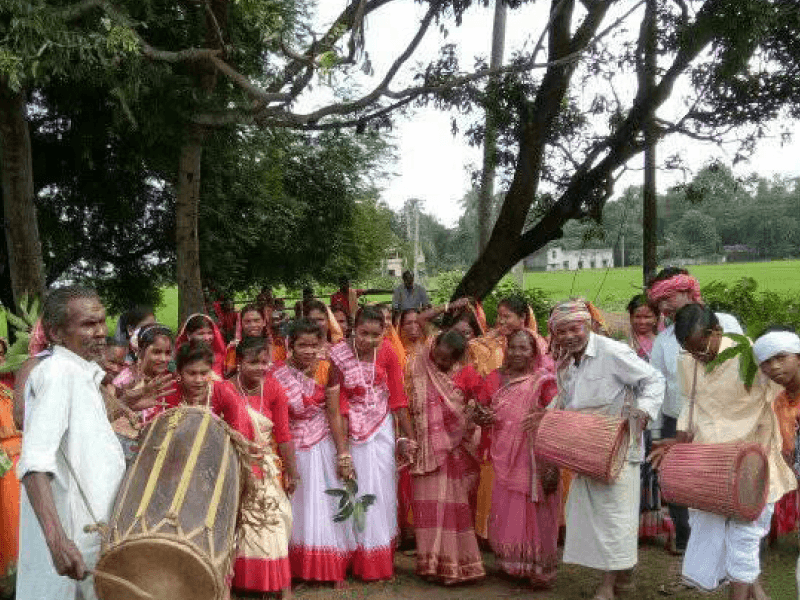
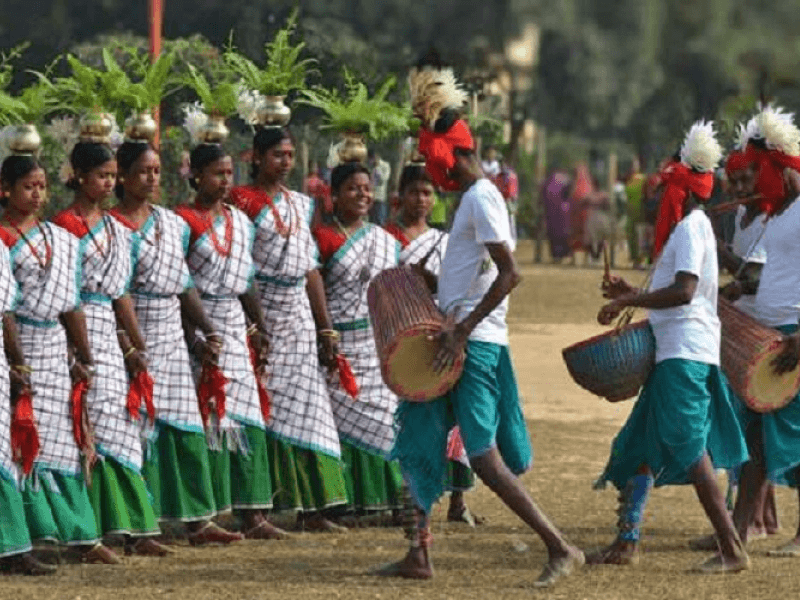
The festival spans several days and is characterized by overwhelming communal joy. The crisp winter air reverberates with the thunderous beats of the Madal and Tumdak, their traditional drums carved entirely by hand. Men and women form long synchronized lines, performing mesmerizing group dances that physically enact the motions of sowing and reaping. During these festivities, women traditionally wear a white sari featuring a thick red border, gracefully draped to allow unrestricted movement, while men wear simple yet elegant woven garments. Through the vibrant murals on their earthen walls and the rhythmic joy of the winter harvest, the Santal community continuously breathes life into the historic plains of the north.
Immersive Experience
No 360° Videos available
Destination Gallery