
Oraon
Dravidian Custodians of the Autumn Harvest
The Earth-Bound Guardians of the Cosmic Sun
Journey into the tightly knit Barind villages where ancestral Dravidian speech, collective council laws, and tree-worship rituals endure.
The Varendra lowlands of greater Rajshahi, Dinajpur, and Naogaon are home to the Oraon, a deeply rooted small ethnic group whose presence adds immense historical weight to the northern plains of Bangladesh. Their lifestyle offers a captivating study of cultural endurance, characterized by an unbreakable bond with the earth and a lineage that stretches back to the ancient southern regions of the subcontinent. Standing as vital custodians of the country's multi-ethnic history, their agrarian lifestyle and unique identity continue to flourish beautifully within the rural landscapes.
Centuries of farming the flat plains have shaped the Oraon into exceptional agriculturalists. Their daily existence revolves around the intense demands of wet rice cultivation, a craft they have perfected to match the monsoon cycles of the region. They utilize every inch of the fertile lowlands, managing their plots with deep ancestral knowledge of soil and seasonal changes.
The social architecture of an Oraon village relies heavily on collective unity. Operating under a traditional patriarchal system where lineage and family property pass down through the male line, the community balances this with an egalitarian approach to village governance. A respected village council, led by an elected or hereditary headman known as the Mahato, oversees internal disputes, manages communal farming efforts, and coordinates seasonal activities. Their homes, neatly constructed from compressed earth and organic thatch, are kept impeccably clean and organized around central courtyards where neighbors gather to husk paddy, repair tools, and share stories after a long day in the fields.
What makes the Oraon community uniquely fascinating within the linguistic landscape of Bangladesh is their distinct mother tongue, known as Kurukh. Unlike most surrounding populations who speak Indo-Aryan or Austroasiatic languages, Kurukh belongs to the Dravidian language family. This linguistic heritage serves as a powerful historical marker, linking them directly to the ancient, pre-Aryan civilizations of the Indian subcontinent. To ensure this rare phonetic treasure is not lost, community elders continuously pass down a vibrant wealth of oral literature, riddles, and historical ballads to the youth in their native Kurukh speech.
Their relationship with the divine is intimately tied to the natural world. Rather than worshipping within enclosed structures, the Oraon find the sacred directly in the flora and fauna surrounding them. They revere a supreme deity known as Dharmesh, the creator symbolized by the sun, who is believed to oversee cosmic order and agricultural abundance. Alongside the creator, they honor various benevolent spirits of the soil, streams, and forests, ensuring that every interaction with nature is conducted with a sense of profound respect and spiritual gratitude.
The absolute pinnacle of their cultural expression is the magnificent Karam festival, a joyous celebration that honors the sacred Karam tree. Held during the autumn month of Bhadra, this festival serves as a passionate prayer for fertility, prosperity, and a bountiful upcoming harvest. Young men and women venture into the forest to ceremonially cut a branch of the Karam tree, which is then brought back to the village center and planted in a specially prepared courtyard. The community gathers around this sacred branch to listen to ancestral legends detailing the tree's protective and life-giving powers.
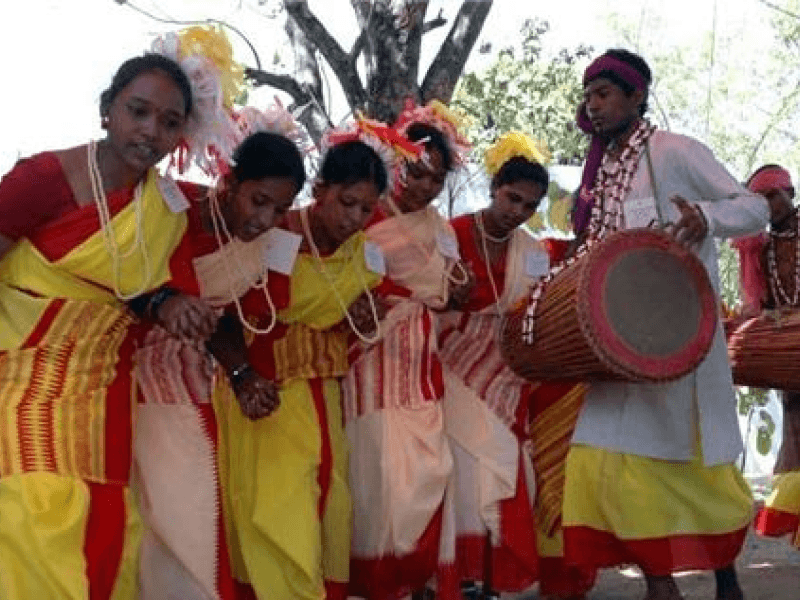
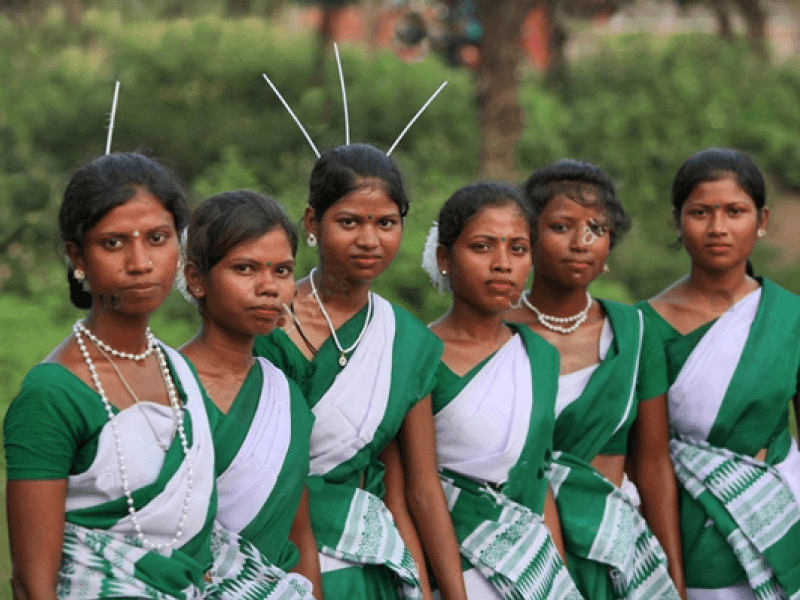
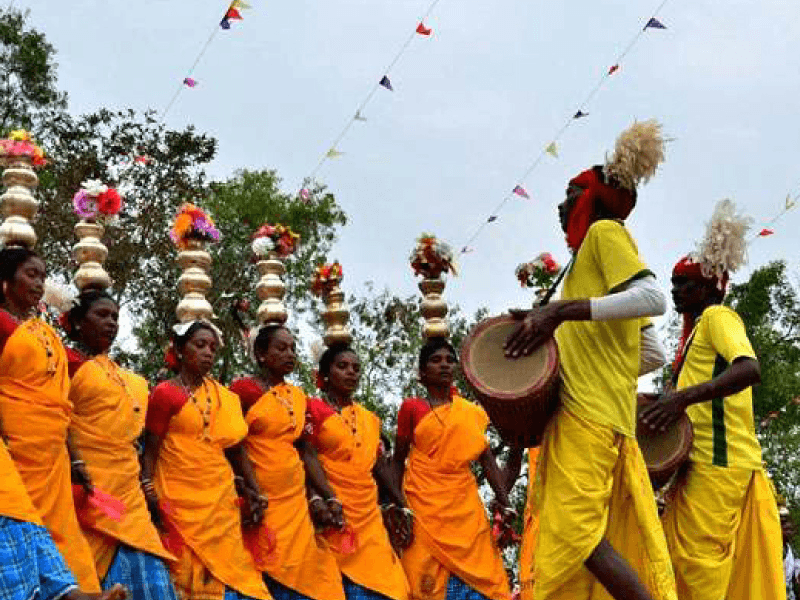
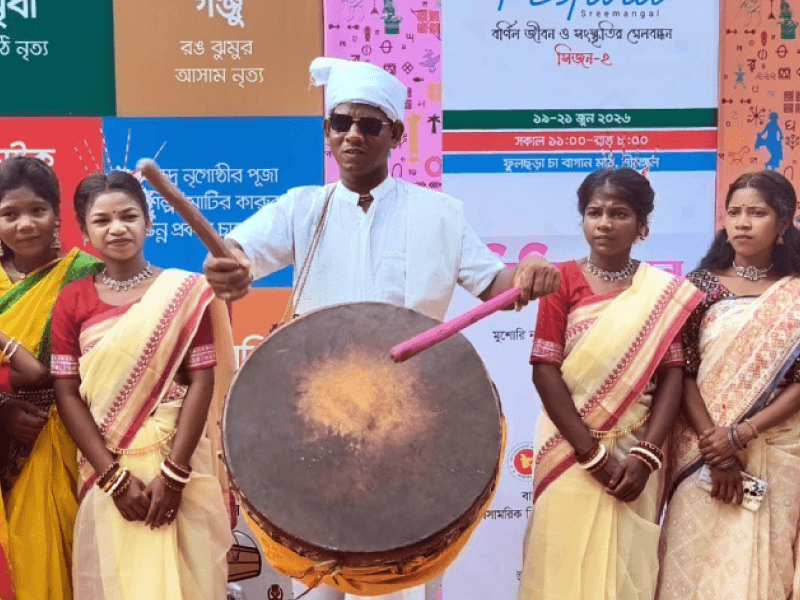
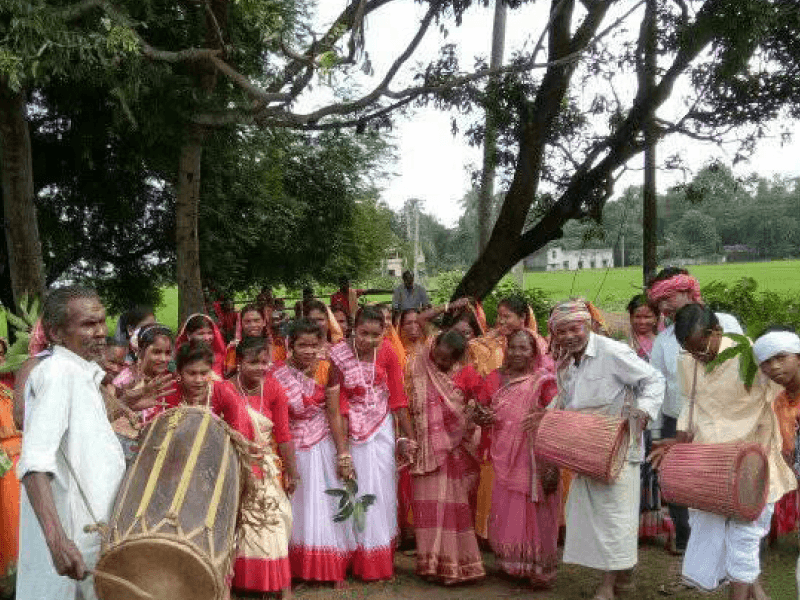
As night falls, the village transforms into a lively stage of music and dance. The air vibrates with the deep, resonant beats of the Mandar and Nagara drums. Men and women link arms to form great circular chains, performing intricate, synchronized steps that sway gracefully around the Karam branch. For these festive occasions, women adorn themselves in traditional white saris bordered with vibrant red bands, weaving wild flowers into their hair, while men wear hand-woven dhotis and matching turbans. This beautiful devotion to the Karam tree, combined with their ancient Dravidian language, keeps the ancestral heritage of the Oraon burning brightly across the northern plains.
Immersive Experience
No 360° Videos available
Destination Gallery