
Munda
Austroasiatic Masters of the Solar Pantheon
The Egalitarian Sculptors of Ancestral Plain-Land Settlements
Discover an ancient, deeply unified farming community defined by unwritten Mundari dialects, sun devotion, and rhythmic seasonal dances.
Deep within the rural stretches of the northern districts like Rajshahi, Naogaon, and Dinajpur lives the Munda community. As a recognized small ethnic group in Bangladesh, they bring a quiet but beautiful rhythm to the flat plains. Their lifestyle is deeply connected to the changing seasons, the soil they farm, and the ancient traditions passed down by their ancestors. Visitors exploring this region will find a community that values peace, hard work, and togetherness above all else.
The historical roots of the Munda people are incredibly old. They belong to the Austroasiatic language family, speaking a native tongue known as Mundari. This specific linguistic connection is vital because it links them to some of the earliest known inhabitants of the South Asian subcontinent. While they use Bengali to communicate with their neighbors in the local markets, Mundari remains the true voice of their homes. Through this language, grandmothers share riddles, myths, and fables with the younger generation, keeping their ancient memory alive without needing a written script.
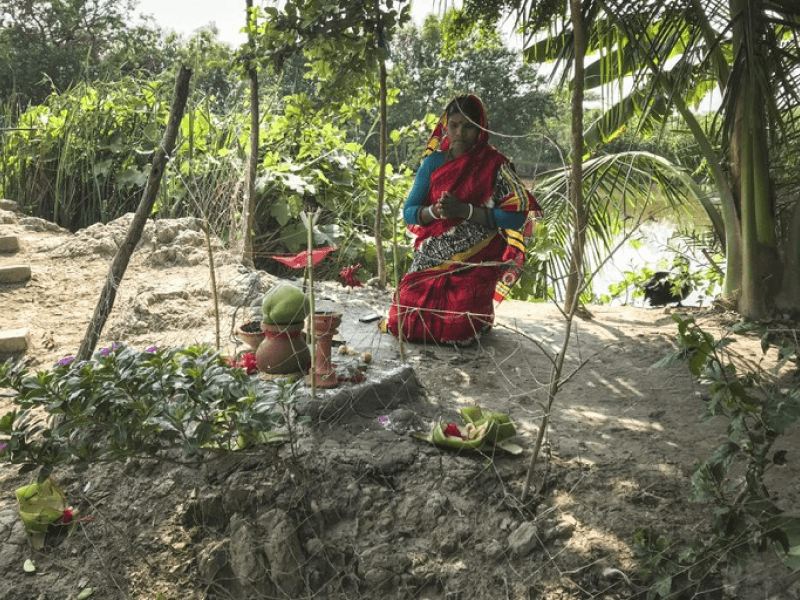
In their spiritual life, they hold a deep respect for the natural world. Their traditional faith revolves around the worship of Singbonga, the supreme creator who is often represented by the sun. They believe that Singbonga watches over them, providing warmth and life to their crops. They also honor various spirits of the forest, mountains, and rivers, ensuring they never take more from nature than they absolutely need. This spiritual balance guides their everyday actions and farming decisions.
A Munda village is a perfect example of community living. Their settlements are highly organized and close knit. People do not just live next to each other; they share their lives entirely. The society follows a patriarchal system, where family names and property are passed through the male members. However, the culture strongly believes in fairness and mutual respect, giving everyone a voice in community matters.
Every village has a traditional council led by a headman. This council acts as the heart of the community. They gather to solve disagreements, plan the upcoming harvest, and organize seasonal festivals. No one is left to face any hardship alone. During the busy planting season, neighbors naturally move from one field to another, working together until every single farm is fully planted.
Their homes reflect this simplicity and care. They build their houses using local mud and thatch, maintaining them with immense pride. The earthen floors are constantly swept clean, and the walls are often painted with natural earth colors. The central courtyards serve as open living rooms where women dry grains, weave mats, and children play safely together under the sun.
Music and movement are not just entertainment for the Munda people. They are essential tools for surviving and celebrating the difficult agricultural cycle. Every stage of farming, from sowing seeds to gathering the final crop, is marked by specific songs and dances. They do not separate their art from their daily work.
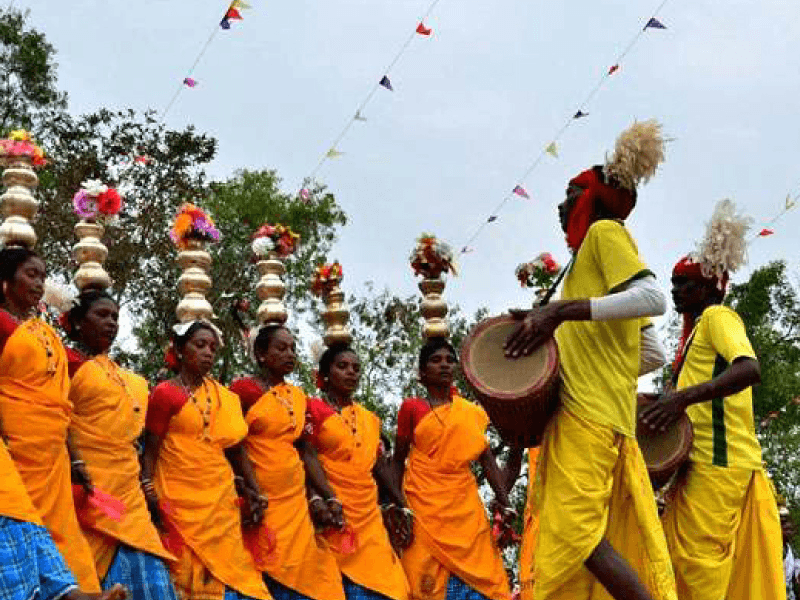
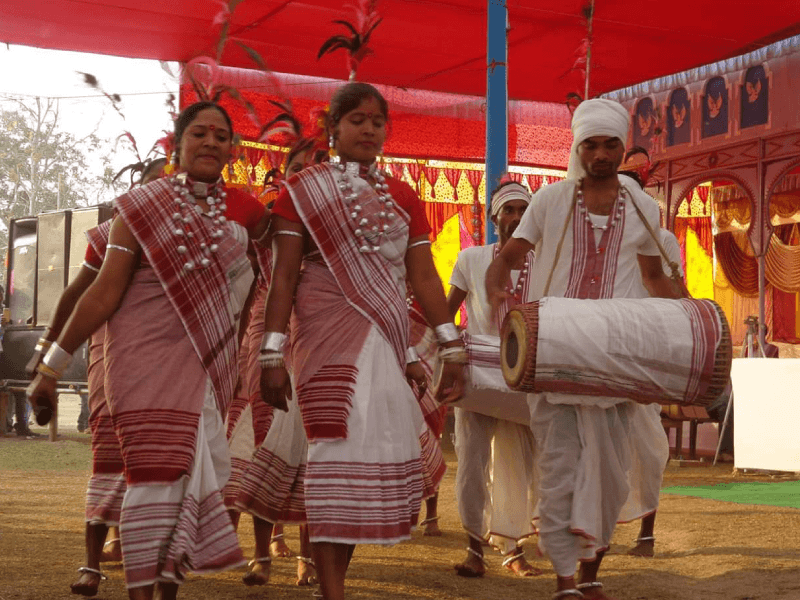
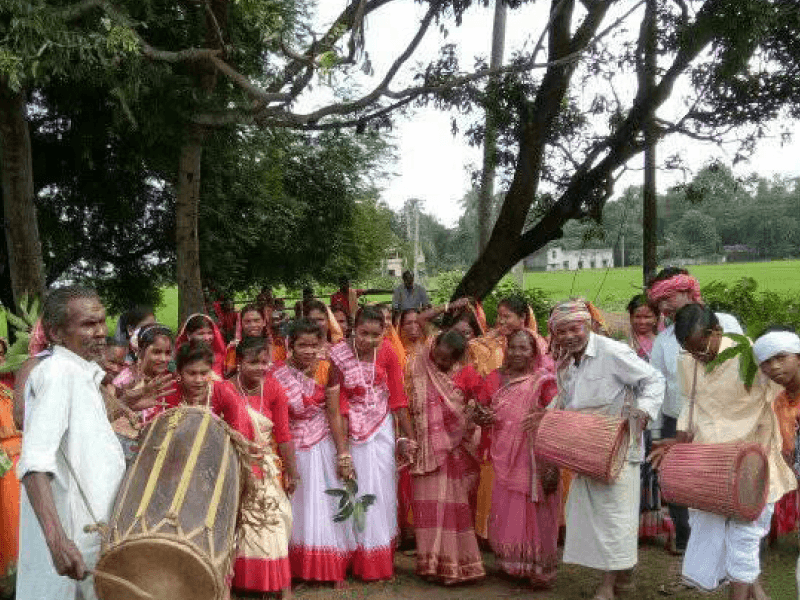
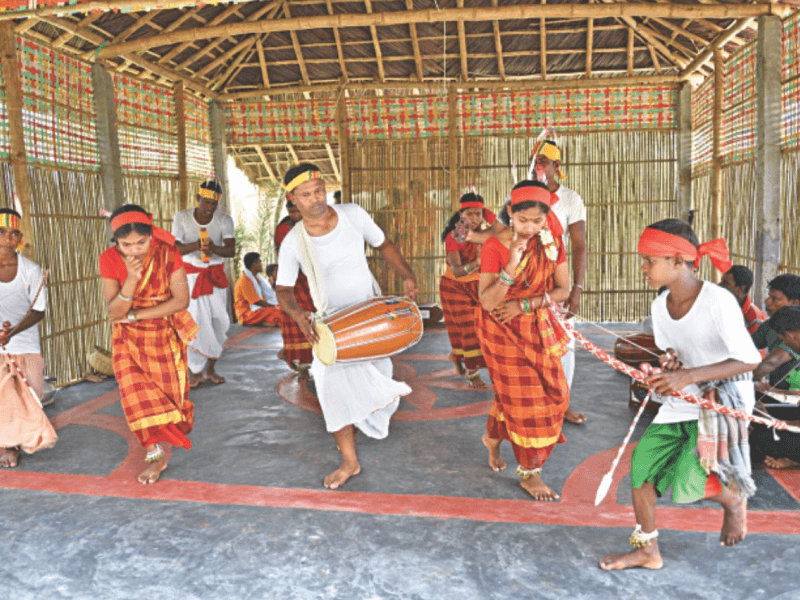
When the harvest is safely brought home, the village bursts into song. They celebrate festivals like Mage Porob with great joy. During these times, the air fills with the beats of the Madal and the Dumang, their handmade wooden drums, along with the sweet notes of bamboo flutes.
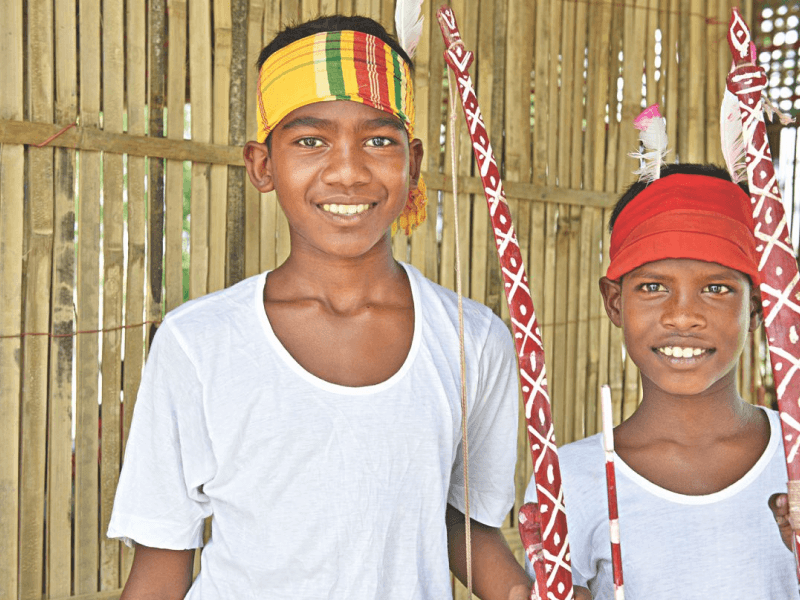
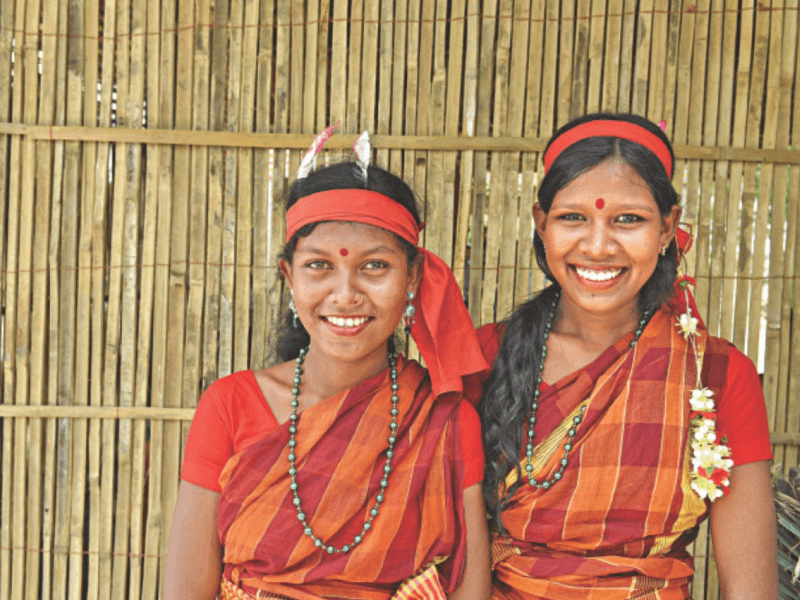
Their dance forms are gentle and deeply symbolic. Men and women gather in the village square, forming large circles. They hold each other by the waist or shoulders, moving in perfect unison. The steps mimic the actions of farming, bending gracefully toward the earth and rising toward the sky. Women wear simple, brightly colored saris, while men wear traditional woven cloths. This collective dancing strengthens their bonds, acting as a unified prayer of thanks to the earth for feeding them for another year.
The Munda community continues to thrive in the northern plains through their shared labor and rich cultural practices. Their Austroasiatic heritage, strong village bonds, and rhythmic celebrations make them a precious part of the national identity.
Immersive Experience
No 360° Videos available
Destination Gallery