
Bajra Shahi Mosque
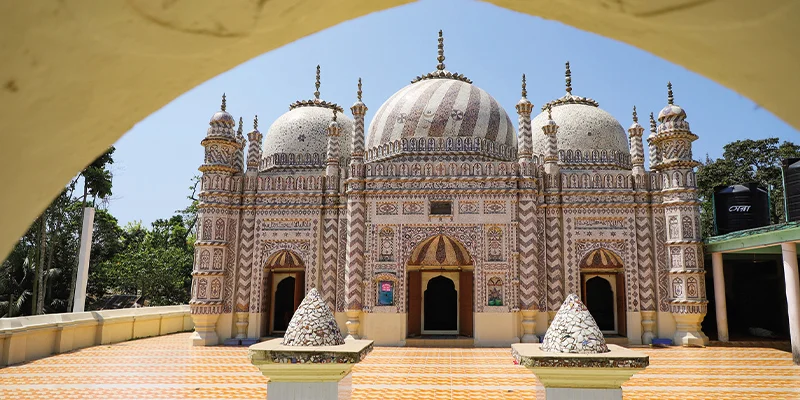
Nestled in the quiet countryside
of Noakhali district, the Bajra Shahi Mosque stands as a resplendent testament
to a late Mughal revival and the deep-rooted piety of local zamindars. An
inscription fixed over its central doorway reveals that the mosque was
originally erected in 1741-42 AD by a man named Aman Allah during the reign of
the Mughal emperor Muhammad Shah. For nearly two centuries, the mosque served
the local community until it underwent a magnificent transformation in the
early 20th century. Between 1911 and 1928, the Bajra zamindars Khan Bahadur Ali
Ahmad and Khan Bahadur Mujir Uddin Ahmad sponsored an extensive renovation,
breathing new life into the aging structure.
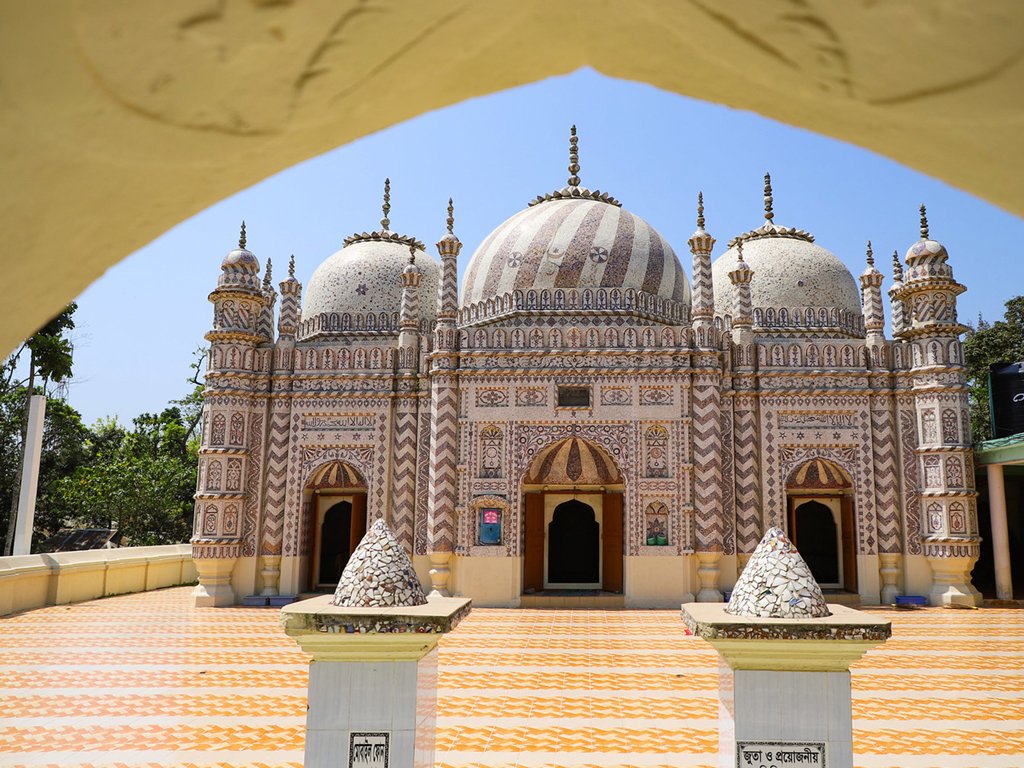
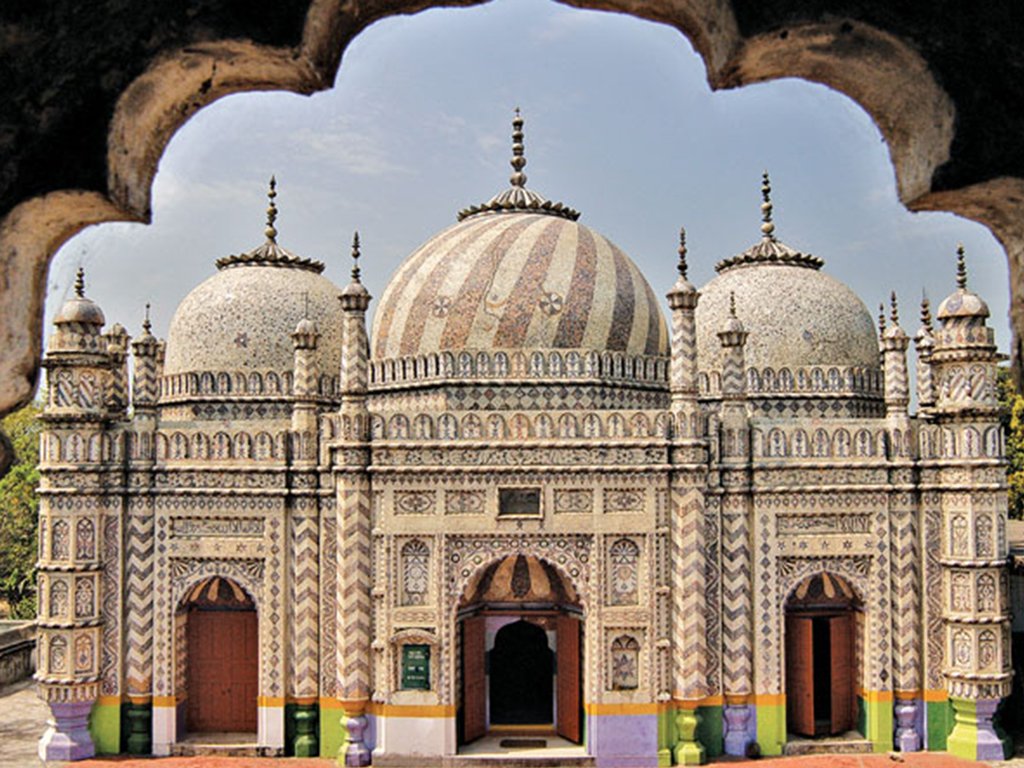
The result of that renovation is a visual feast that makes the Bajra Shahi Mosque stand apart. The entire structure is profusely decorated with intricate mosaics made from shattered shards of Chinese porcelain—a technique known as Chini Tikri, which was a hallmark of decorative art in the region during the 19th and 20th centuries. This craftsmanship transforms the mosque's surface into a shimmering tapestry of color and light. Architecturally, the mosque is a classic example of the Mughal style, rectangular in plan (16m by 7.32m) with three elegant domes and four octagonal corner towers rising above the parapet. Inside, the prayer hall is divided into three bays by two beautifully crafted multi-cusped transverse arches, with three ornate mihrabs adorning the western wall. This exquisite fusion of robust Mughal structure and delicate local artistry makes this quiet village feel like a discovery of hidden treasure.
Immersive Experience
No 360° Videos available
Destination Gallery