

Traditional Rice Harvesting and Planting
The seasonal rhythm behind Bangladesh's staple grain
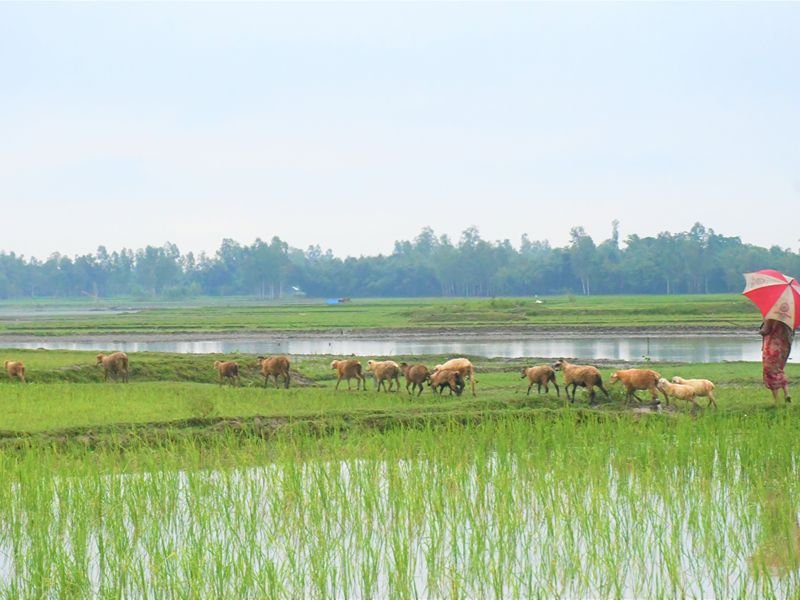
Gold of the Delta. Step into the Living Rhythm of the Paddy Fields.
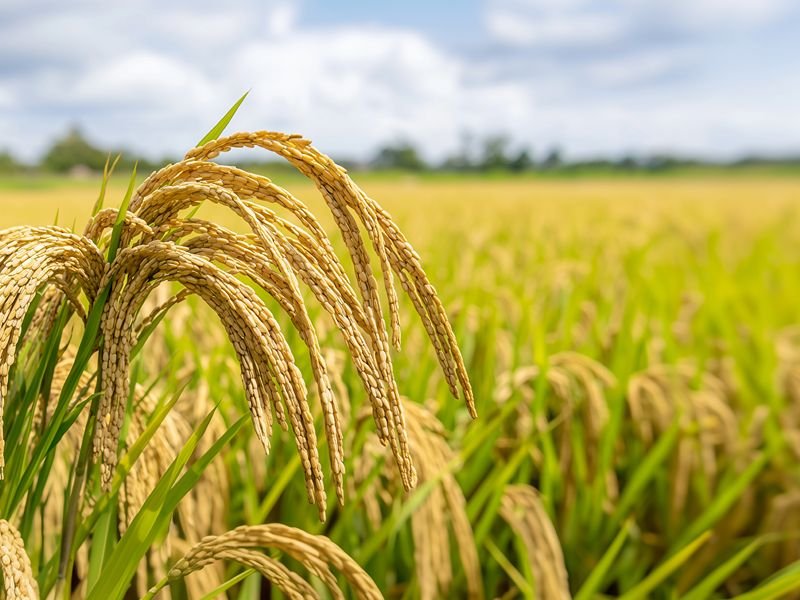
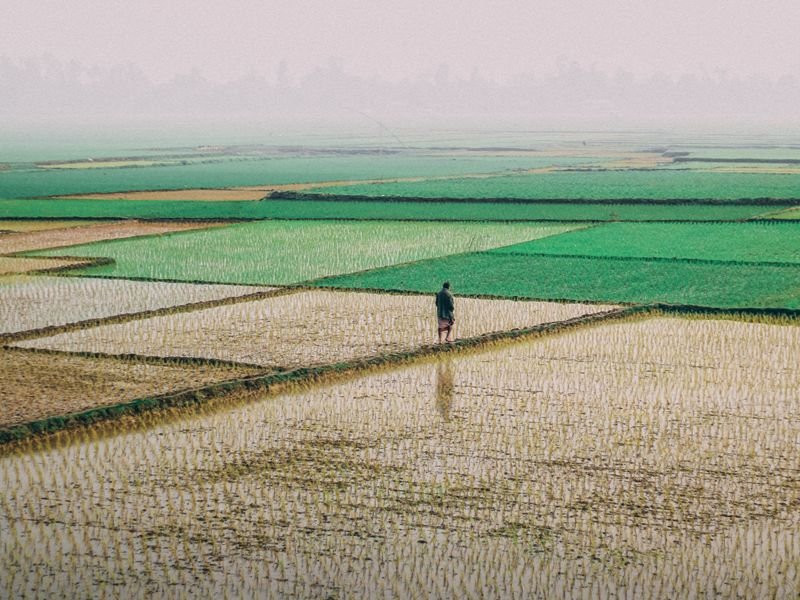
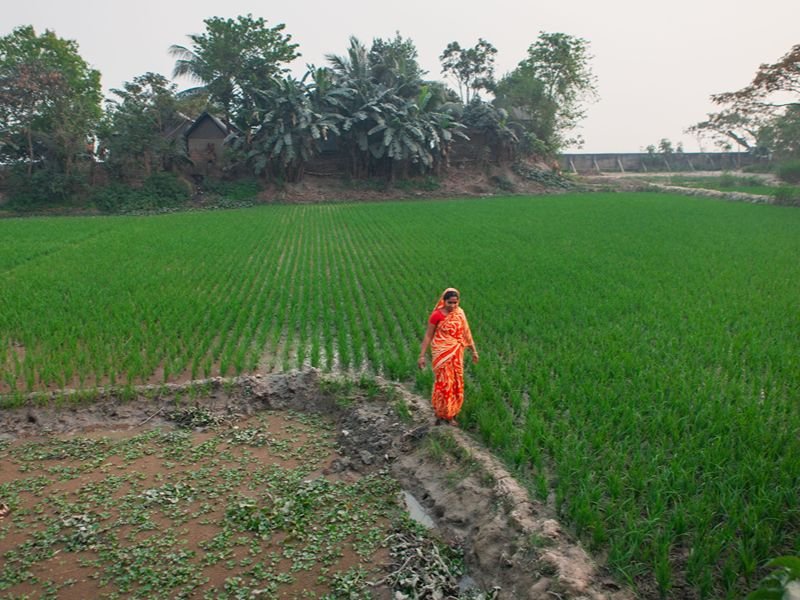
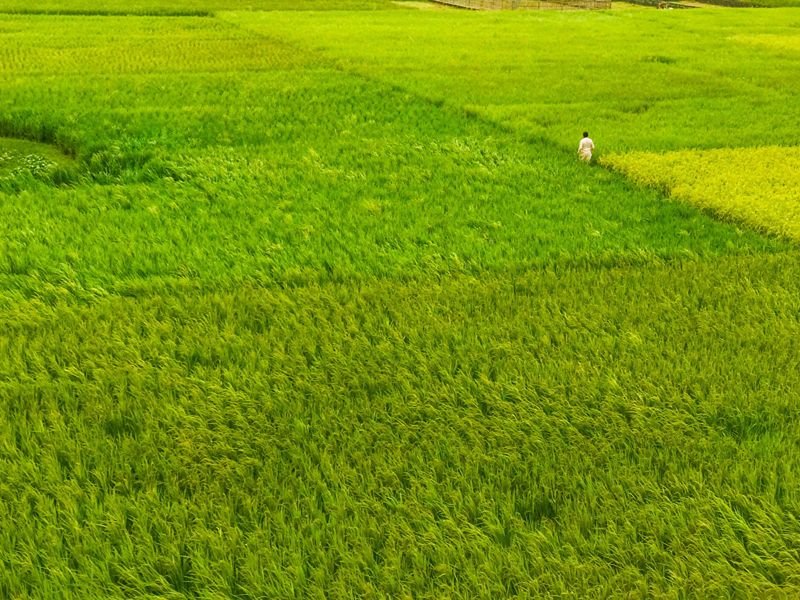
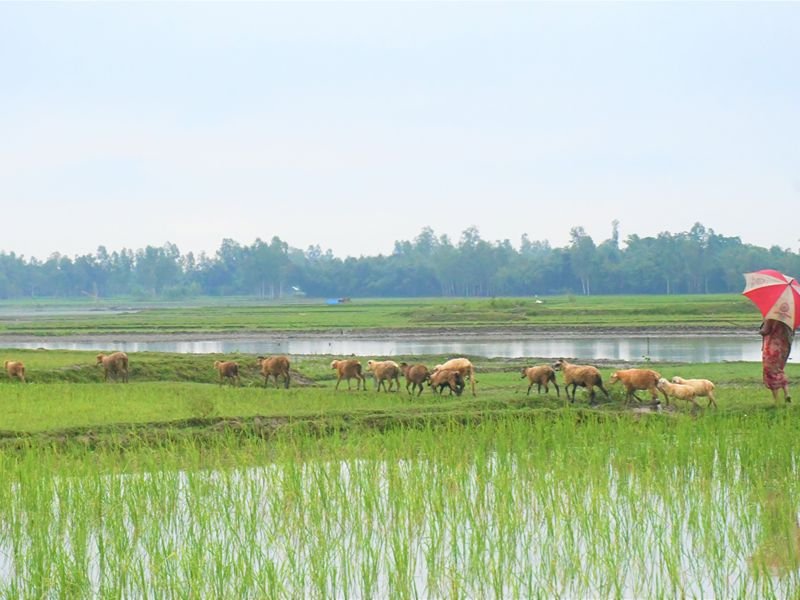
Rice shapes everyday life across rural Bangladesh. It fills household kitchens, supports millions of livelihoods, and transforms the countryside with every agricultural season. Farmers grow rice mainly through three seasonal systems: Aus, Aman, and Boro. Each follows a different calendar and responds to different combinations of rainfall, irrigation, and landscape.
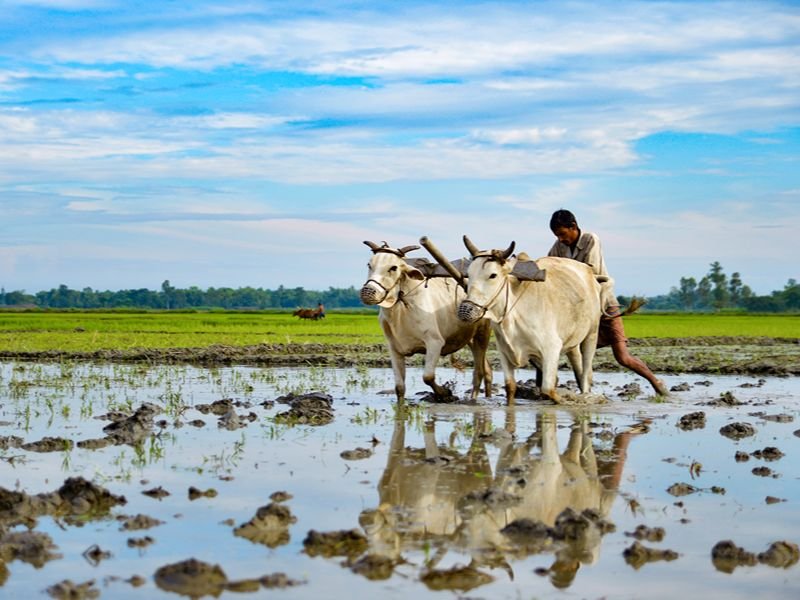
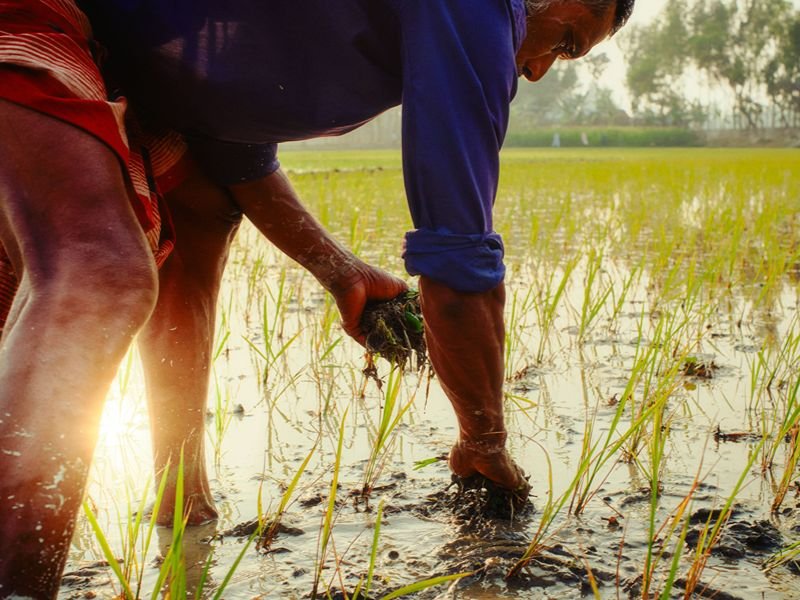
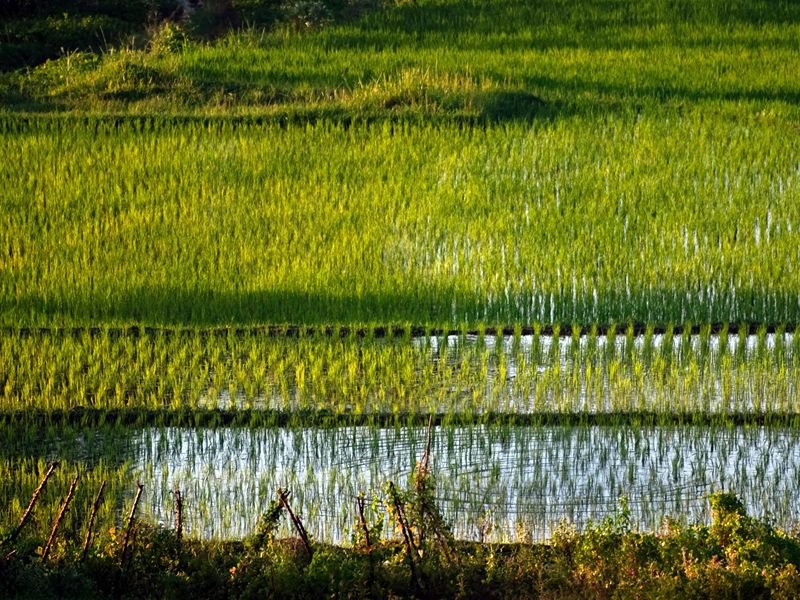
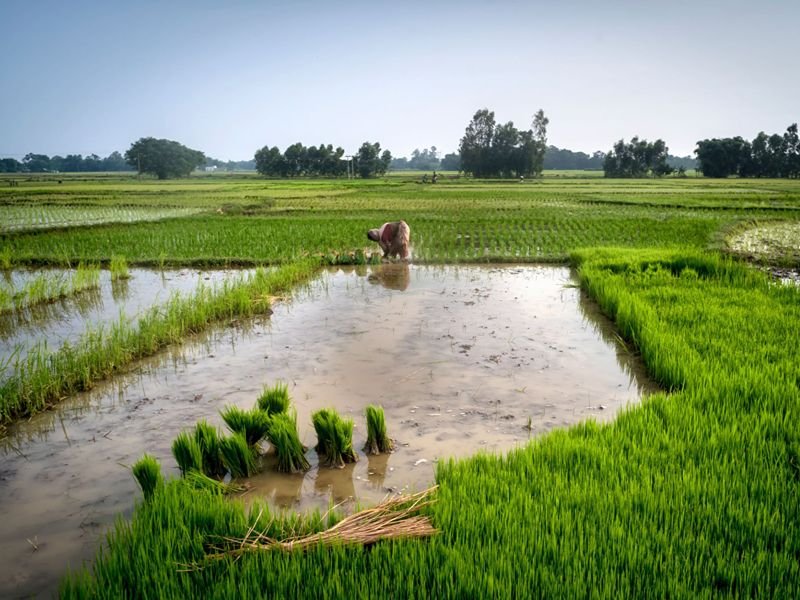
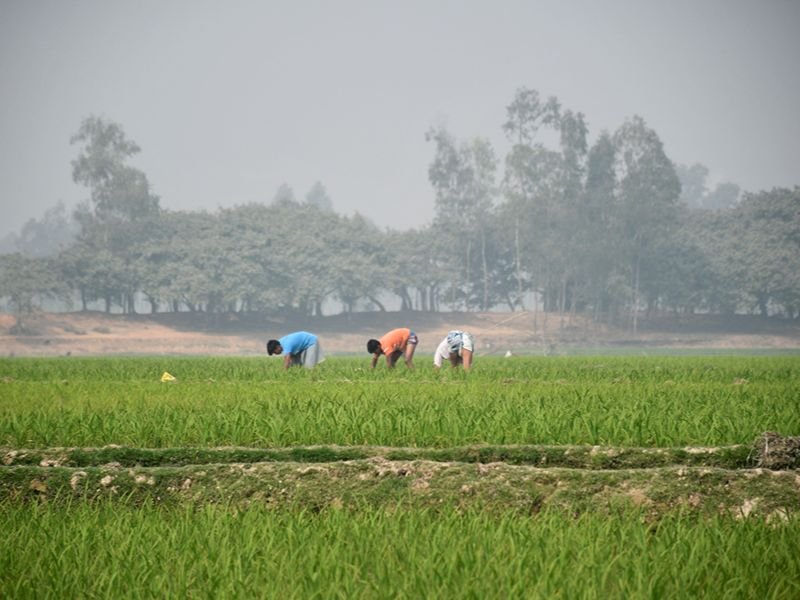
Aman creates one of the most familiar farming scenes in the country. Farmers commonly transplant Aman seedlings during July and August, when monsoon rain provides much of the water the crop needs. Workers carry young seedlings from seedbeds and plant them by hand in prepared fields, often moving in small groups across the soft soil.
Hand transplanting remains part of rural farming, although mechanized land preparation, transplanting, threshing, and harvesting have expanded considerably. Visitors may therefore see traditional and modern methods operating side by side, depending on the farm and region.
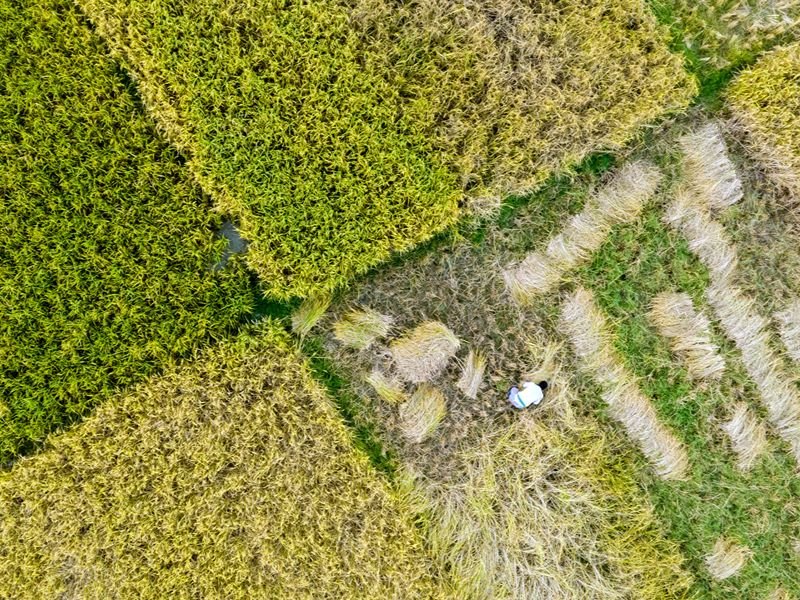
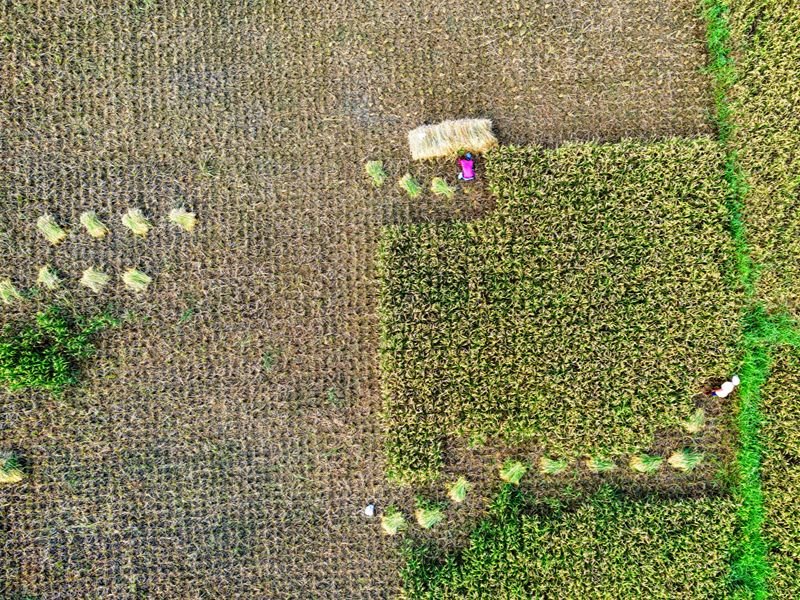
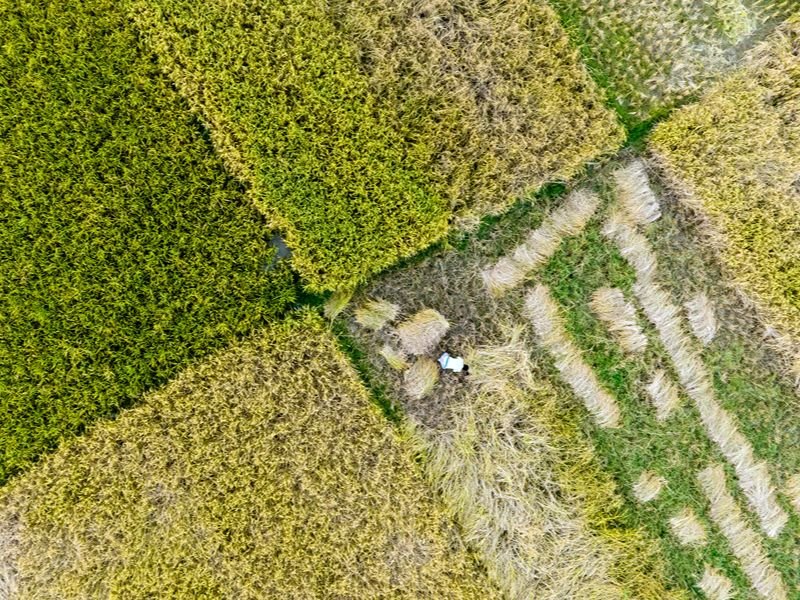
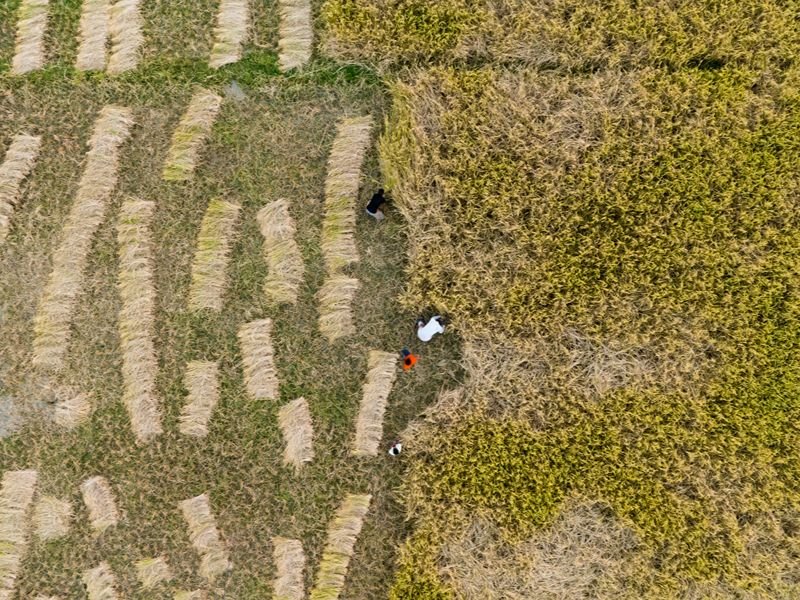
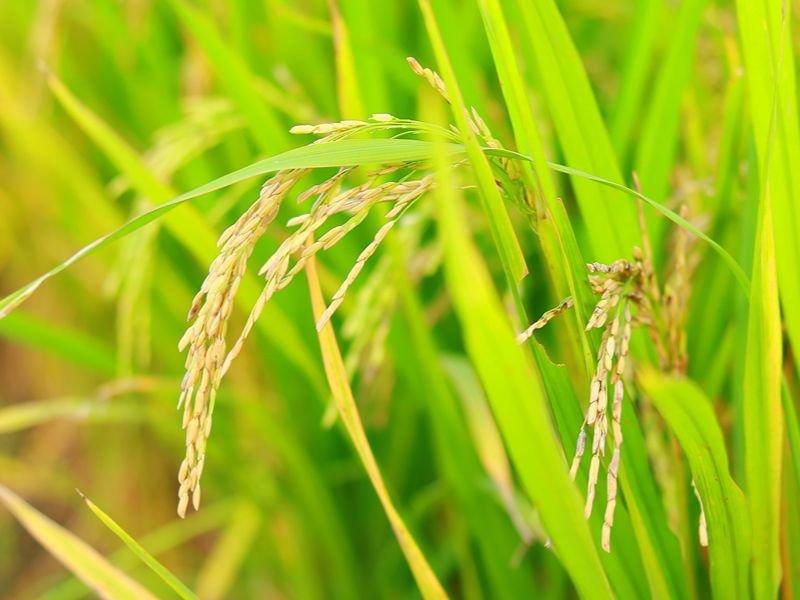
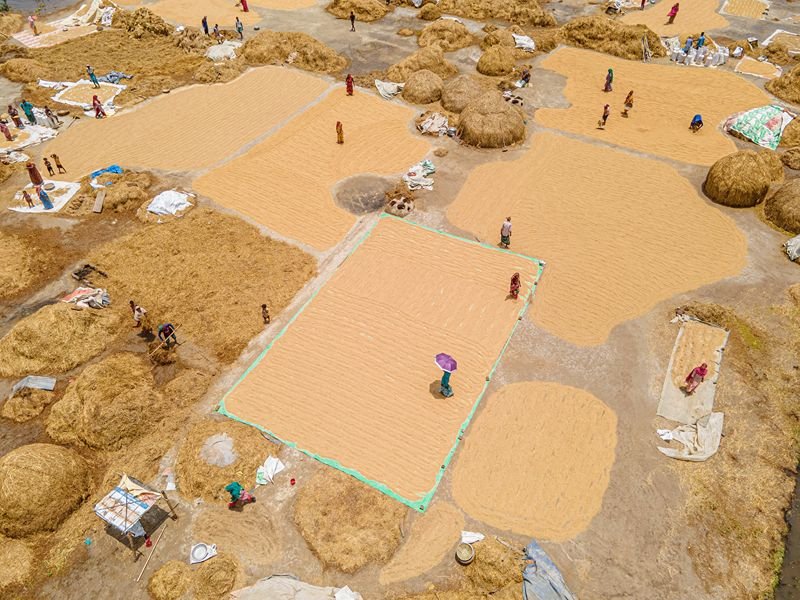
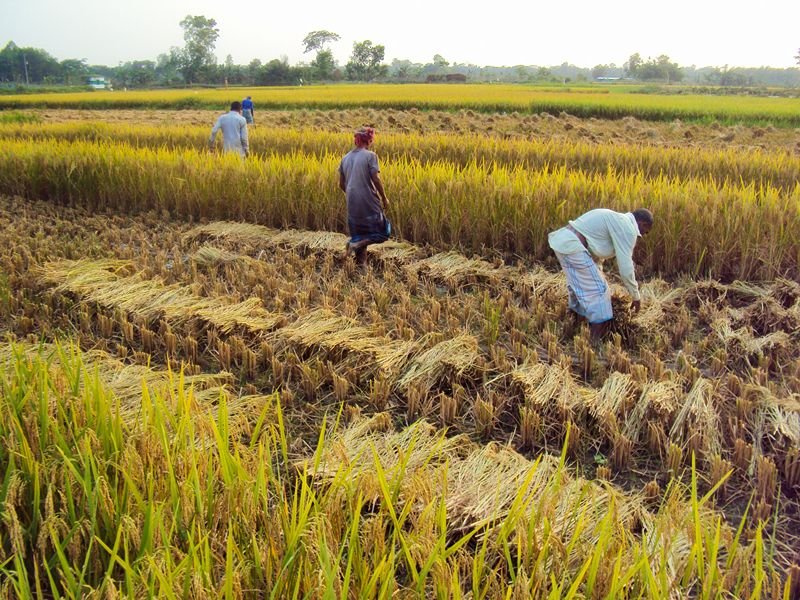
The harvest usually begins in November and often continues through December, with some transplanted Aman varieties extending into January. Farmers traditionally cut ripe paddy with curved hand sickles known locally as kanchi. After cutting, they separate the grain from the stalk through threshing. Traditional methods include beating the harvested stalks and, in some places, animal treading, while mechanical threshers now perform much of this work.
The dhenki, a traditional foot-operated wooden lever, belongs to a later stage. Rural households historically used it to husk paddy and turn it into rice rather than to separate grain from harvested stalks.
The Aman harvest also connects with Nabanna, Bengal's traditional celebration of the new crop. Families prepare food from freshly harvested rice, including different varieties of pitha. Although the festival has older religious and agrarian roots, communities across Bangladesh now recognize it as part of the cultural memory of the harvest season.
A responsibly arranged farm visit allows travelers to understand this cycle at close range. Watching farmers transplant seedlings or harvest mature paddy reveals the skill, physical effort, and seasonal knowledge behind the food that remains central to everyday life in Bangladesh.
Immersive Experience
No 360° Videos available
Destination Gallery
Organic Vegetable Farm Homestays
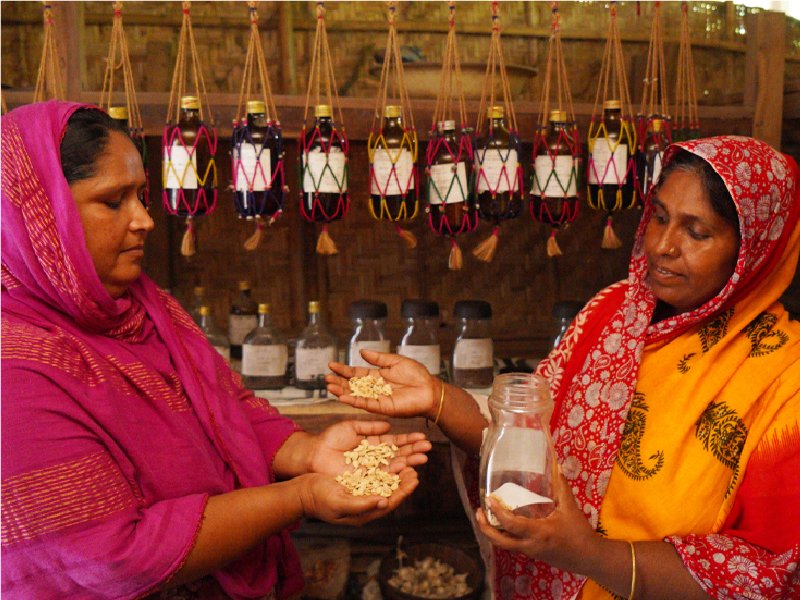
Biodiversity, local seeds, and slower ways of experiencing rural agriculture
Explore More
Blooming Mustard Fields Exploration
Bangladesh's golden winter fields and the beekeepers who follow the flowers
Explore More