

Jute Cultivation and Processing
The golden fiber from field to finished thread
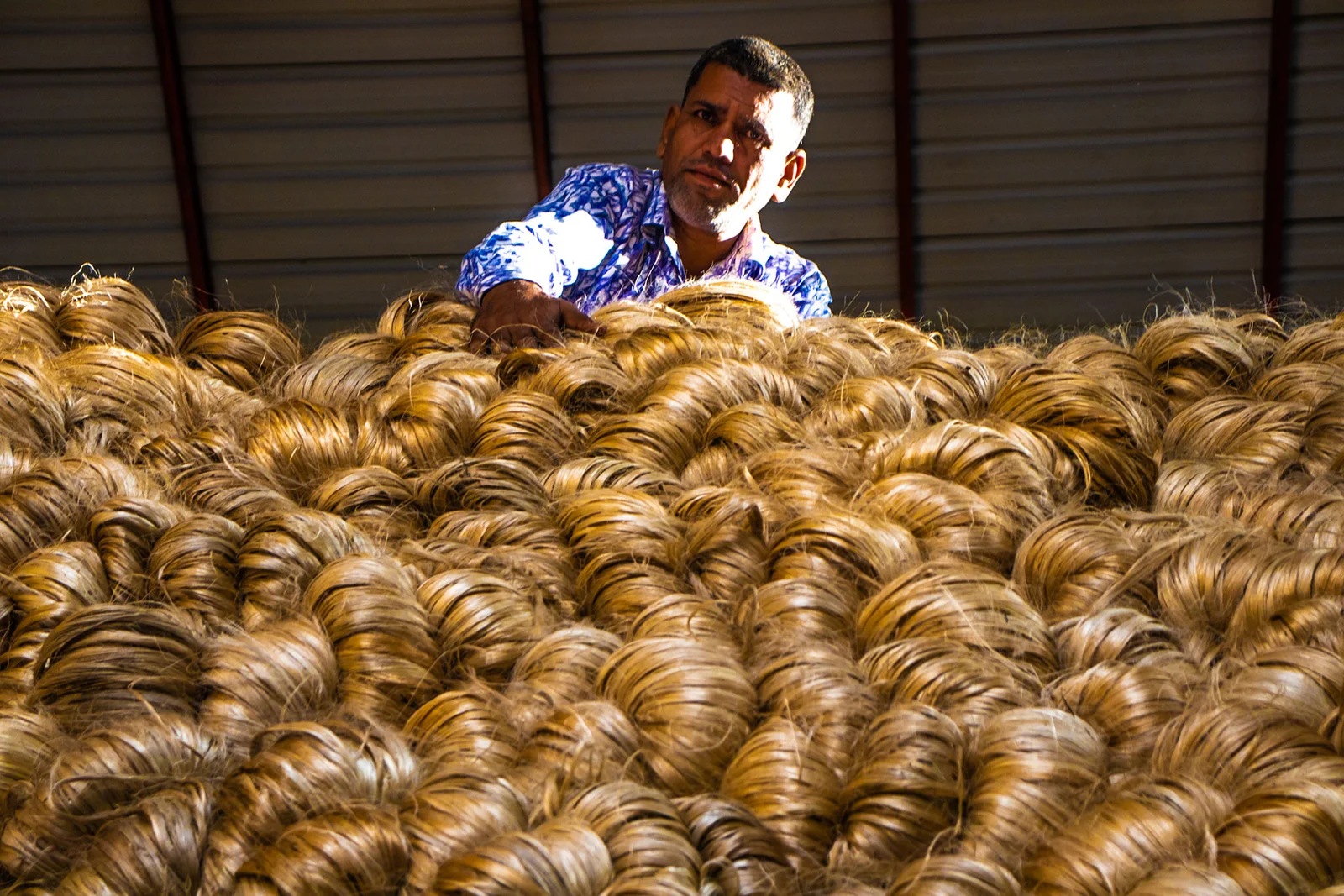
The Golden Fiber. Follow Jute from Green Stalk to Shining Strand.
Jute has shaped Bangladesh's agriculture, trade, industry, and rural landscape for generations. Farmers grow the crop across fertile floodplain regions where warm temperatures, seasonal rain, and suitable soils encourage rapid growth.
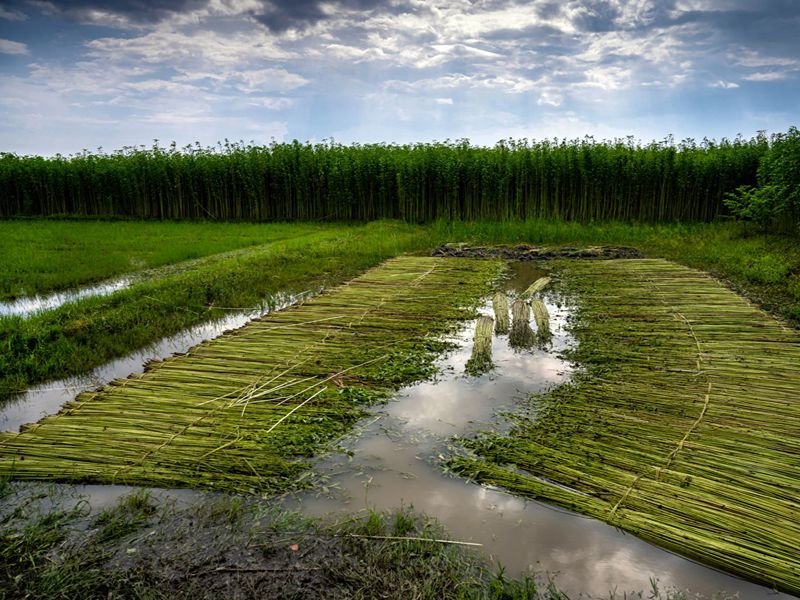
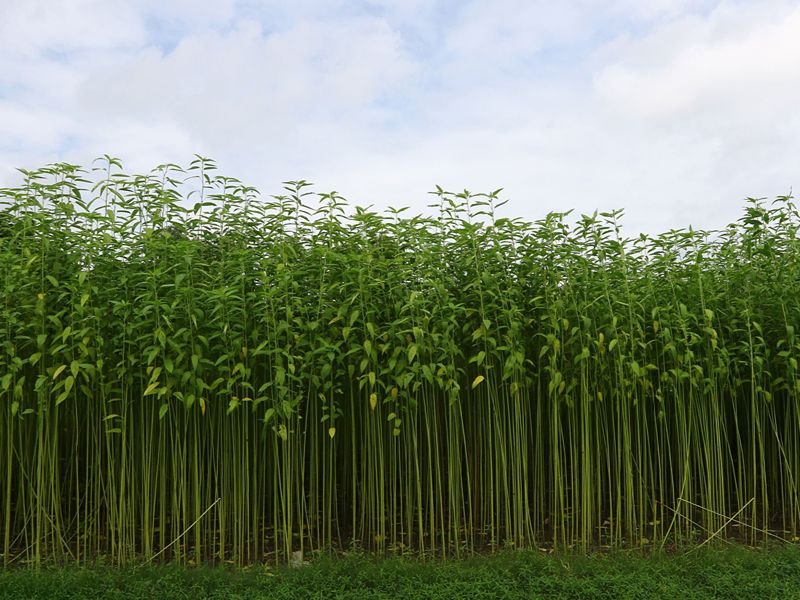
The farming cycle begins with land preparation and sowing. As the season advances, jute plants grow tall and straight, developing long fibers within the outer part of the stalk.
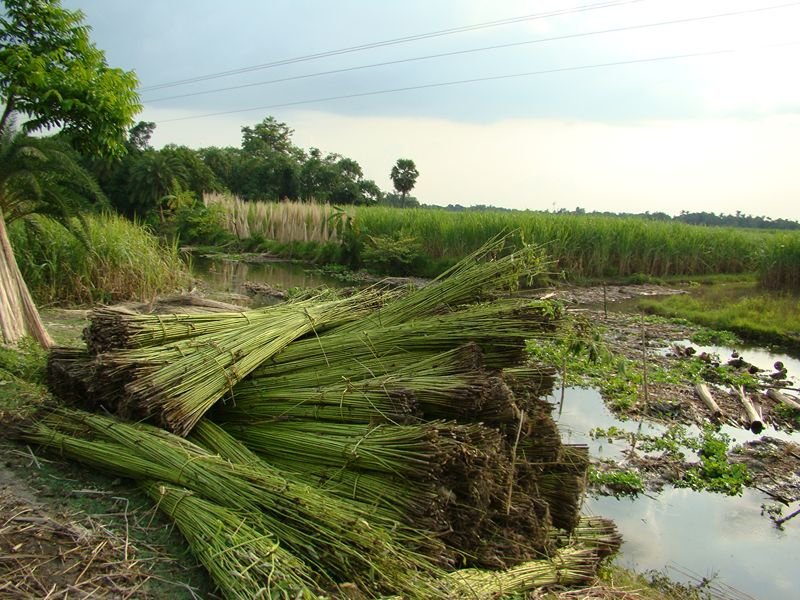
Farmers harvest mature jute during the monsoon period. After cutting the plants, they gather the stalks into bundles and prepare them for retting.
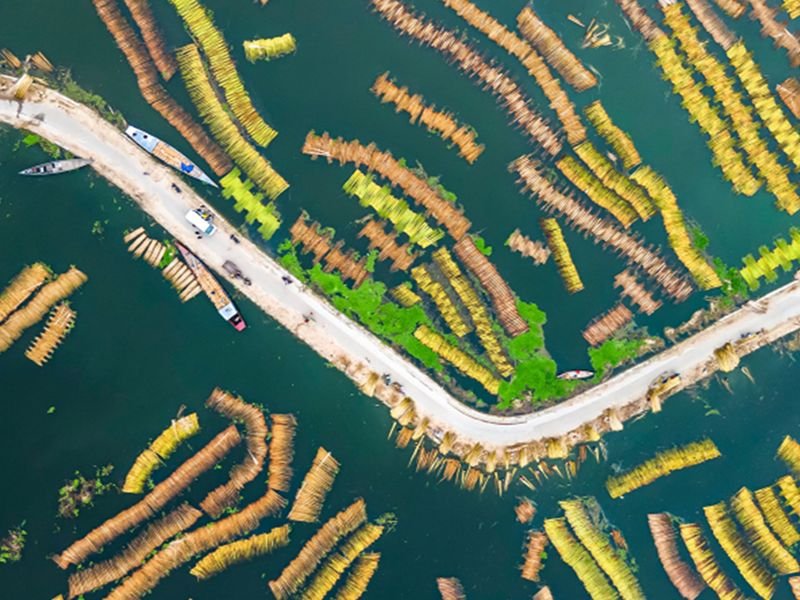
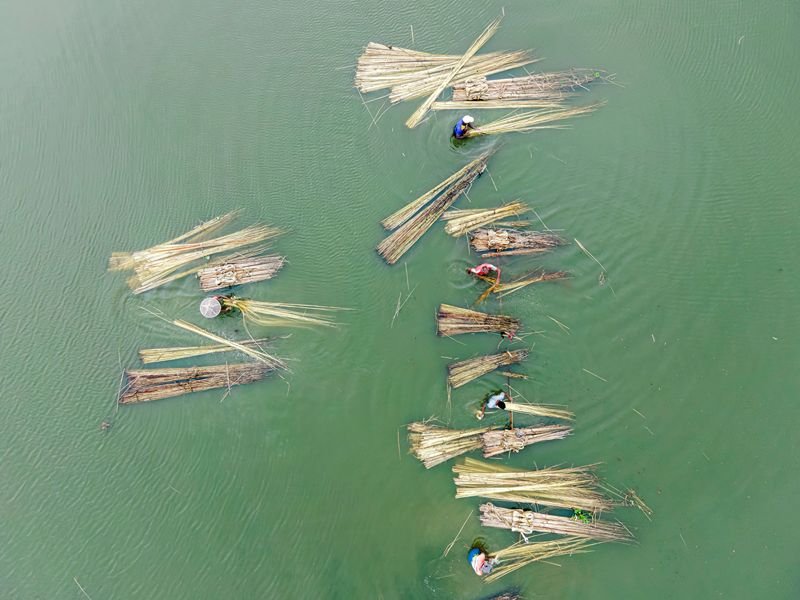
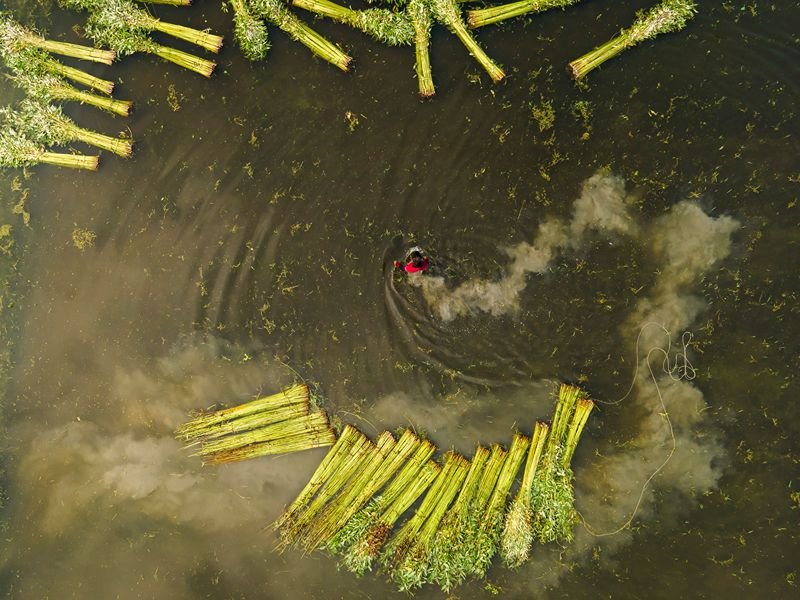
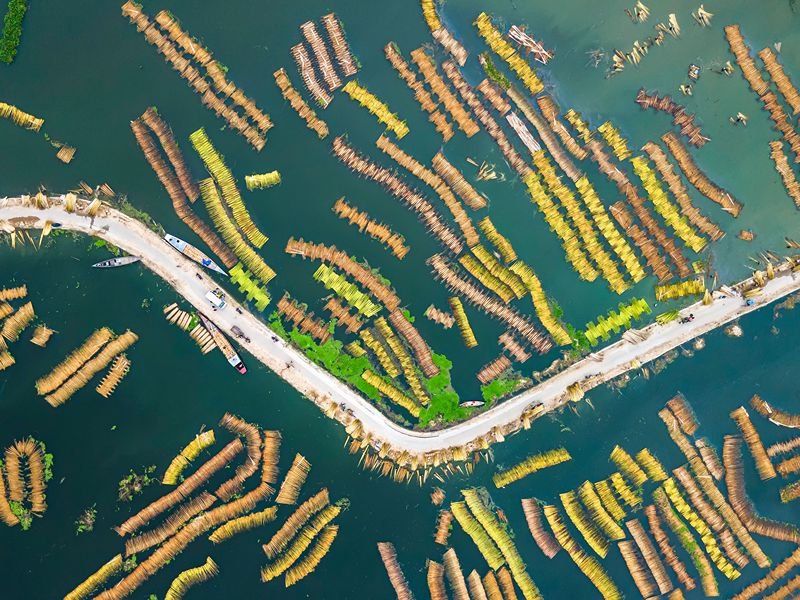
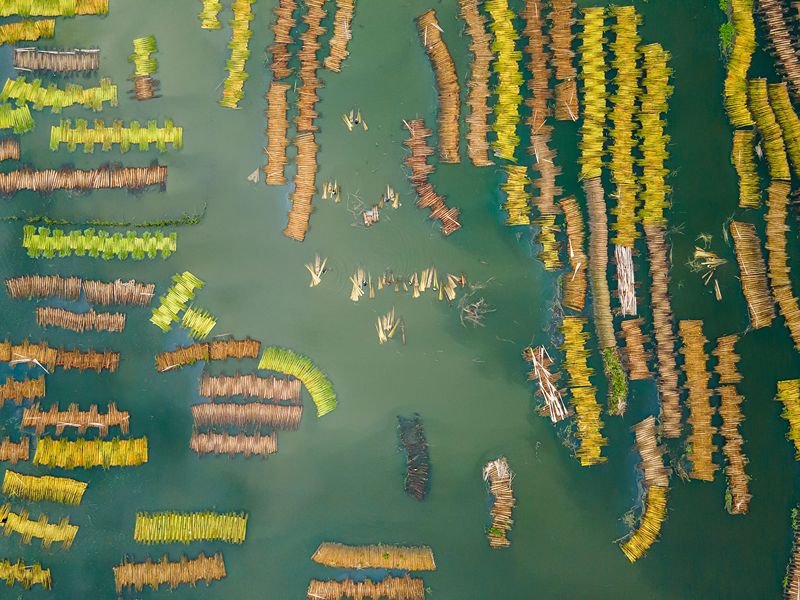
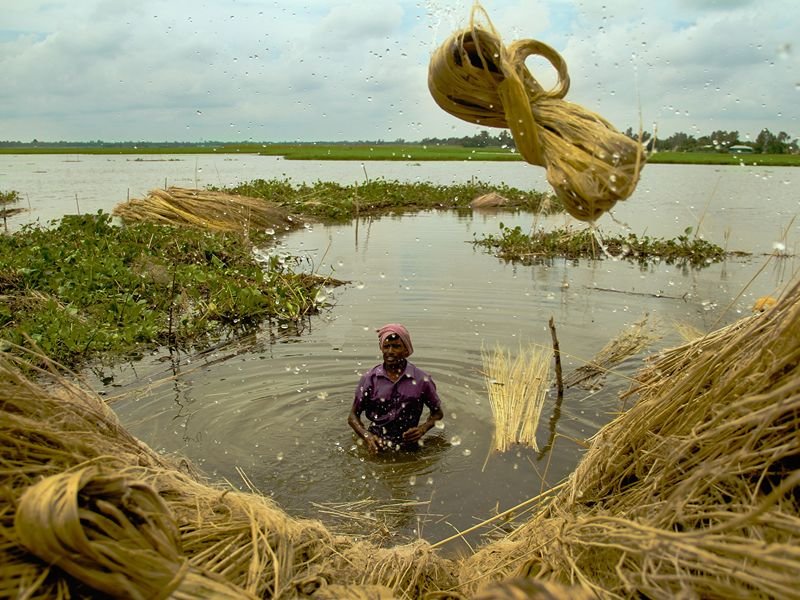
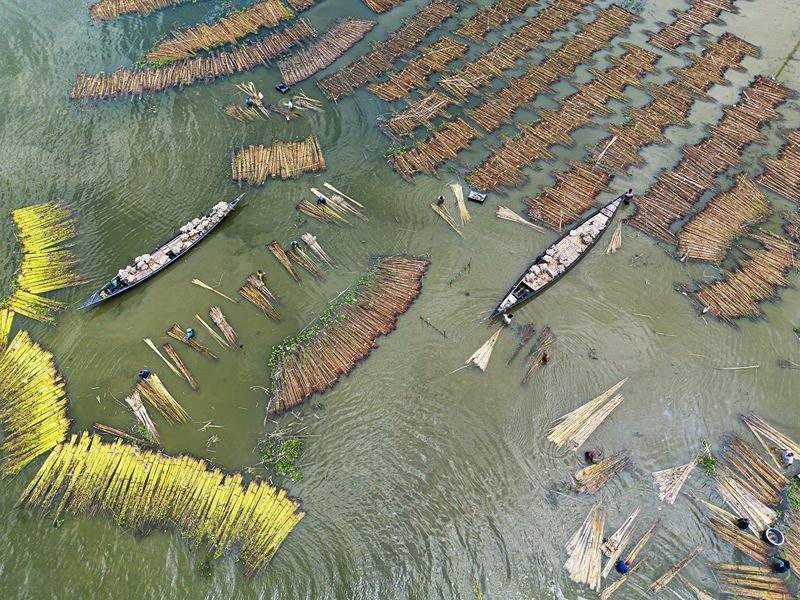
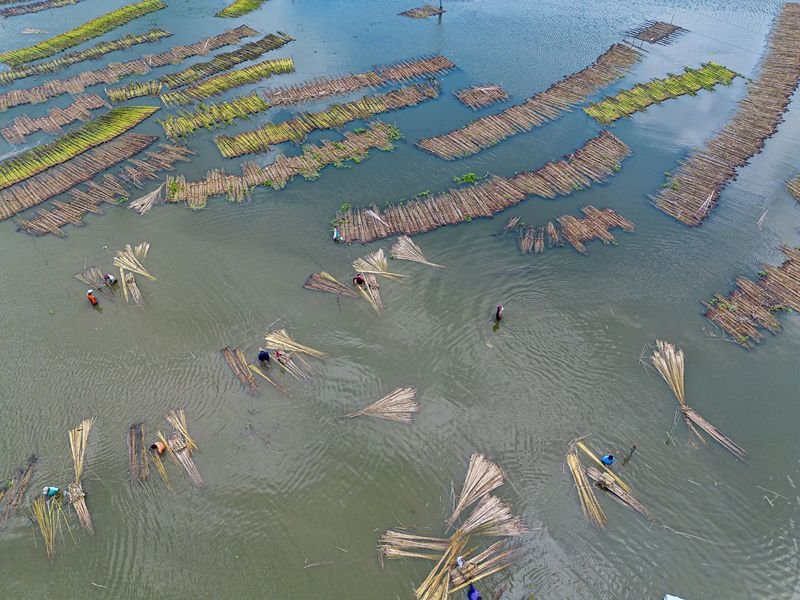
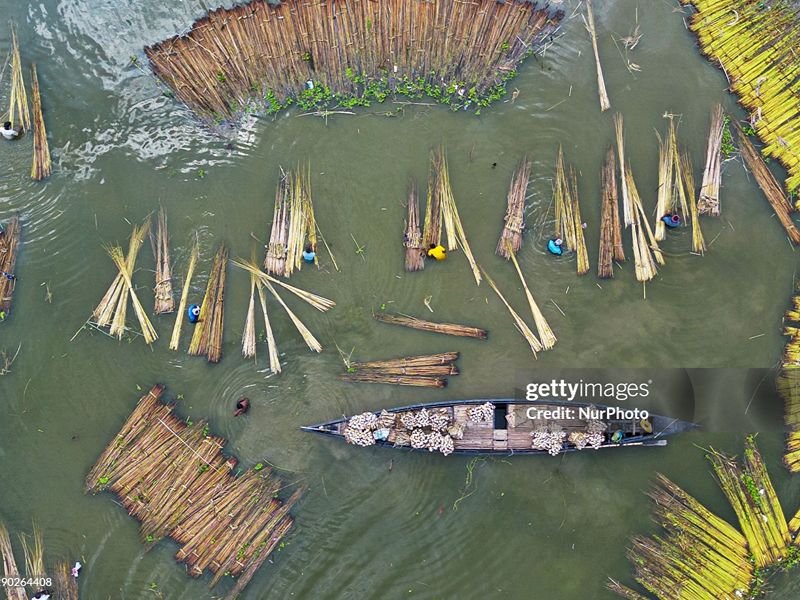
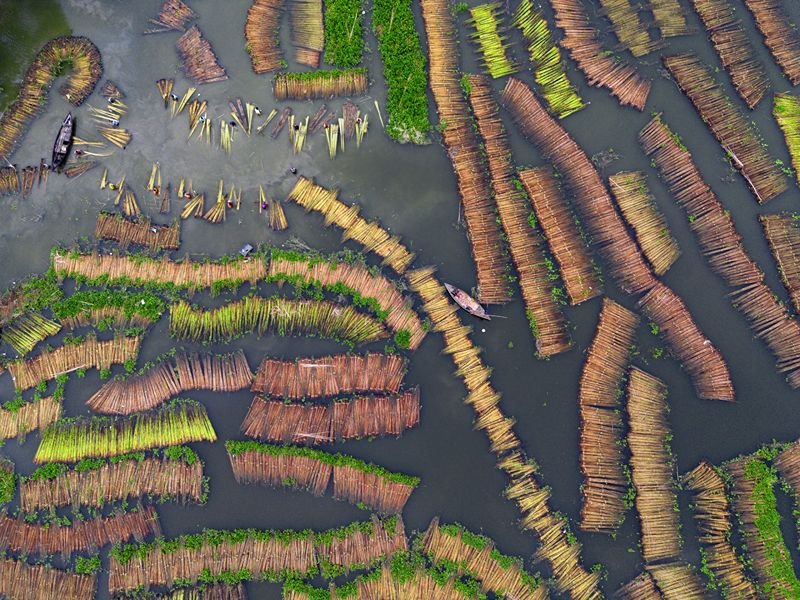
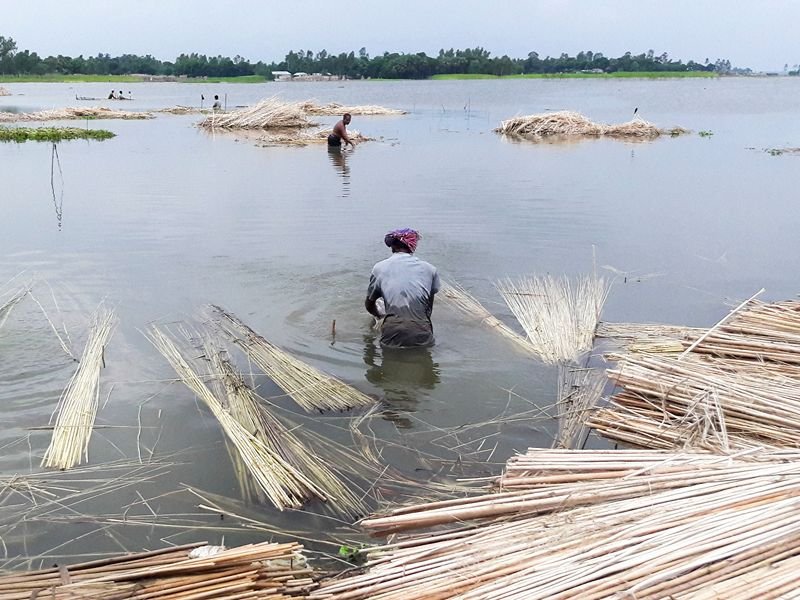
Retting separates the valuable fiber from the woody stem through natural microbial action. Farmers submerge bundled stalks in ponds, canals, or other suitable water. Banglapedia notes that retting under favorable conditions generally takes around 12 to 15 days, although the actual time varies with temperature, water quality, crop condition, and technique.
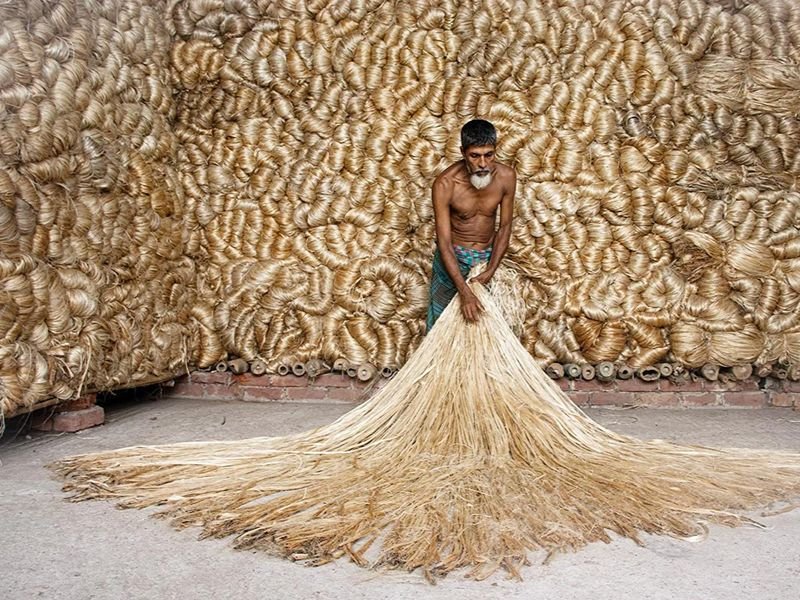
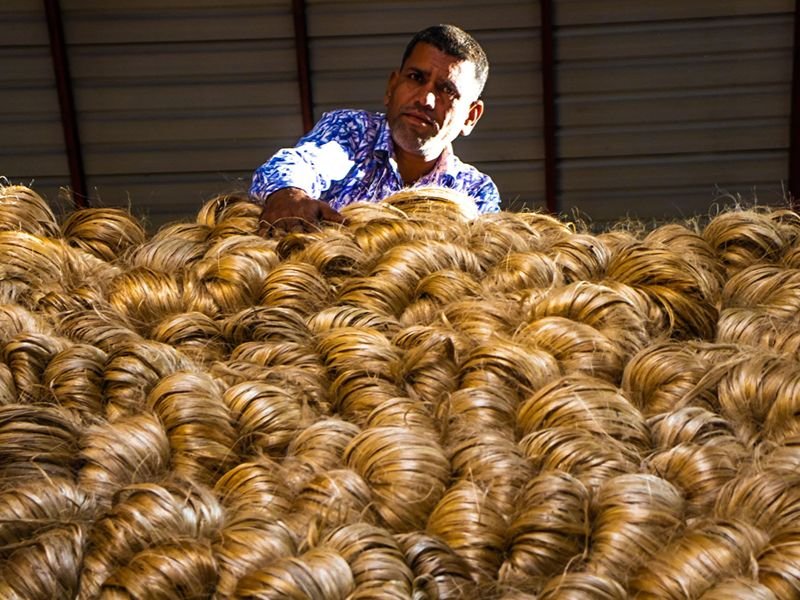
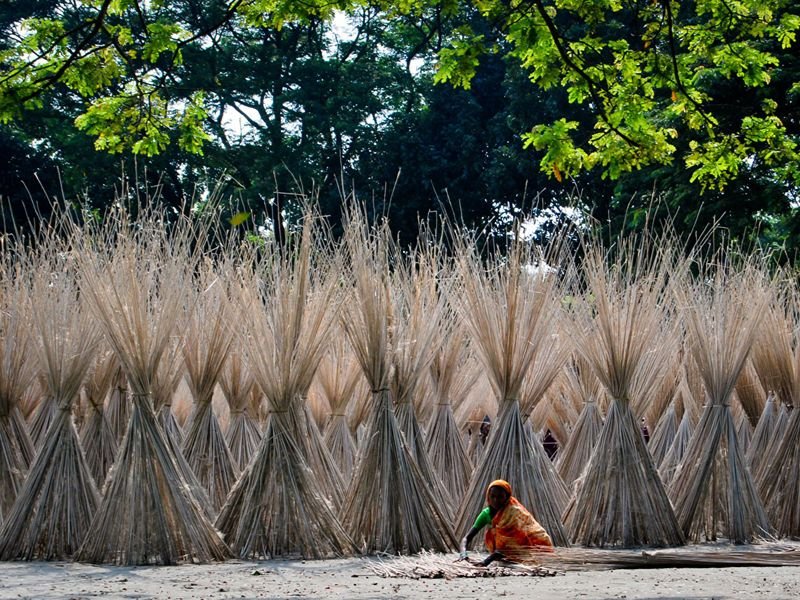
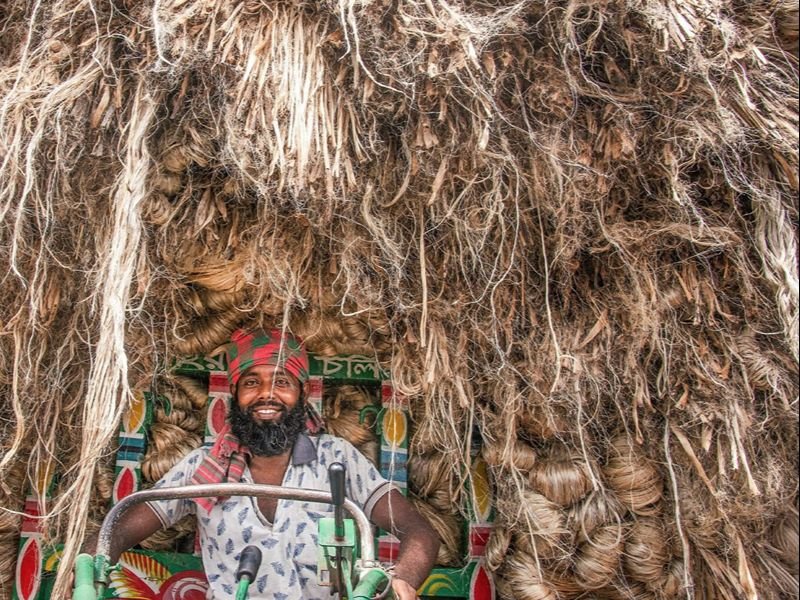
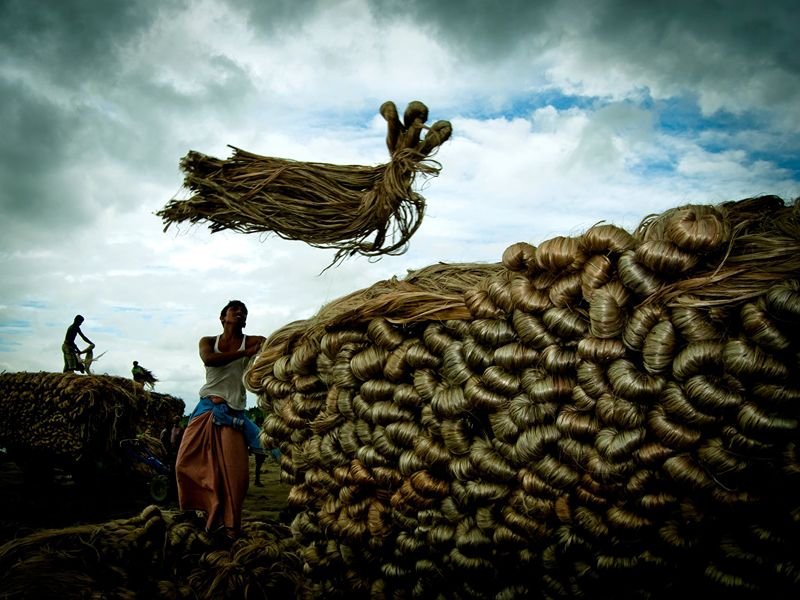
After retting, workers remove the stalks and strip the loosened fibers by hand. They wash the strands, remove excess water, and hang them in the sun to dry. Long pale-golden bundles of drying fiber create one of the most recognizable scenes of the jute season.
The woody inner stalk, known as patkathi, also remains useful. Rural households use it for fuel, fencing, temporary structures, and other practical purposes.
The raw fiber eventually moves into mills and small enterprises that turn it into yarn, sacks, rope, twine, floor coverings, bags, handicrafts, and increasingly diverse modern products.
Jute provides important environmental advantages because the natural fiber is biodegradable. However, the sustainability of a finished product also depends on cultivation methods, retting, processing, dyes, coatings, transport, and final use.
Bangladesh remains one of the world's leading jute-producing countries. Government investment materials identify it as the world's second-largest producer, although using the broader description "one of the world's leading producers and exporters" makes the brochure less dependent on rankings that can change over time.
Immersive Experience
No 360° Videos available
Destination Gallery
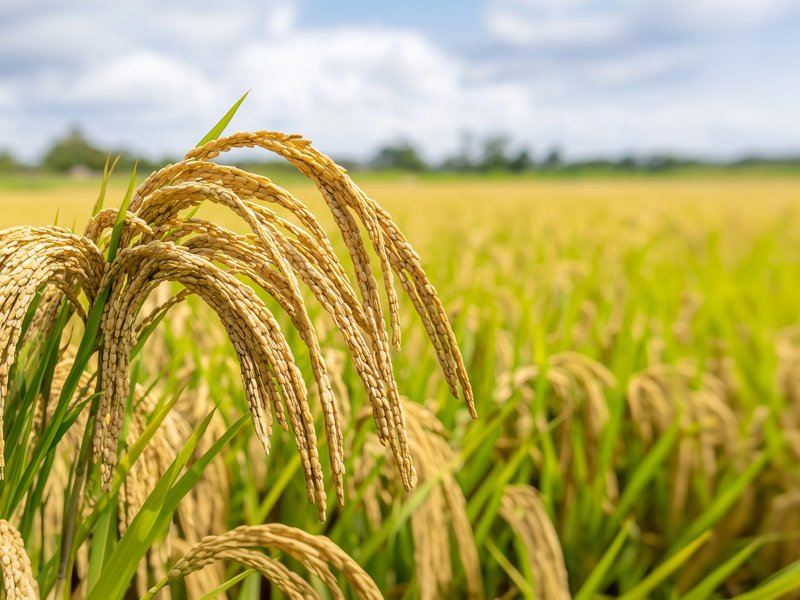
Traditional Rice Harvesting and Planting
The seasonal rhythm behind Bangladesh's staple grain
Explore More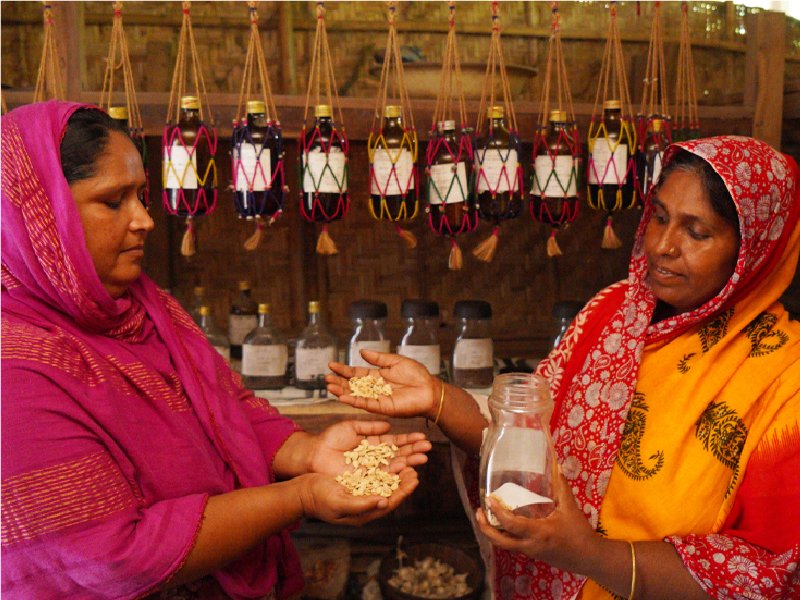
Organic Vegetable Farm Homestays
Biodiversity, local seeds, and slower ways of experiencing rural agriculture
Explore More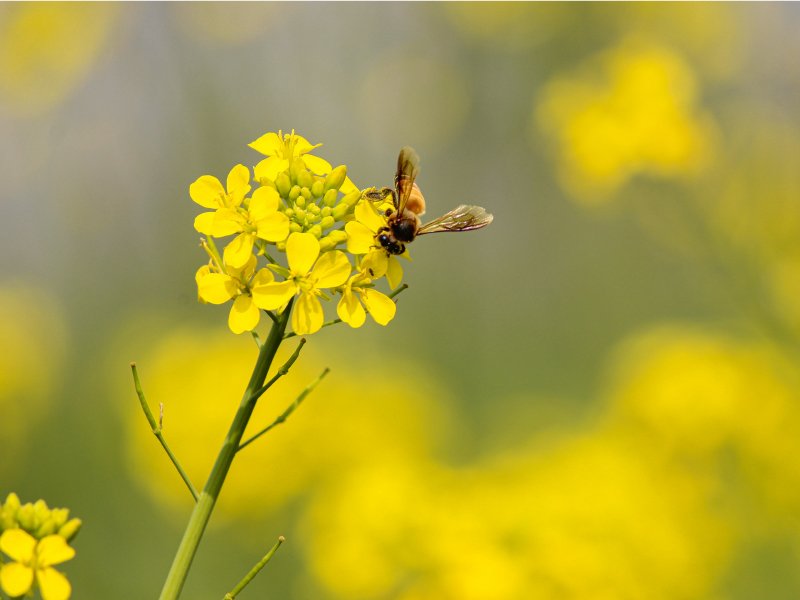
Blooming Mustard Fields Exploration
Bangladesh's golden winter fields and the beekeepers who follow the flowers
Explore More