

Pohela Boishakh
Welcome the Bengali New Year with dawn songs, street art and a UNESCO-recognised procession
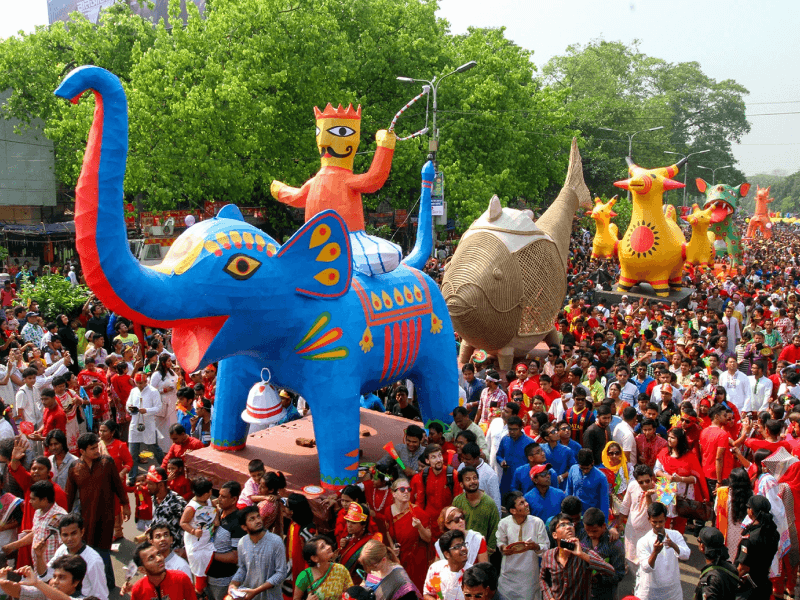
When the sun rises on the 14th of April, it does not merely bring a new day; it awakens the most vibrant, roaring celebration of secular identity in Bangladesh. Pohela Boishakh, the first day of the Bengali New Year, is an unparalleled cultural phenomenon. For an international traveller, it is an invitation to witness the core of the Bengali soul—a spectacular, living tapestry of heritage, art, and unyielding optimism for the future.
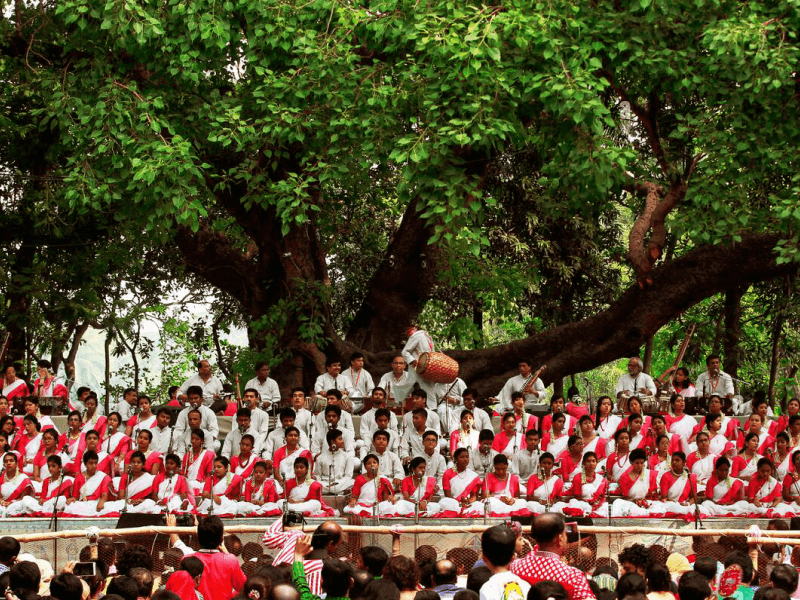
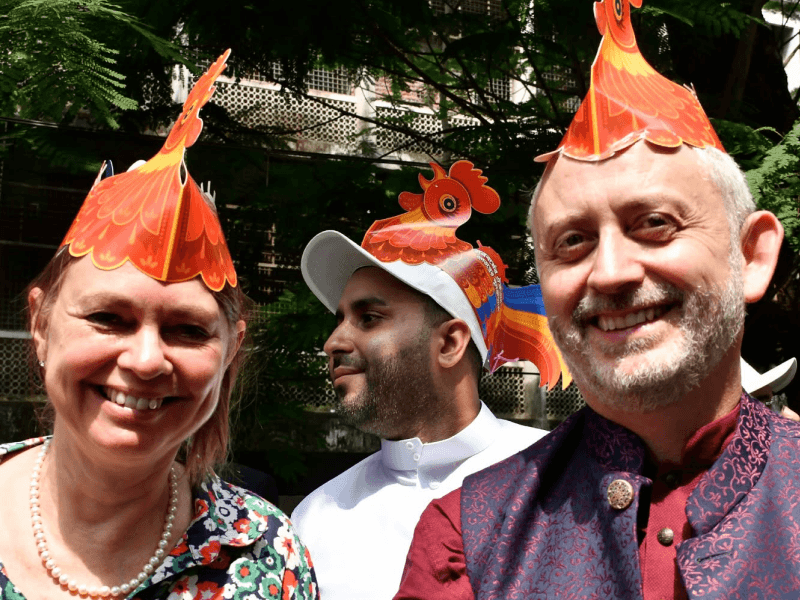
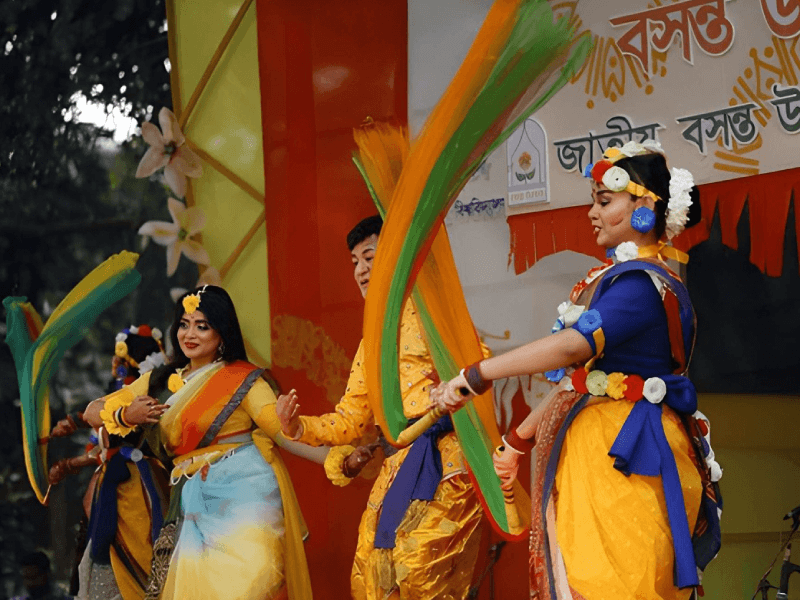
The sensory journey of Pohela Boishakh begins at the break of dawn beneath the ancient banyan tree at Ramna Batamul in Dhaka. Here, a large early-morning audience gathers to hear the cultural organisation Chhayanaut welcome the first light with classical music and Bengali songs of the season. As the melodies float through the morning mist, the visual spectacle is breathtaking. The entire country paints itself in the festive colours of striking red and pristine white. Women look incredibly elegant in traditional sarees adorned with glass bangles and fresh jasmine in their hair, while men step out in crisp, beautifully embroidered panjabis.
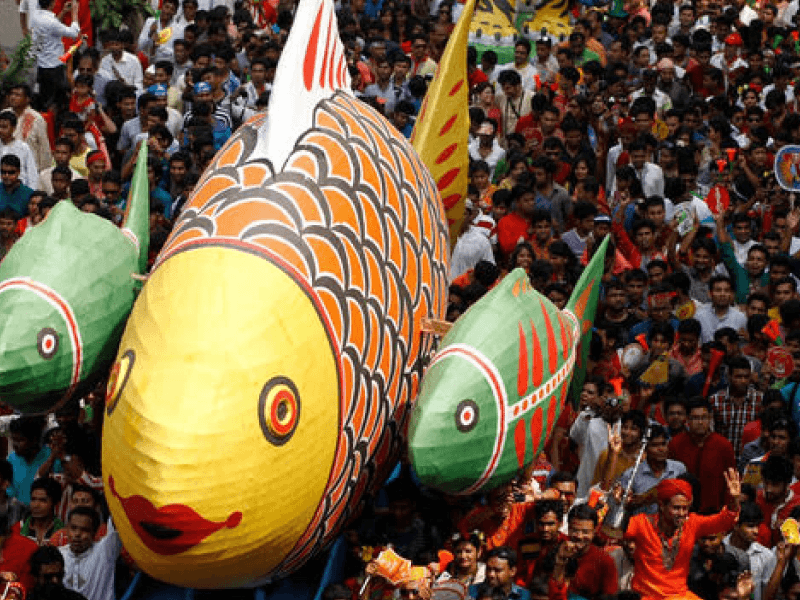
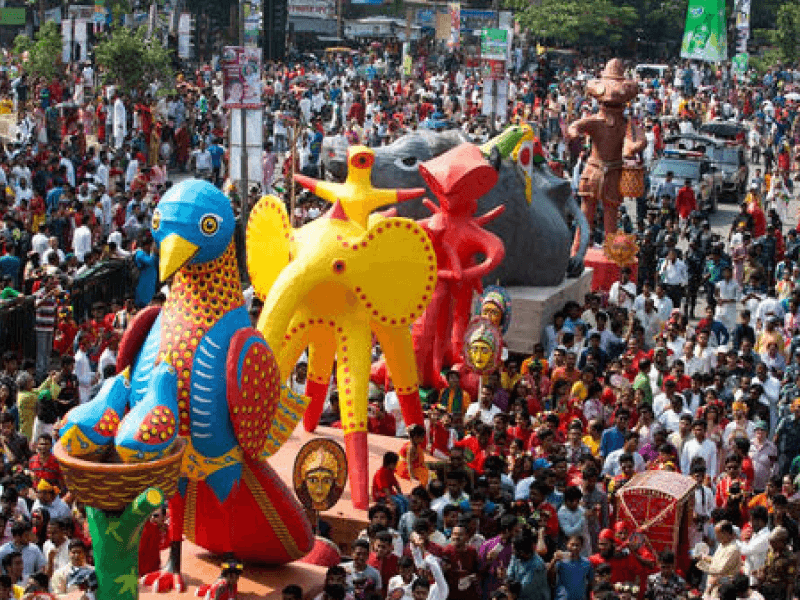
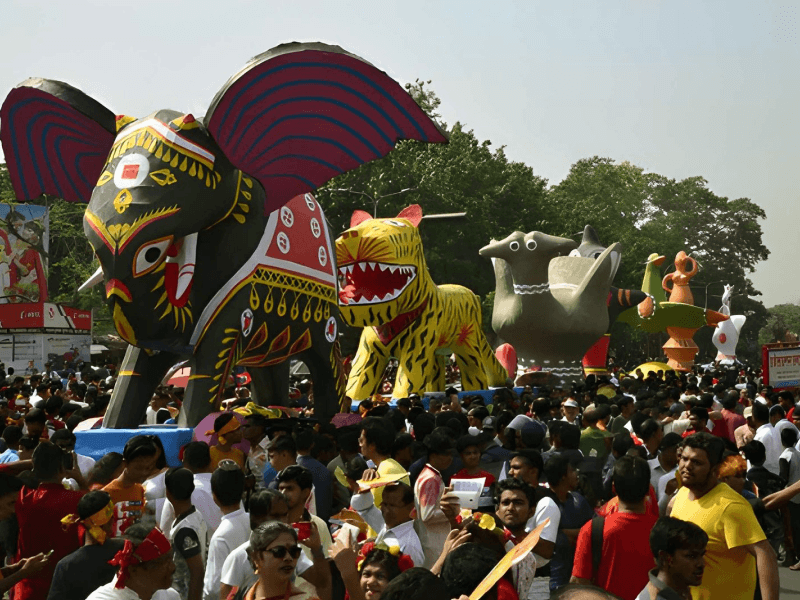
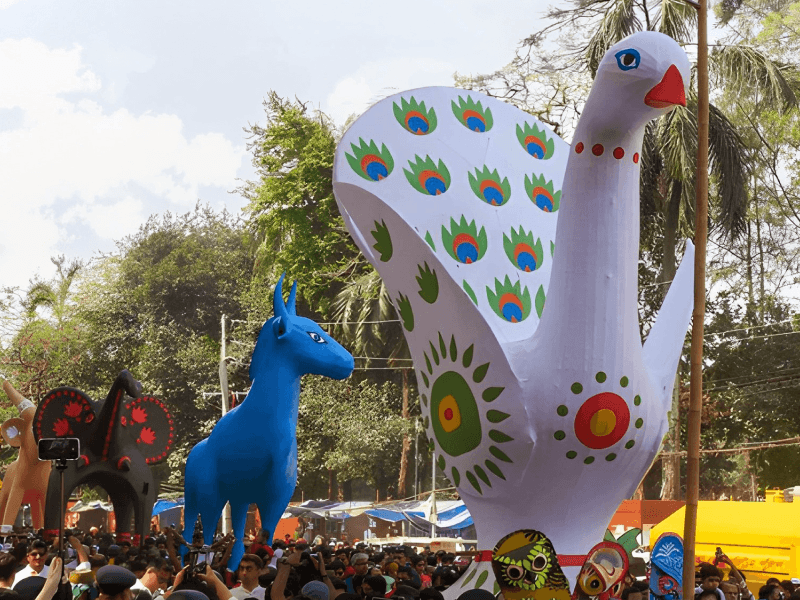
However, the crown jewel of the day—and a breathtaking sight for any global observer—is the Mangal Shobhajatra. Recognized by UNESCO as an Intangible Cultural Heritage of Humanity, this massive, kinetic street parade is organized by the students of the Faculty of Fine Arts at Dhaka University. The streets transform into a moving art gallery featuring colossal, brightly painted masks, giant paper-mâché birds, tigers, and folklore characters. These towering artistic floats are not just visually stunning; they carry deep symbolism, representing the triumph of good over evil, the celebration of courage, and the collective desire for global peace.
To truly experience Pohela Boishakh is to immerse oneself in its rich culinary and rural traditions.
For travelers, the strongest Dhaka route begins before sunrise around Ramna and continues toward the Faculty of Fine Art and TSC after security screening. Mangal Shobhajatra uses masks and floats to express shared hopes and resistance to harmful forces; it is a living cultural procession, not a costume set. Popular foods vary by household and venue, so panta rice and hilsa should be described as familiar choices, not compulsory national practice. Carry water, dress for heat, use only authorised entrances and expect road closures and mobile-network congestion.
Immersive Experience
No 360° Videos available
Destination Gallery
Boshonto Utshob
Meet the first day of Falgun in a blaze of yellow dress, poetry and open-air song
Explore More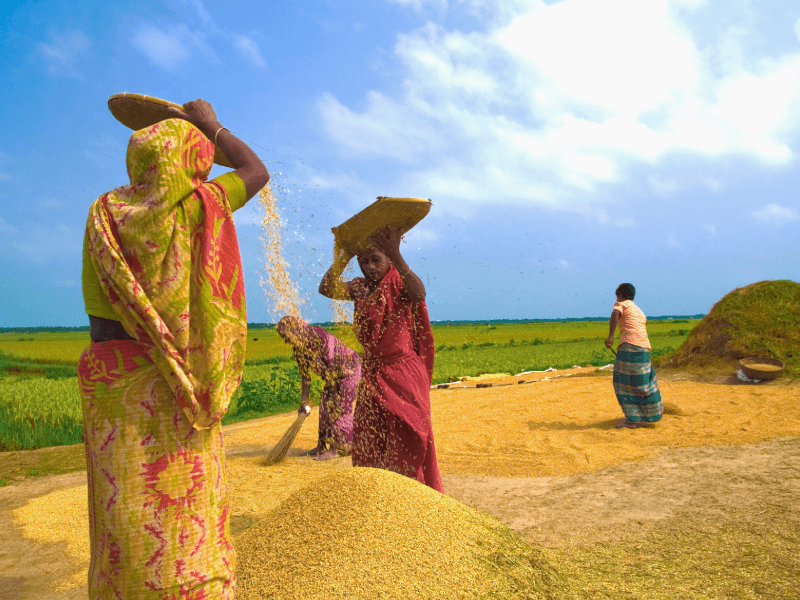
Nobanno Utshob
Follow the new rice harvest from golden fields to pitha, folk song and village fairs
Explore More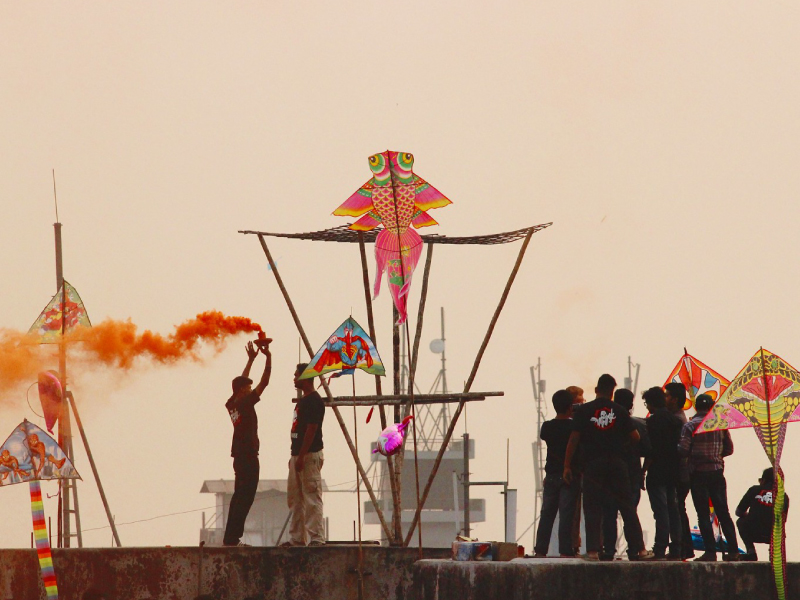
Shakrain
Watch Old Dhaka’s mid-January sky erupt with kites above its tight historic lanes
Explore More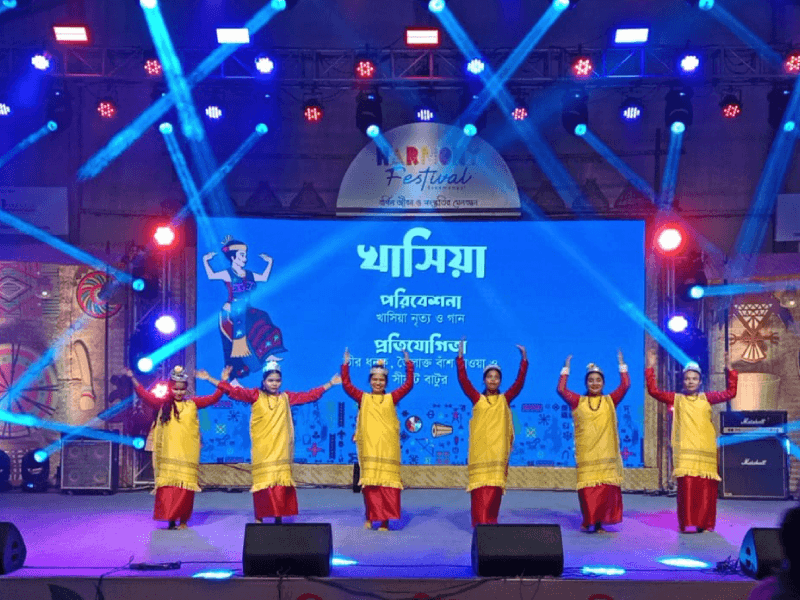
Harmony Festival
Enter Sreemangal’s tea landscape for a celebration of community, craft and cultural coexistence
Explore More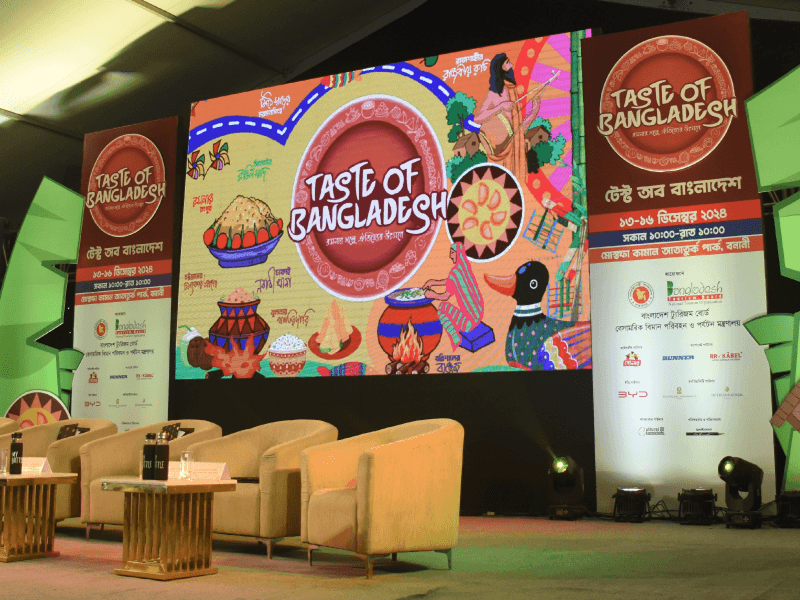
Taste of Bangladesh
Cross Bangladesh by plate, from mezban and shatkora to hilsa, pitha and street snacks
Explore More