

Pohela Boishakh Alpana and Street Murals
Traditional floor art transformed into colorful public celebration
Colors of a New Year. From Rice-Paste Designs to City-Scale Art
Alpana has traveled a remarkable path from domestic ritual art to one of the most visible forms of public decoration in Bangladesh. Historically, women played the leading role in drawing Alpana on floors and courtyards for religious vows, household ceremonies, weddings, seasonal observances, and other important occasions.
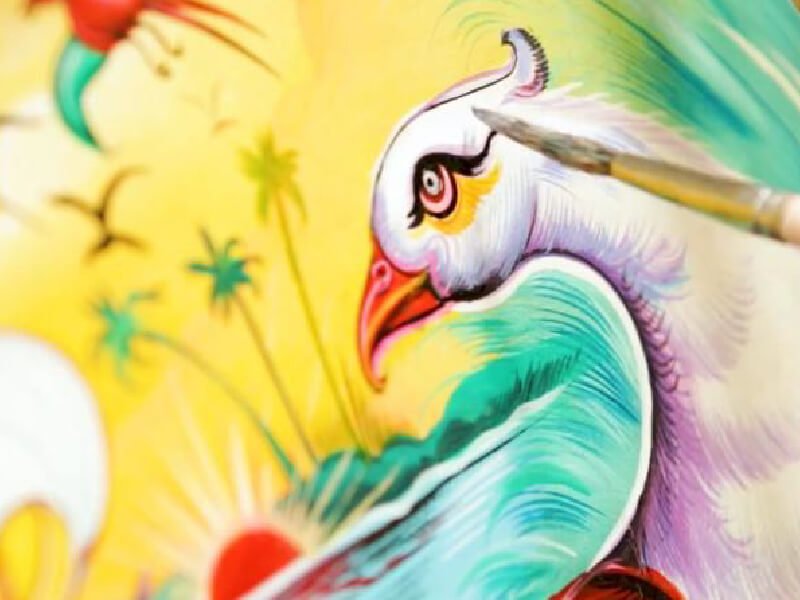
Traditional makers used rice powder or rice paste diluted with water to create white designs on darker earthen surfaces. Depending on the occasion, artists also used materials such as turmeric, vermilion, ash, burnt earth, and natural color powders. Common motifs include rice stems, lotus flowers, fish, footprints, owls, plows, creepers, and geometric forms.
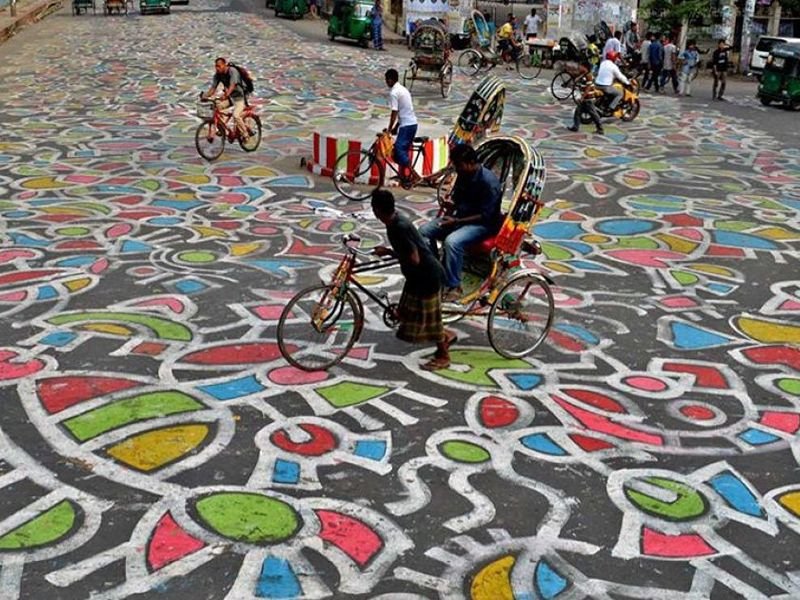
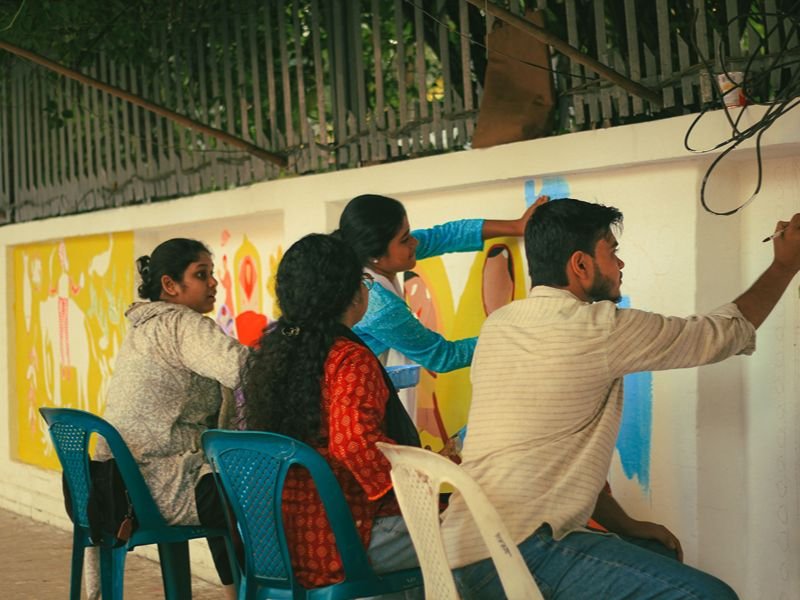
Over time, Alpana moved beyond domestic and ritual settings. Artists began decorating public streets, memorial approaches, university campuses, cultural venues, and festival grounds. Modern public Alpana often uses enamel, acrylic, or other commercial paint rather than traditional rice paste.
Pahela Boishakh gives this evolution its largest public stage. Artists have created large-scale road paintings in Dhaka and other districts, but these projects vary from year to year. They do not form one guaranteed annual multi-mile painting on Manik Mia Avenue.
A striking example came in 2024, when the Alponay Boishakh 1431 project created public paintings at Manik Mia Avenue in Dhaka and Shib Bari in Khulna, while artists painted a 14-kilometer road between Mithamoin and Austagram in Kishoreganj as part of an attempt to create an exceptionally long Alpana.
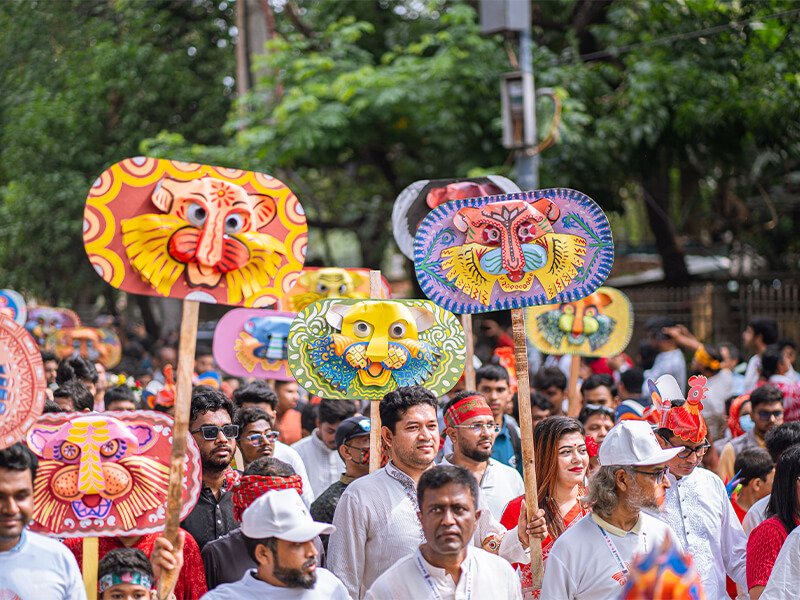
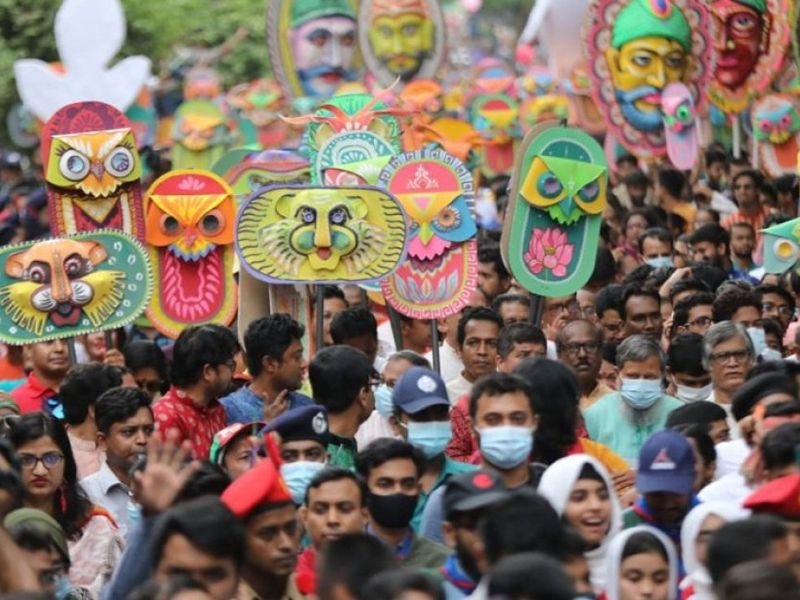
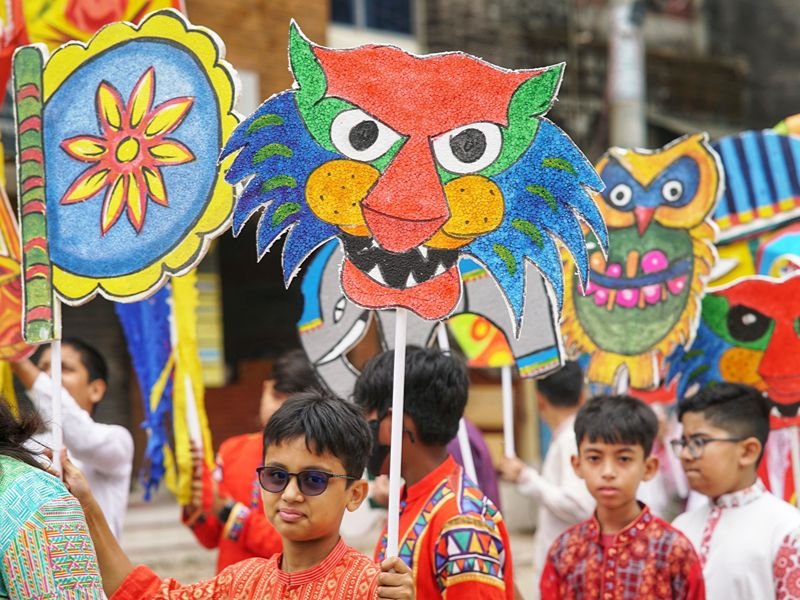
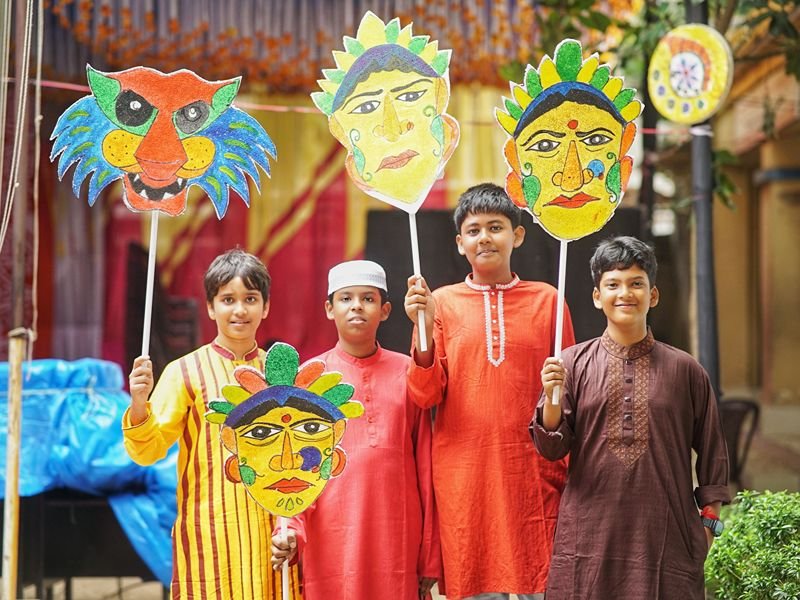
The visual culture of Bengali New Year also connects closely with the procession organized by teachers and students of the University of Dhaka's Faculty of Fine Art. UNESCO inscribed Mangal Shobhajatra on Pahela Baishakh in 2016. The procession began in 1989 and uses masks, large crafted figures, floats, paintings, and folk imagery to express solidarity, courage, hope, and resistance to destructive forces.
The name now requires current context. In April 2026, the Bangladesh government announced the official name Baishakhi Shobhajatra for the procession. UNESCO, however, continues to list the heritage element under its registered title, Mangal Shobhajatra on Pahela Baishakh.
Immersive Experience
No 360° Videos available
Destination Gallery
UNESCO Recognized Rickshaw Art
Vibrant urban folk art carried through the streets of Dhaka
Explore More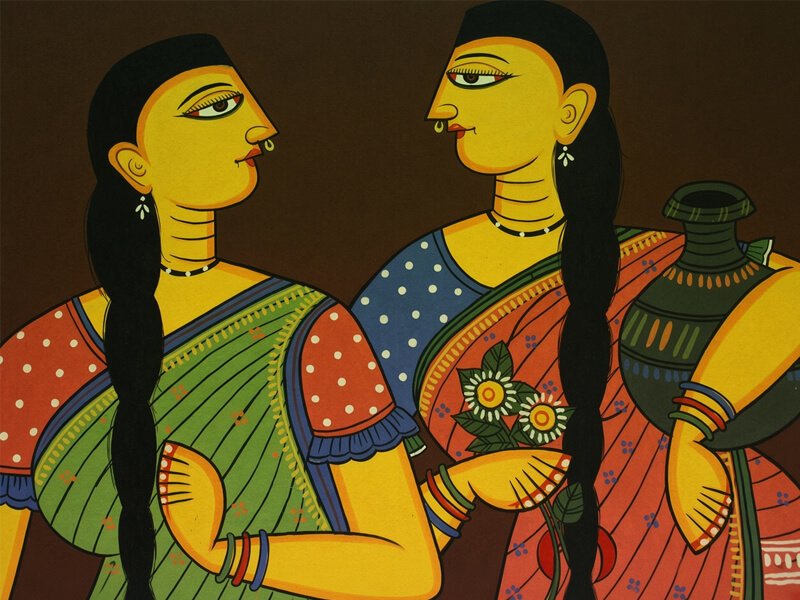
Traditional Patachitra Folk Paintings
Scroll paintings that bring stories to life through image and song
Explore More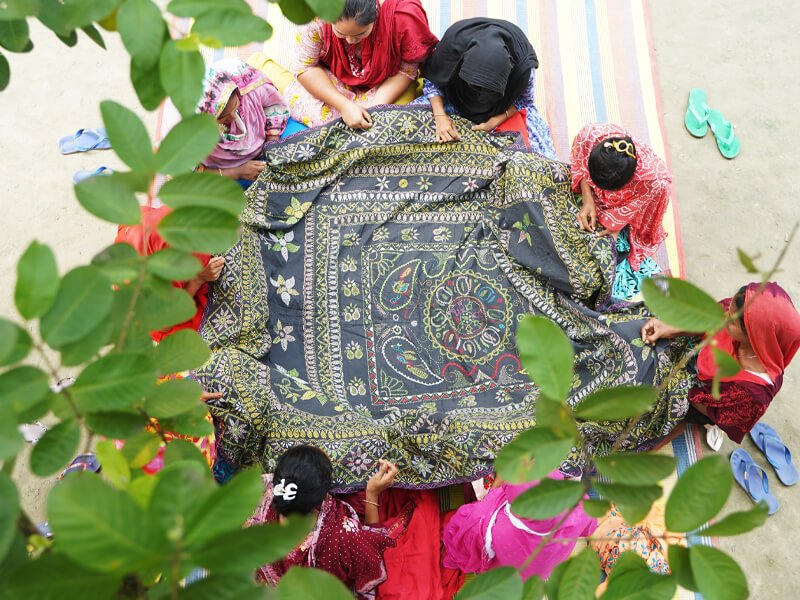
Nakshi Kantha as Visual Storytelling
Embroidered textiles shaped by memory, utility, and rural imagination
Explore More