

Nakshi Kantha as Visual Storytelling
Embroidered textiles shaped by memory, utility, and rural imagination
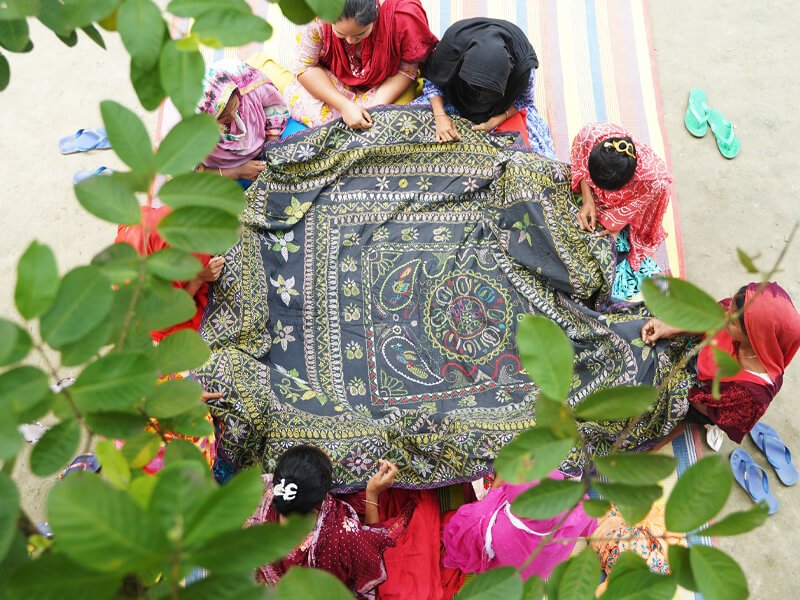
Threads of Memory. Stories, Patterns, and Everyday Life Stitched by Hand
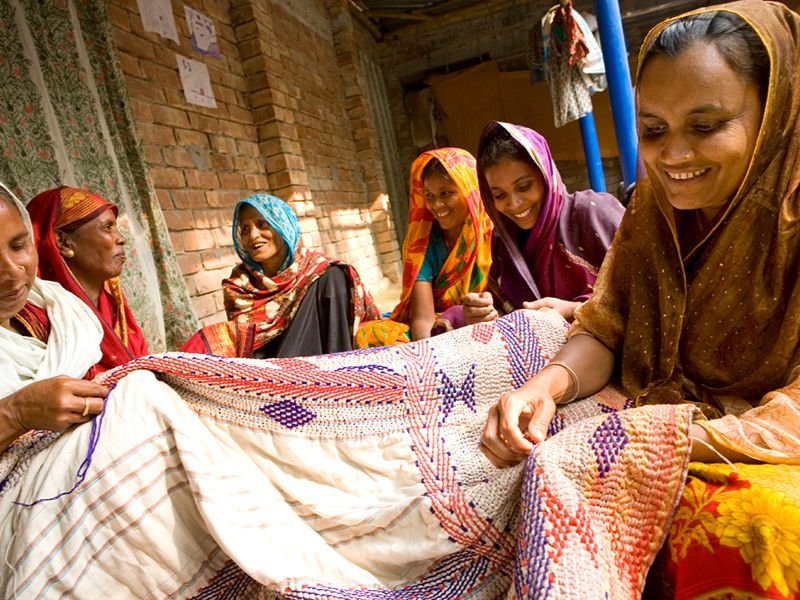
Nakshi Kantha transforms simple layers of cloth into one of Bengal's most expressive textile traditions. Rural women historically developed the craft within the household, combining practical quilt making with embroidery, pattern, symbolism, and personal creativity.
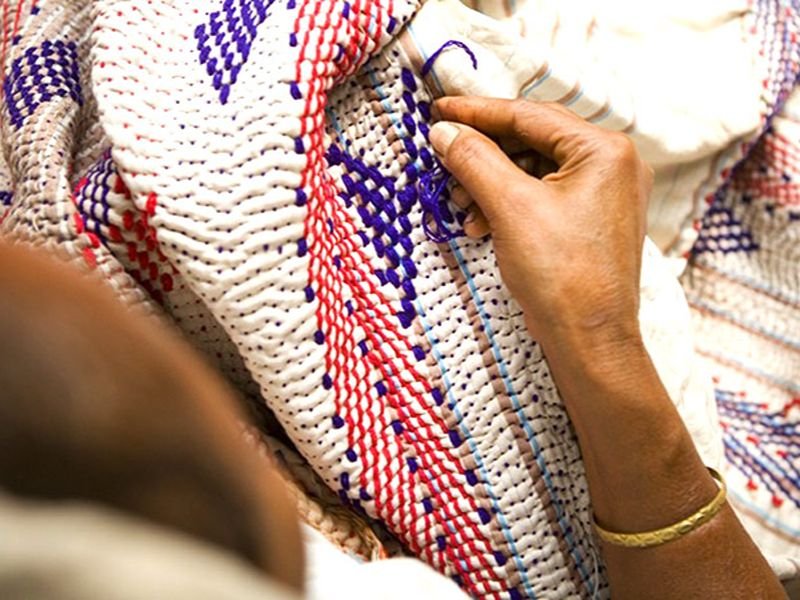
Traditional makers reused old saris, dhotis, lungis, and other cotton cloth. Depending on the desired thickness, they layered roughly three to seven pieces and joined them with running stitches. Women often pulled colored thread from old sari borders and reused it for decorative motifs and edging. The repeated running stitch produced the softly rippled surface that remains closely associated with kantha.
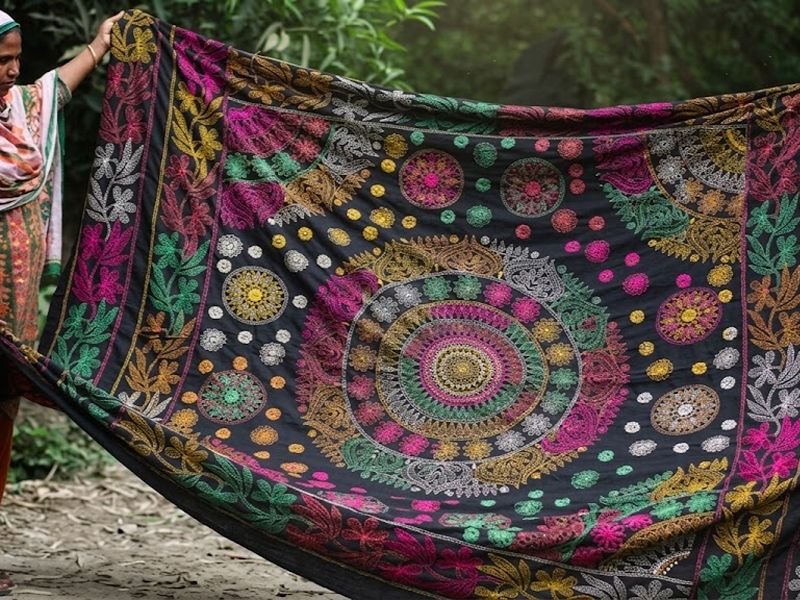
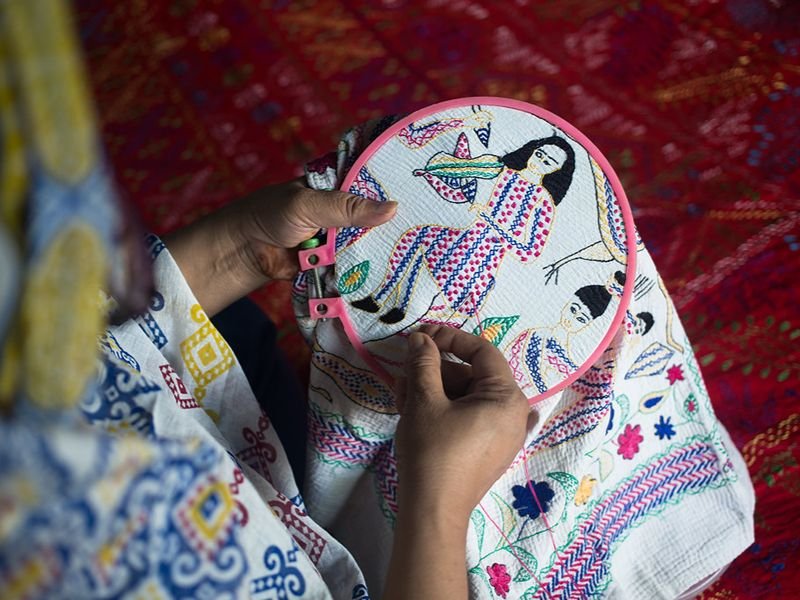
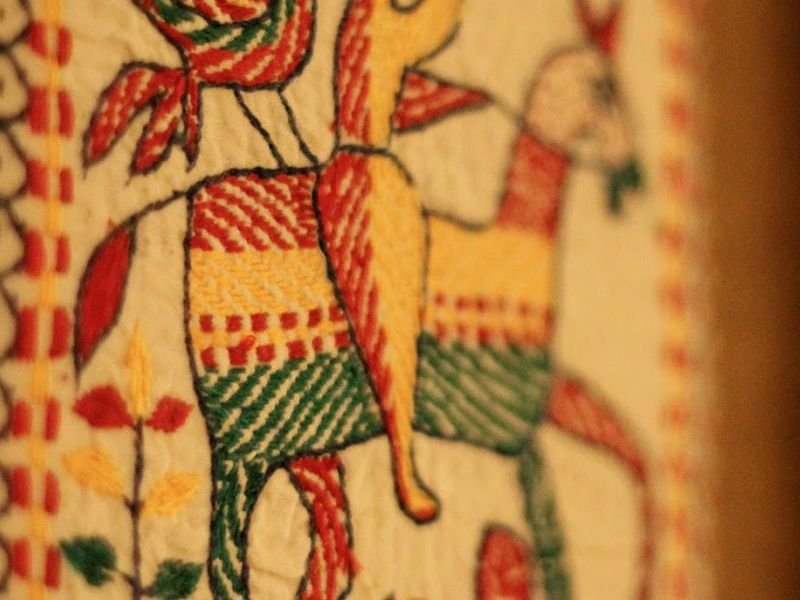
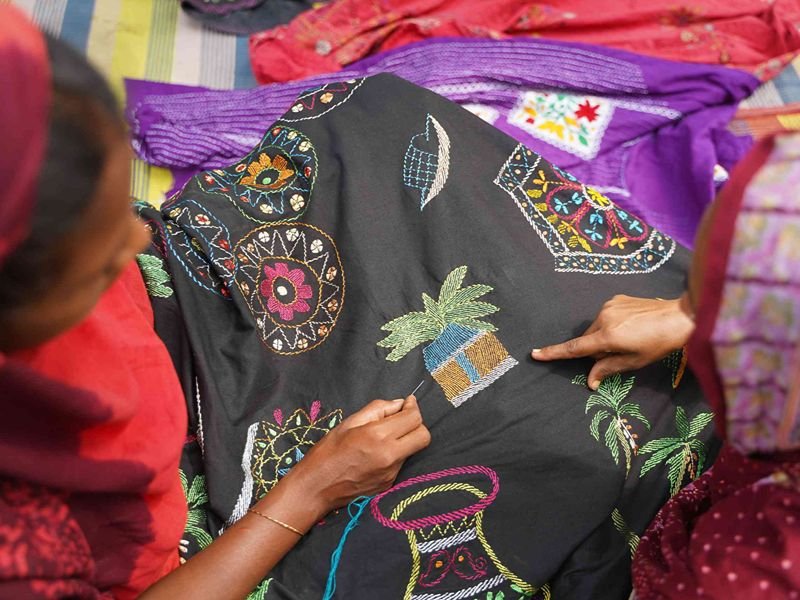
Not every kantha tells a complete visual story. Most traditional kanthas served practical household purposes, while more elaborate examples developed rich decorative or narrative imagery. Artists stitched lotus forms, trees, birds, fish, horses, elephants, boats, palanquins, kitchen utensils, flowers, ceremonial scenes, mythology, and moments from ordinary life.
Some kanthas also contain words, blessings, names, or captions. These details show how embroidery could become a form of personal expression. Still, it would be misleading to call every piece an autobiography or to assign one rigid symbolic meaning to every motif.
The tradition gained a powerful literary association through Jasimuddin's Naksi Kanthar Math, published in 1929. The narrative poem used the embroidered quilt as a central image in a tragic rural love story and helped popularize the term Nakshi Kantha among educated Bengali readers.
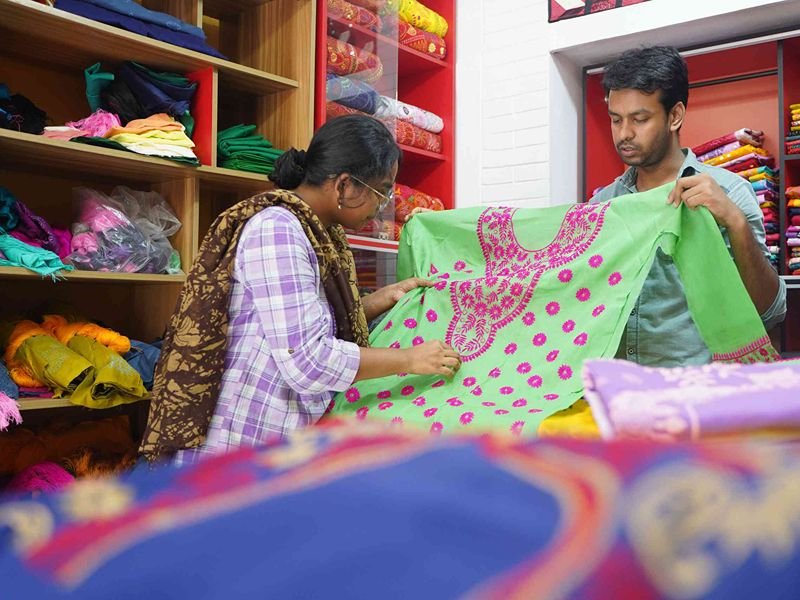
Commercial production has changed the craft considerably. Contemporary makers may use new cloth, commercial embroidery thread, transferred patterns, and organized supply networks. Jamalpur has become a major modern commercial center. In 2024, The Business Standard reported roughly 300 to 400 physical and online Nakshi Kantha shops in Jamalpur town, with large numbers of rural women producing embroidered goods from their homes.
The modern industry now produces quilts, bedcovers, garments, wall pieces, bags, cushions, and fashion products. These adaptations have created new income opportunities while also changing the materials and working systems of a craft that began as household reuse.
Immersive Experience
No 360° Videos available
Destination Gallery
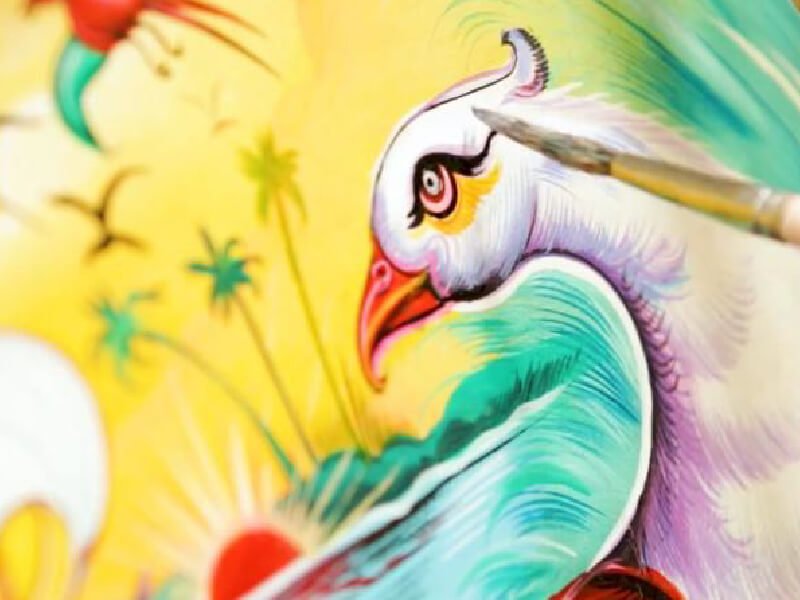
UNESCO Recognized Rickshaw Art
Vibrant urban folk art carried through the streets of Dhaka
Explore More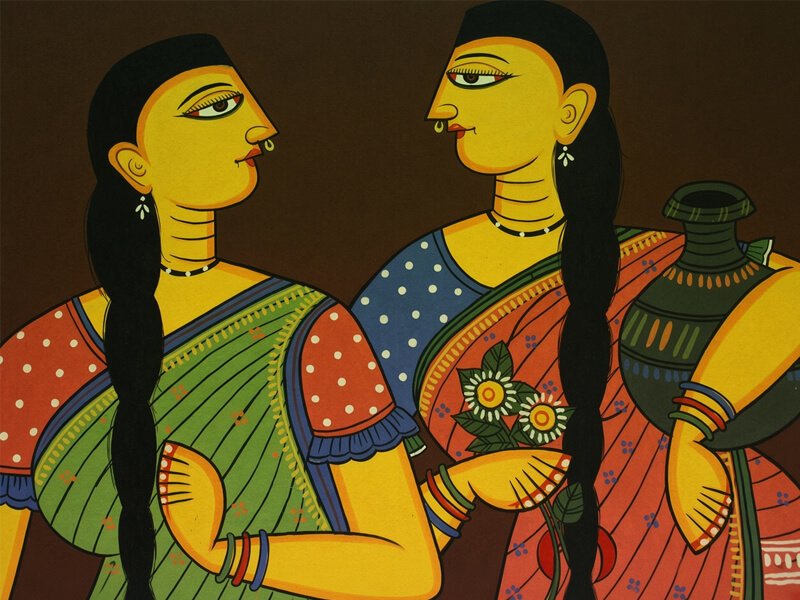
Traditional Patachitra Folk Paintings
Scroll paintings that bring stories to life through image and song
Explore More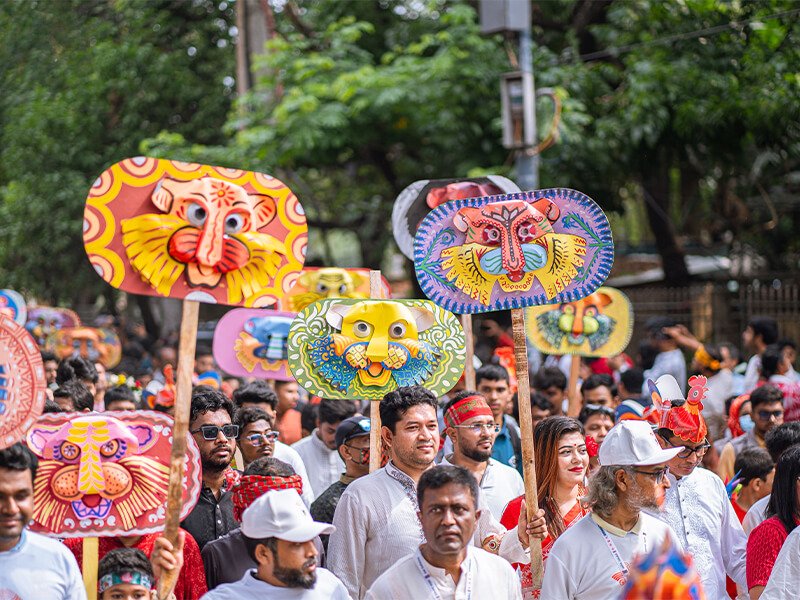
Pohela Boishakh Alpana and Street Murals
Traditional floor art transformed into colorful public celebration
Explore More