

Dhaka University & Charukala
A campus shaped by education, political movements, architecture, and art
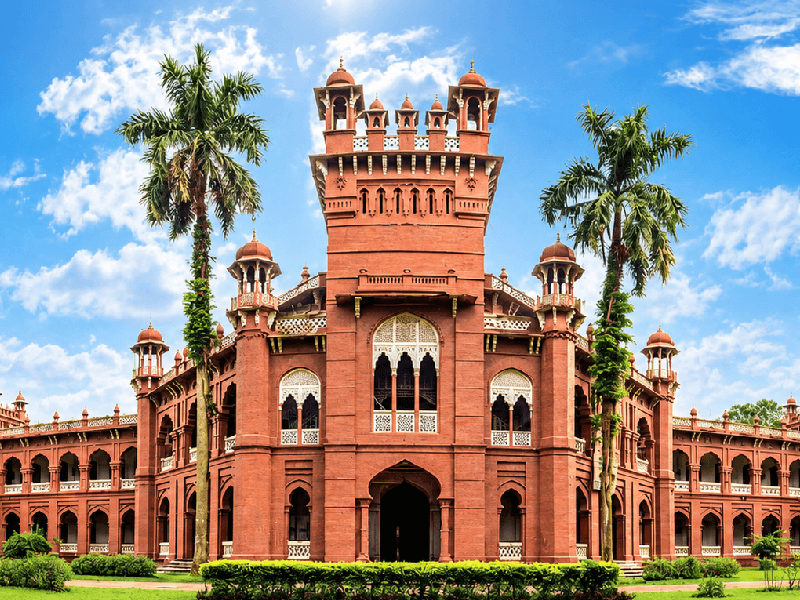
Campus of Ideas. Walk Through a Century of Art and Public History.
The University of Dhaka began its journey on July 1, 1921. Over the following century, the campus became one of Bangladesh's most important spaces for higher education, political activism, literature, art, and cultural debate.
Its role in the Language Movement remains especially significant. The university's own historical record states that Dhaka University played a central role in the 1952 movement that ultimately helped secure recognition of Bangla as a state language of Pakistan. Students and teachers also participated in later democratic, nationalist, and independence movements.
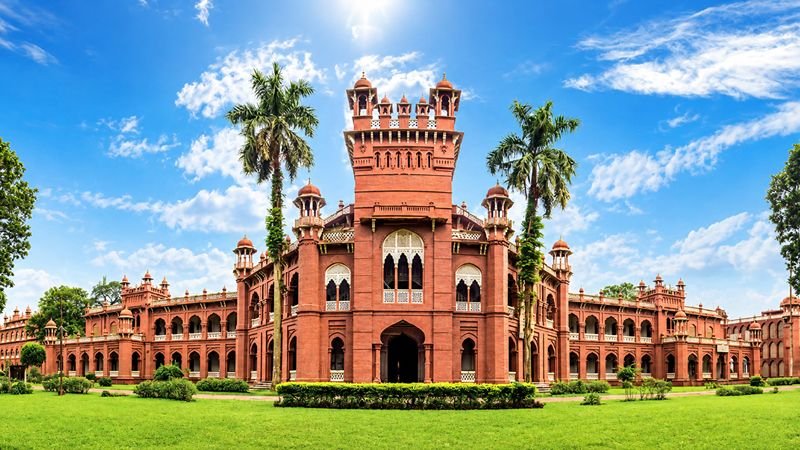
Curzon Hall provides one of the campus's most distinctive architectural landmarks. Lord Curzon laid its foundation in 1904. After the University of Dhaka opened, the building became part of its science section. Banglapedia describes the architecture as a blend of European and Mughal elements, visible in the red-brick facade, arches, domes, deep eaves, and decorative details.
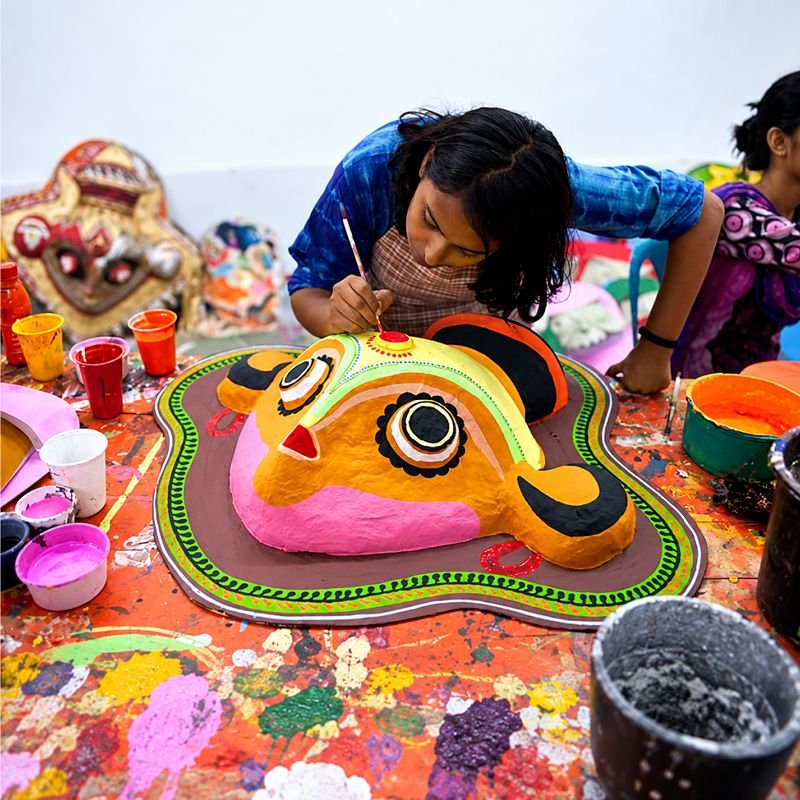
The Faculty of Fine Art, commonly called Charukala, offers a different architectural experience. Shilpacharya Zainul Abedin established the Government Institute of Art in 1948, which later developed into today's Faculty of Fine Art. Architect Muzharul Islam designed its Shahbagh complex, constructed in the 1950s, with low buildings, shaded walkways, courtyards, trees, and open spaces that connect art education with the landscape.
The faculty also plays a central role in the Bengali New Year procession. UNESCO inscribed Mangal Shobhajatra on Pahela Baishakh in 2016 and identifies teachers and students of the Faculty of Fine Art as the practitioners and organizers of the tradition.
There is an important current terminology update. In April 2026, the government announced that the procession would officially be called Baishakhi Shobhajatra. UNESCO's heritage listing, however, continues to carry the registered name Mangal Shobhajatra on Pahela Baishakh.
Immersive Experience
No 360° Videos available
Destination Gallery
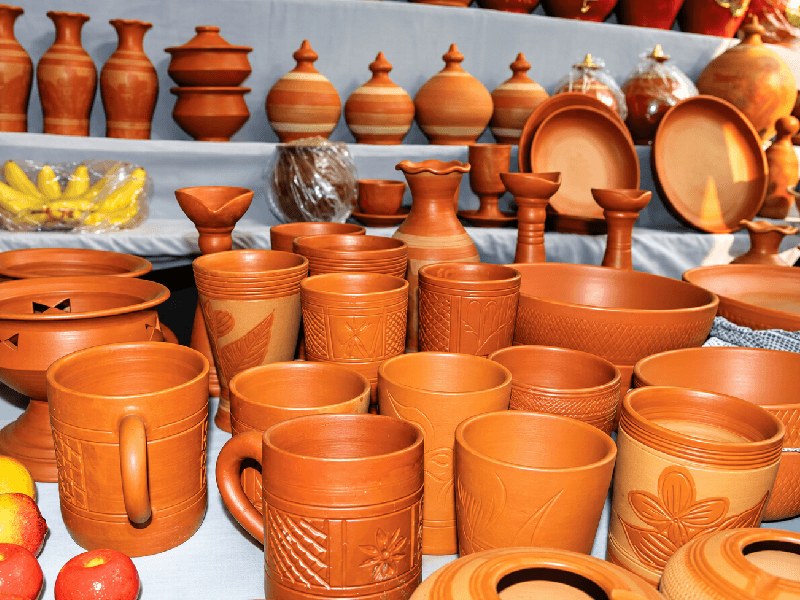
Shopping for Bangladeshi Crafts
Heritage textiles, artisan traditions, and contemporary Bangladeshi design
Explore More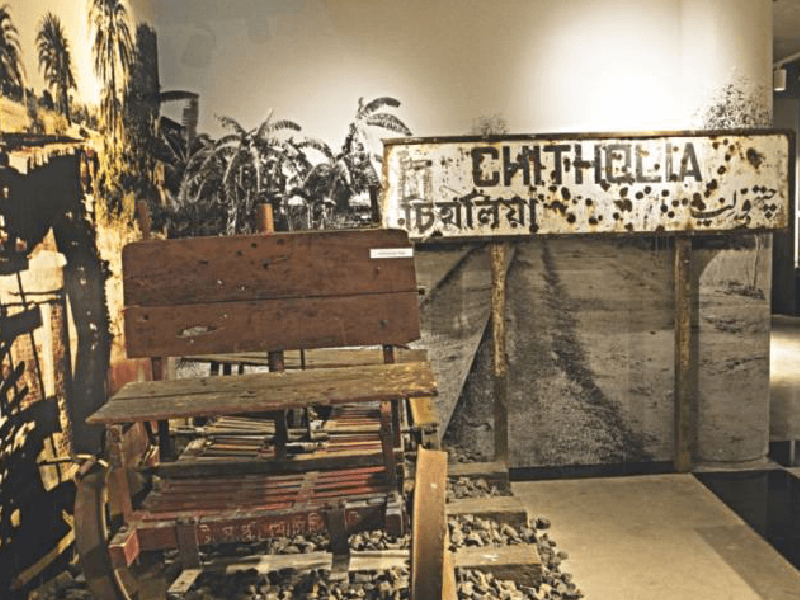
The Liberation War Museum
Documents, objects, and memories of Bangladesh's struggle for independence.
Explore More