
Explore Bangladesh
Chakma
The largest ethnic tribe in Bangladesh
Resilient and Vibrant Chakma Heritage.
The Chakma community constitutes the largest small ethnic group in Bangladesh, possessing a rich and enduring cultural legacy that significantly enhances the nation's diversity. Known for their agricultural resilience and distinct artistic traditions, they have maintained their unique way of life for centuries amidst the rolling landscapes of the country's southeastern borderlands.
The Chakma predominantly reside in the verdant valleys and hill ranges of the Chittagong Hill Tracts, with their population largely concentrated within the districts of Rangamati and Khagrachhari. Historically, they maintain a distinct administrative and social structure known as the Chakma Circle. This traditional system is overseen by the Chakma Raja, a hereditary chief whose leadership and status have been historically recognized by the state.
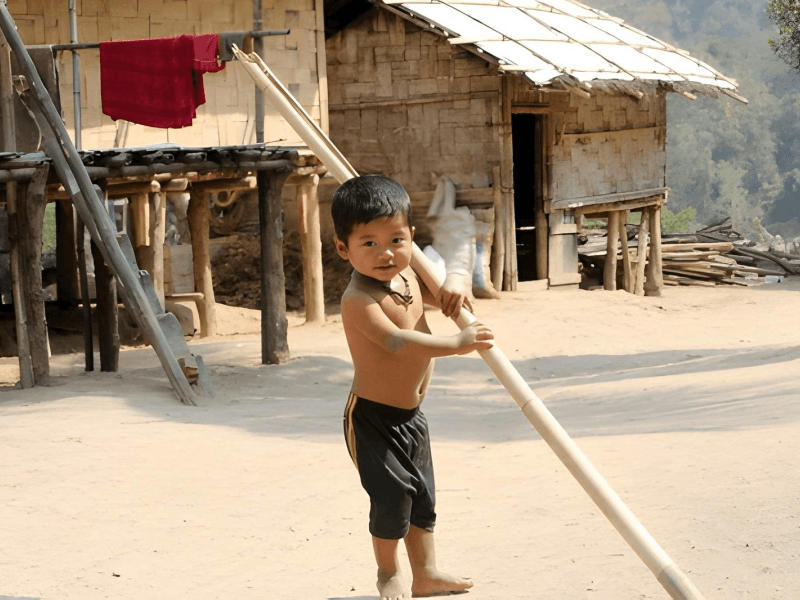
Unlike some of the matrilineal groups found elsewhere in Bangladesh, the Chakma follow a patriarchal social structure where lineage, property, and family titles are passed down through the male line. Their traditional village unit, known as a para, is tightly knit and governed by a local headman or Karbari, who plays a crucial role in dispute resolution and guiding community affairs. Historically, the Chakma economy was deeply reliant on jhum (shifting) cultivation across the steep hill slopes, an ancient and sustainable agricultural practice carefully synchronized with the monsoon rains. Today, while many have transitioned into modern professions and permanent plough agriculture in the valleys, their fundamental connection to the land and the rhythm of the agrarian calendar remains a cornerstone of their social identity.
In terms of language, Chakma stand apart from their Tibeto-Burman-speaking neighbors in the hills. They speak their own native tongue; often referred to as Changma Vaj, which belongs to the Indo-Aryan language family, giving it structural ties to Eastern Indo-Aryan languages. The language is traditionally written in a unique, Brahmic-derived alphabet known as the Ajhā Pāṭh script. While the Bengali script is frequently used today, concerted efforts by community leaders, alongside government educational initiatives, are actively working to preserve and revitalize the teaching of their indigenous script to younger generations.
Spiritually, the Chakma are predominantly devoted followers of Theravada Buddhism. Monasteries, locally called Kiyang, are central to village life, and Buddhist monks (Bhikkhus) are highly revered. However, their religious practices represent a beautiful cultural syncretism, seamlessly blending orthodox Buddhist teachings with much older animist traditions and nature worship. This dual heritage is evident in their daily lives, where they maintain reverence for local spirits and conduct traditional rituals aimed at appeasing the forces of the forest and rivers to ensure bountiful harvests and protect the community from illness.
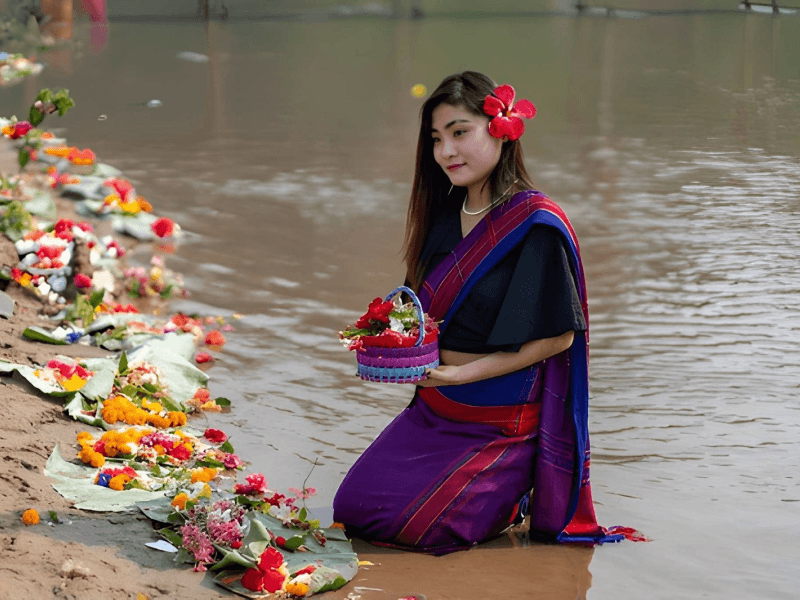
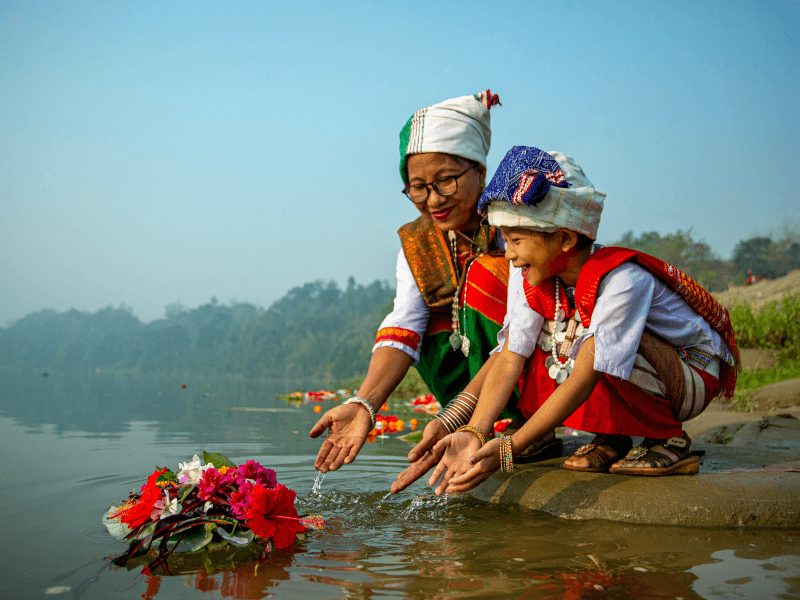
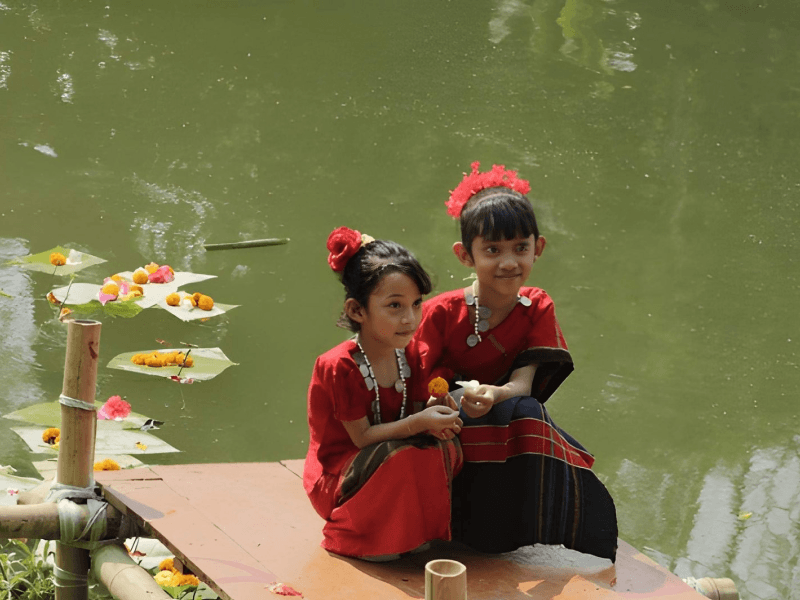
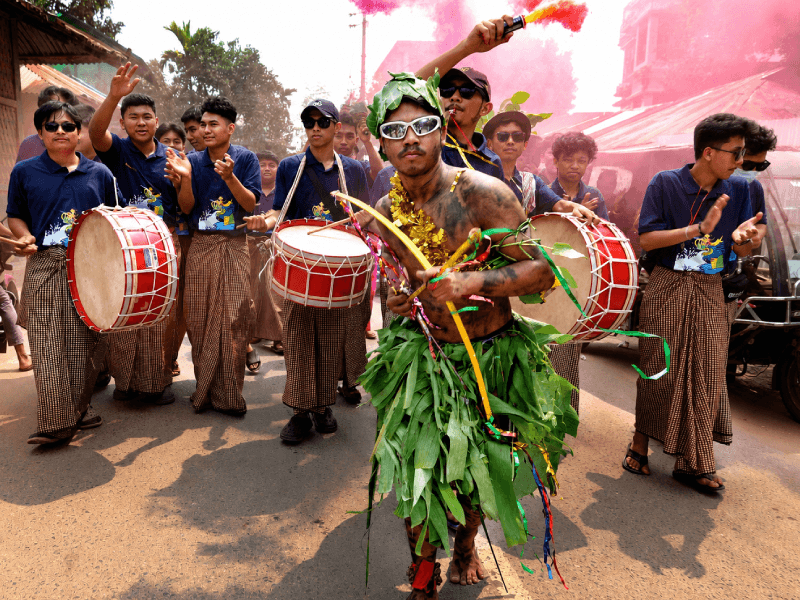
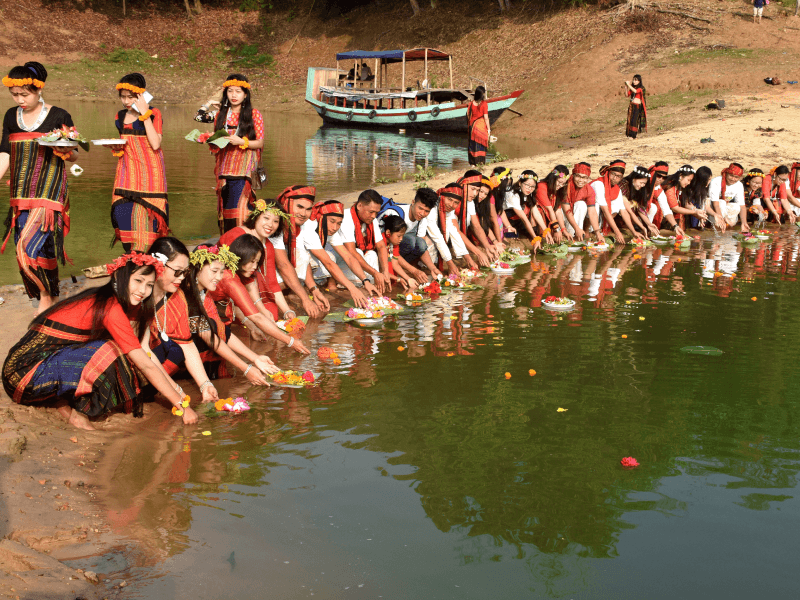
The cultural vitality of the Chakma is most spectacularly displayed during Bizu (or Biju), their premier annual festival. Celebrated over three days in mid-April, Bizu marks the end of the Bengali calendar year and the dawn of a new agricultural cycle. The festival begins with Phool Bizu, a day dedicated to nature where homes are cleaned and flowers are floated on local rivers as a deeply symbolic offering of gratitude and purification. The second day, Mul Bizu, is the heart of the celebration, involving widespread feasting, traditional sports, and visits to neighboring homes to strengthen social bonds. The festival concludes with Gojje Pojje Bizu, a day reserved for rest and seeking blessings from the community's elders.
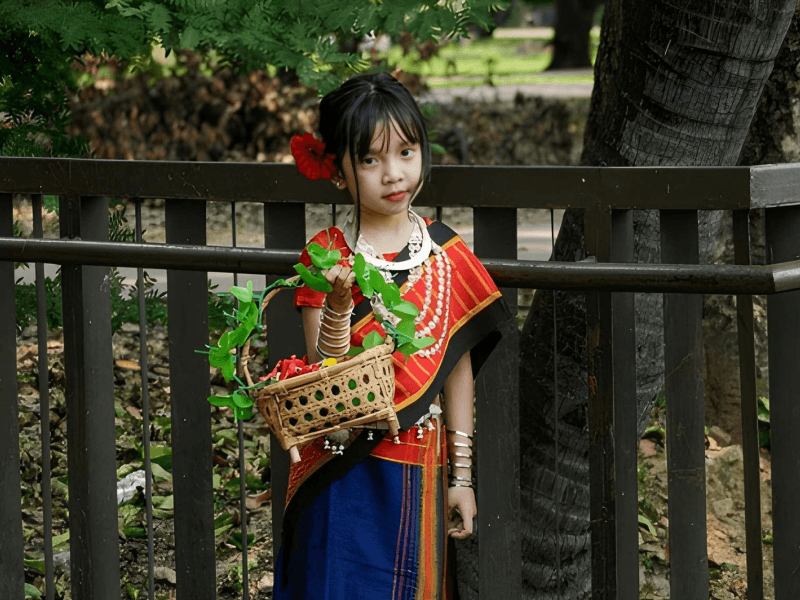
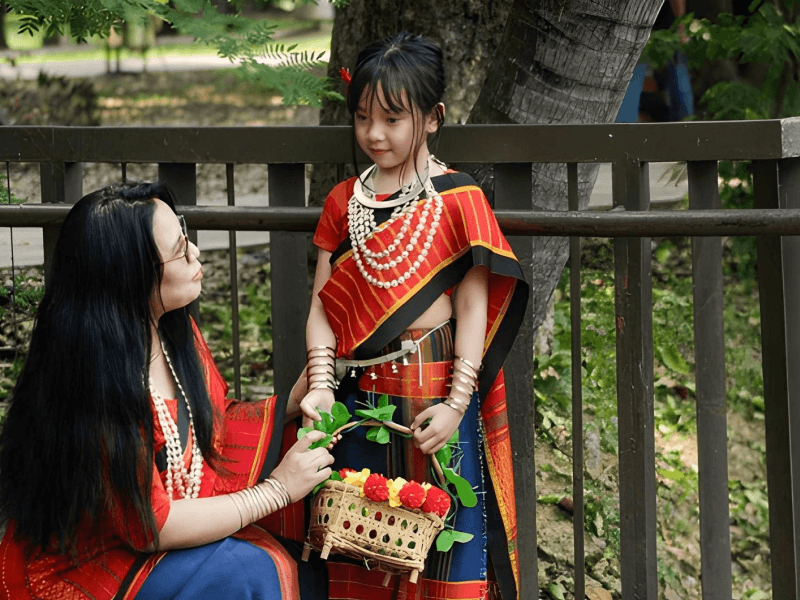
In terms of artistry, Chakma women are recognized as exceptional weavers. Using a traditional backstrap loom called a Bein, they meticulously create the community’s signature attire. For women, this includes the Pinon, an elegant ankle-length cloth wrapped around the waist, and the Hadi, a beautifully decorated upper garment. The intricate, colorful geometric patterns woven into these garments are historically derived from an ancestral design mastercloth called the Aalam. To complete their festive appearance, women adorn themselves with elaborate traditional silver jewelry, while men traditionally wear a woven tunic and a headgear known as the Khabang. Through their vibrant handlooms, grand festivals, and deep-rooted spiritual life, the Chakma continue to thrive as an essential pillar of Bangladesh’s cultural heritage.
The Chakma community constitutes the largest small ethnic group in Bangladesh, possessing a rich and enduring cultural legacy that significantly enhances the nation's diversity. Known for their agricultural resilience and distinct artistic traditions, they have maintained their unique way of life for centuries amidst the rolling landscapes of the country's southeastern borderlands.
The Chakma predominantly reside in the verdant valleys and hill ranges of the Chittagong Hill Tracts, with their population largely concentrated within the districts of Rangamati and Khagrachhari. Historically, they maintain a distinct administrative and social structure known as the Chakma Circle. This traditional system is overseen by the Chakma Raja, a hereditary chief whose leadership and status have been historically recognized by the state.
Unlike some of the matrilineal groups found elsewhere in Bangladesh, the Chakma follow a patriarchal social structure where lineage, property, and family titles are passed down through the male line. Their traditional village unit, known as a para, is tightly knit and governed by a local headman or Karbari, who plays a crucial role in dispute resolution and guiding community affairs. Historically, the Chakma economy was deeply reliant on jhum (shifting) cultivation across the steep hill slopes, an ancient and sustainable agricultural practice carefully synchronized with the monsoon rains. Today, while many have transitioned into modern professions and permanent plough agriculture in the valleys, their fundamental connection to the land and the rhythm of the agrarian calendar remains a cornerstone of their social identity.
In terms of language, Chakma stand apart from their Tibeto-Burman-speaking neighbors in the hills. They speak their own native tongue; often referred to as Changma Vaj, which belongs to the Indo-Aryan language family, giving it structural ties to Eastern Indo-Aryan languages. The language is traditionally written in a unique, Brahmic-derived alphabet known as the Ajhā Pāṭh script. While the Bengali script is frequently used today, concerted efforts by community leaders, alongside government educational initiatives, are actively working to preserve and revitalize the teaching of their indigenous script to younger generations.
Spiritually, the Chakma are predominantly devoted followers of Theravada Buddhism. Monasteries, locally called Kiyang, are central to village life, and Buddhist monks (Bhikkhus) are highly revered. However, their religious practices represent a beautiful cultural syncretism, seamlessly blending orthodox Buddhist teachings with much older animist traditions and nature worship. This dual heritage is evident in their daily lives, where they maintain reverence for local spirits and conduct traditional rituals aimed at appeasing the forces of the forest and rivers to ensure bountiful harvests and protect the community from illness.
The cultural vitality of the Chakma is most spectacularly displayed during Bizu (or Biju), their premier annual festival. Celebrated over three days in mid-April, Bizu marks the end of the Bengali calendar year and the dawn of a new agricultural cycle. The festival begins with Phool Bizu, a day dedicated to nature where homes are cleaned and flowers are floated on local rivers as a deeply symbolic offering of gratitude and purification. The second day, Mul Bizu, is the heart of the celebration, involving widespread feasting, traditional sports, and visits to neighboring homes to strengthen social bonds. The festival concludes with Gojje Pojje Bizu, a day reserved for rest and seeking blessings from the community's elders.
In terms of artistry, Chakma women are recognized as exceptional weavers. Using a traditional backstrap loom called a Bein, they meticulously create the community’s signature attire. For women, this includes the Pinon, an elegant ankle-length cloth wrapped around the waist, and the Hadi, a beautifully decorated upper garment. The intricate, colorful geometric patterns woven into these garments are historically derived from an ancestral design mastercloth called the Aalam. To complete their festive appearance, women adorn themselves with elaborate traditional silver jewelry, while men traditionally wear a woven tunic and a headgear known as the Khabang. Through their vibrant handlooms, grand festivals, and deep-rooted spiritual life, the Chakma continue to thrive as an essential pillar of Bangladesh’s cultural heritage.
Immersive Experience
No 360° Videos available
Photo Collection
Destination Gallery