
Tajhat Palace
In the northern city of Rangpur,
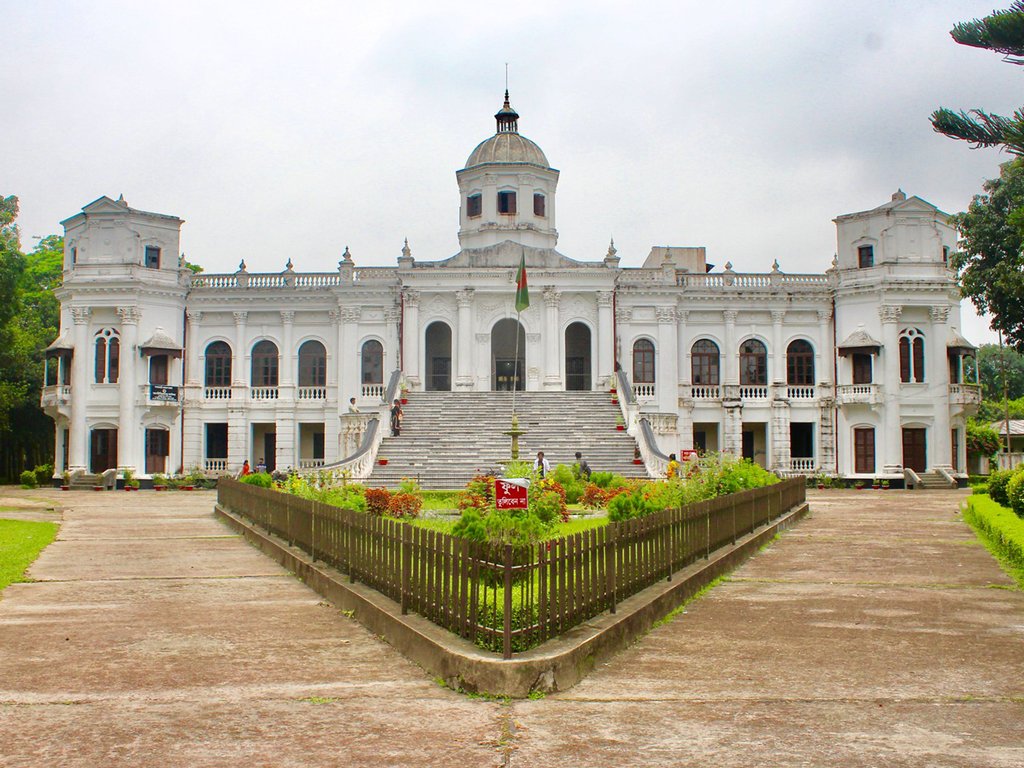
a vision of European grandeur rises from the Bengali landscape. The Tajhat
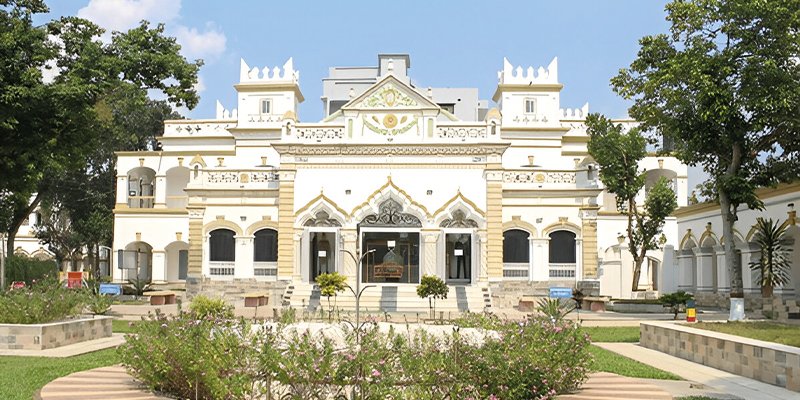
Palace is a breathtaking architectural anomaly, a brilliant white neoclassical
mansion that seems to have been plucked from the streets of a European capital
and placed on the outskirts of this bustling town. Its name, meaning "the
home of crowns," is derived from the local nickname for its builder,
Maharaja Kumar Gopal Lal Roy, a wealthy jeweler and zamindar whose fortune was
so vast it was said he could afford to wear a crown. The original palace was
destroyed by the devastating earthquake of 1896, and the magnificent structure
we see today was his triumphant, early-20th-century response to that loss.
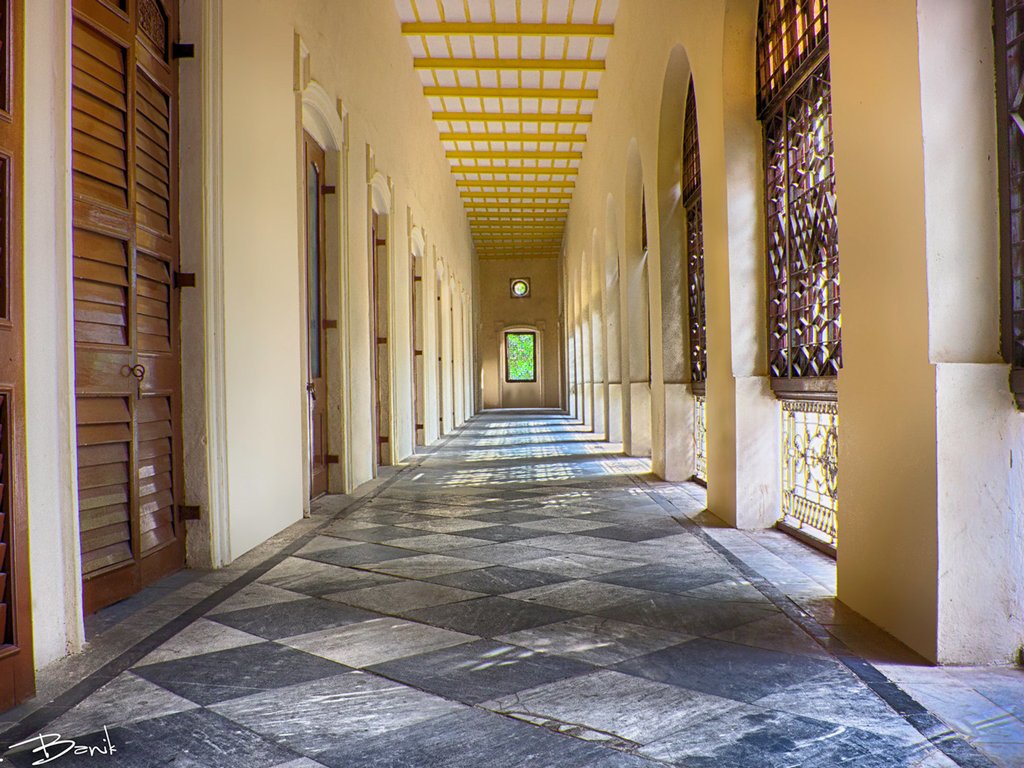
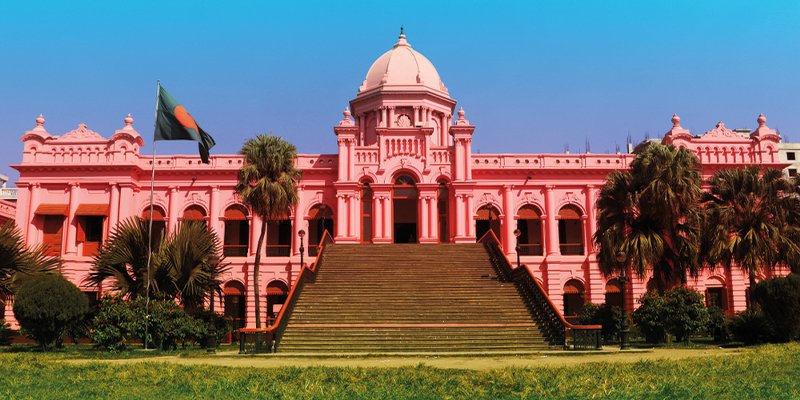
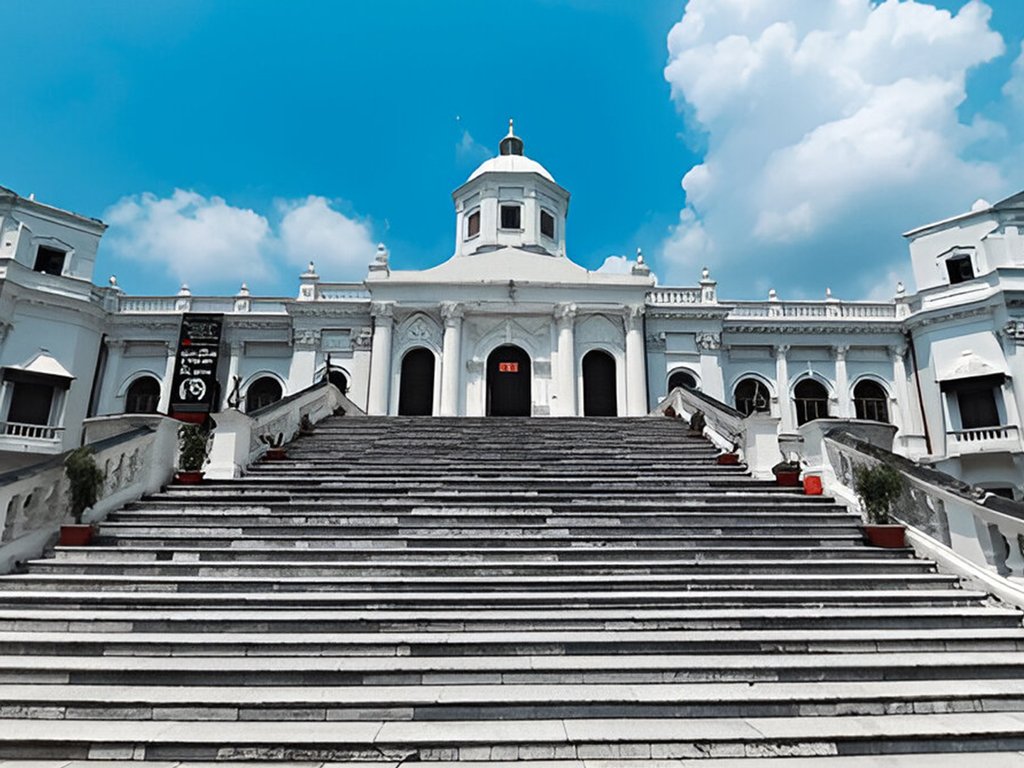
Approaching the Tajhat Palace is a cinematic experience. A long, imposing central staircase paved in imported white marble leads your eye up to a grand portico, setting the stage for the two-storey edifice's 76-meter-wide façade. The building is a showcase of European architectural details, crowned by a striking ribbed conical dome that sits on a tall octagonal neck and is supported by a series of slender semi-Corinthian columns. The balustrades on either side of the staircase were once adorned with classical Roman sculptures in Italian marble. The interior is laid out in a U-shape, with a grand central hall measuring over 18 by 13 meters and a 3-meter-wide corridor that runs the length of the building. Today, this opulent "home of crowns" houses the Rangpur Museum, its 22 apartments filled with exhibits that tell the story of the region. It stands as a monument to a time when Bengal's nouveau riche looked to the West for their inspiration, creating a palace that is as unexpected as it is beautiful.
Immersive Experience
No 360° Videos available
Destination Gallery