

Polo Bawa Festival
Watch a winter wetland erupt as villagers fish together with bell-shaped bamboo traps
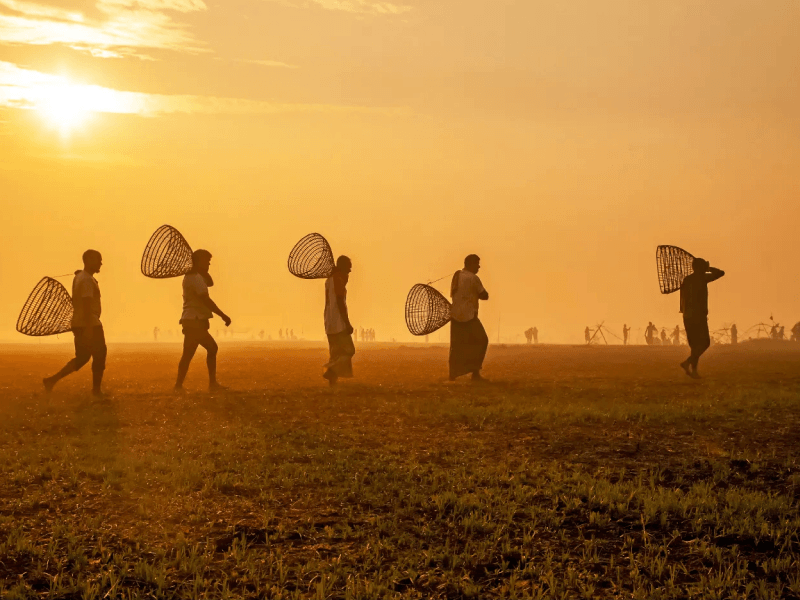
Reach the beel at first light and witness a community move through the water as one.
When winter arrives and the vast, mirror-like Haors (wetlands) and Beels (lakes) of regions like Habiganj and Moulvibazar begin to dry up, a breathtaking, centuries-old rural spectacle unfolds.
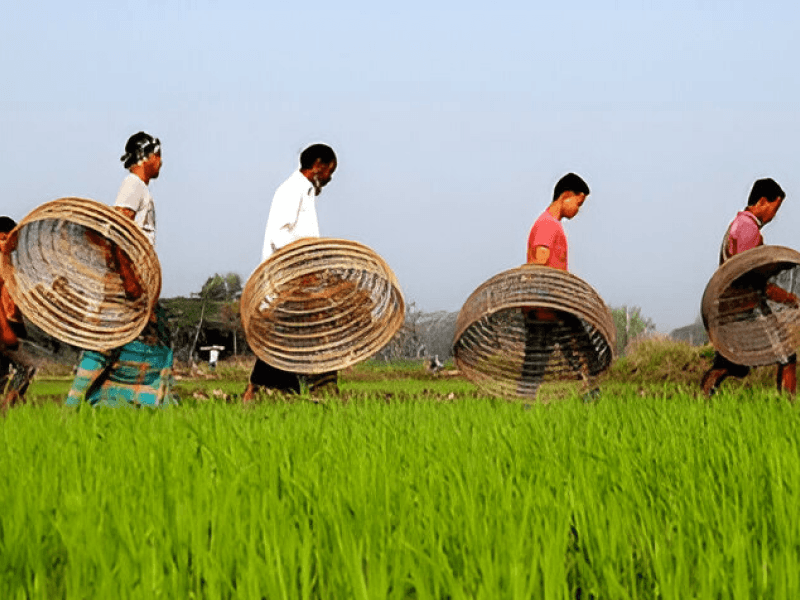
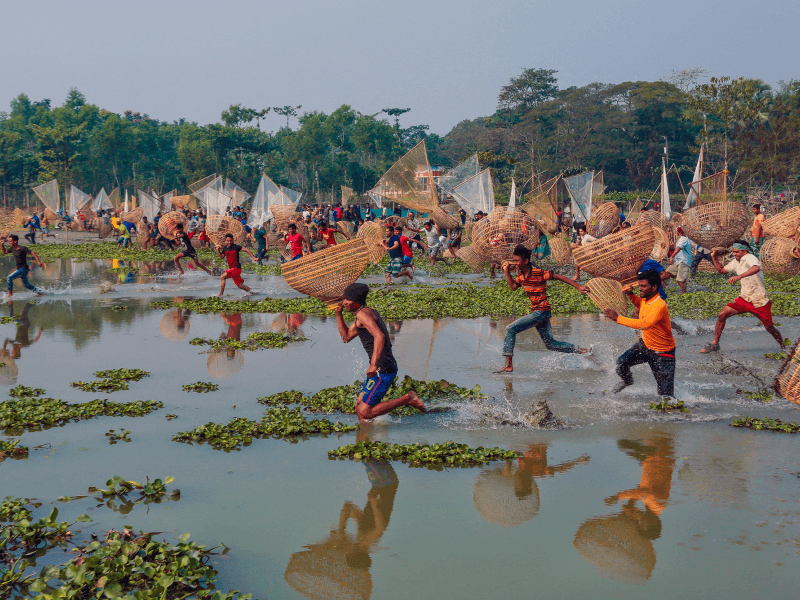
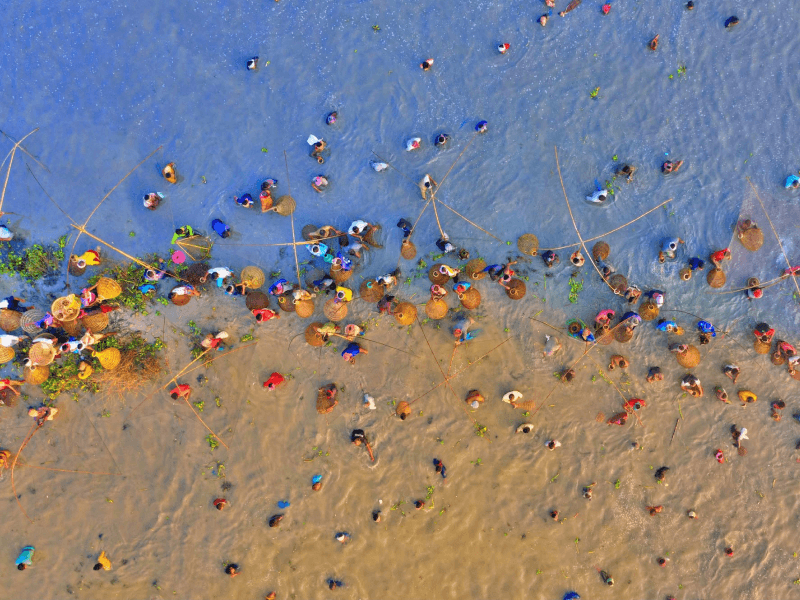
The anticipation builds for days as announcements are made across neighboring villages, fixing a specific date and time for the event. They are armed with a Polo, a traditional, bell-shaped bamboo trap, open at the bottom with a small hole at the top.
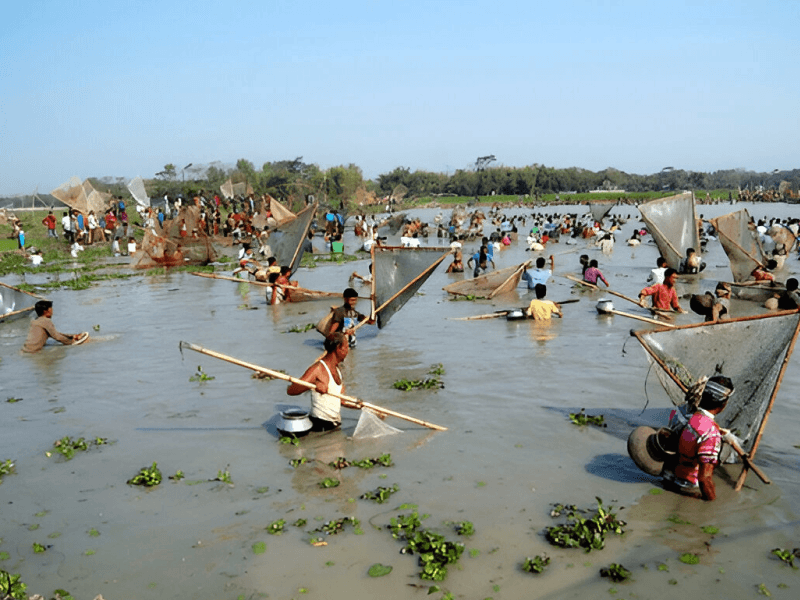
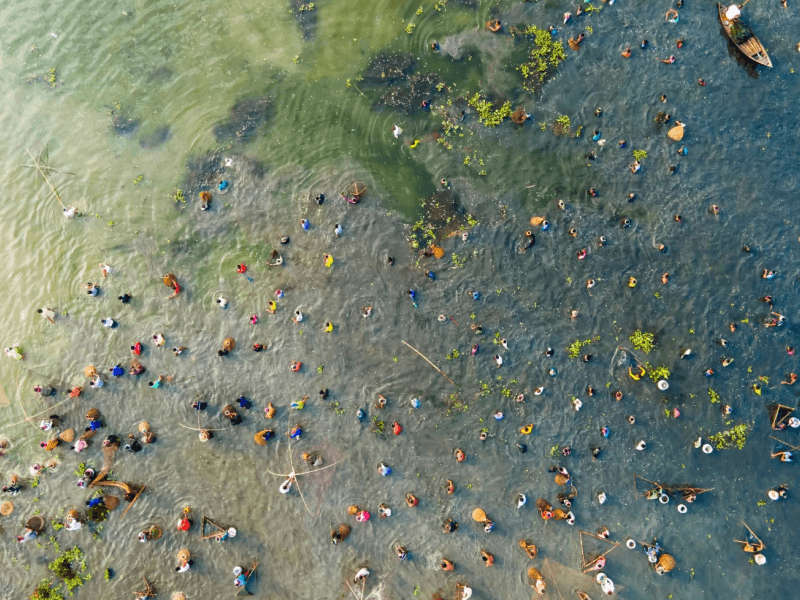
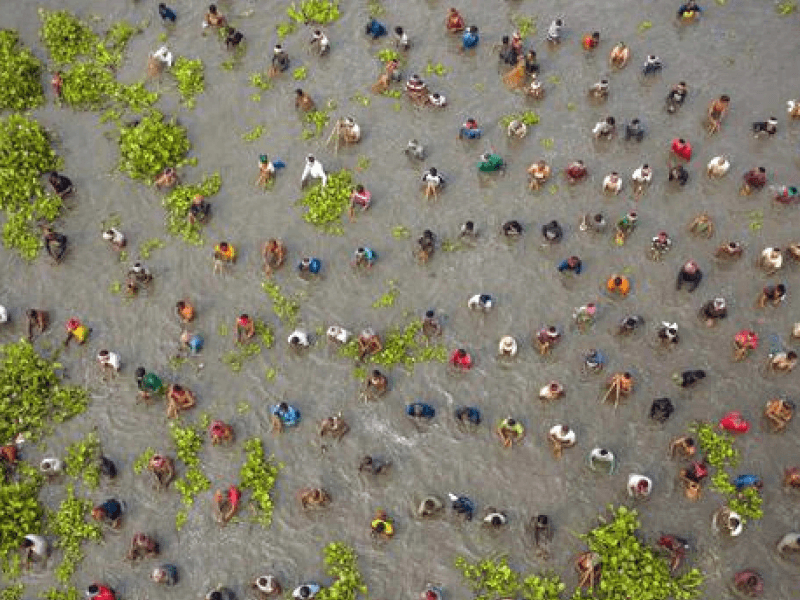
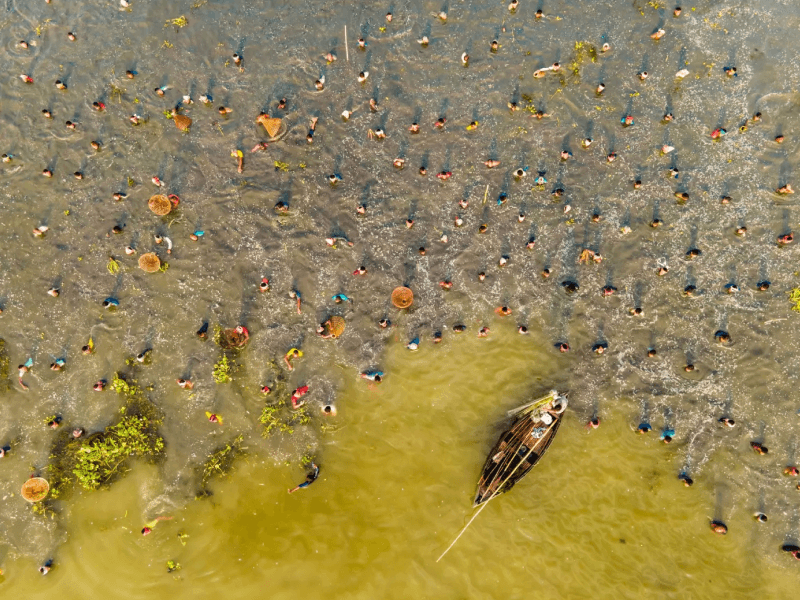
At a single, unified signal, the crowd surges forward, plunging into the chilling, knee-deep water with a massive, roaring splash. When a participant feels the frantic movement of a trapped fish, a triumphant shout rings out, and the catch—often large snakeheads or carp—is pulled out by hand.
Approach the celebration as a guest: follow the host community's instructions, ask before photographing people or private ritual, buy directly from identified local makers and leave sacred, public and natural spaces undisturbed. Confirm the current programme shortly before departure, because weather, security and community decisions can change access. Carry only what the venue allows, protect yourself from heat or rain, agree on a meeting point and keep the route clear for worshippers, performers, residents and emergency services. If access changes, accept the host's decision and switch to a public programme rather than pressing into a private or unsafe space.
Polo Bawa is a community resource event, not an open recreational fishery. Visitors should watch from the bank unless the host explicitly invites participation and confirms fisheries rules. Wetland mud, cold water, hidden holes and sharp debris create risks; do not wade without local guidance and proper footwear. Dates can shift with water level, as recent village reporting has shown, and locations occur beyond Habiganj and Moulvibazar. Avoid drones over participants, do not buy protected or undersized catch and keep vehicles away from fragile wetland edges. The landscape is raw because it is working community space.
Immersive Experience
No 360° Videos available
Destination Gallery
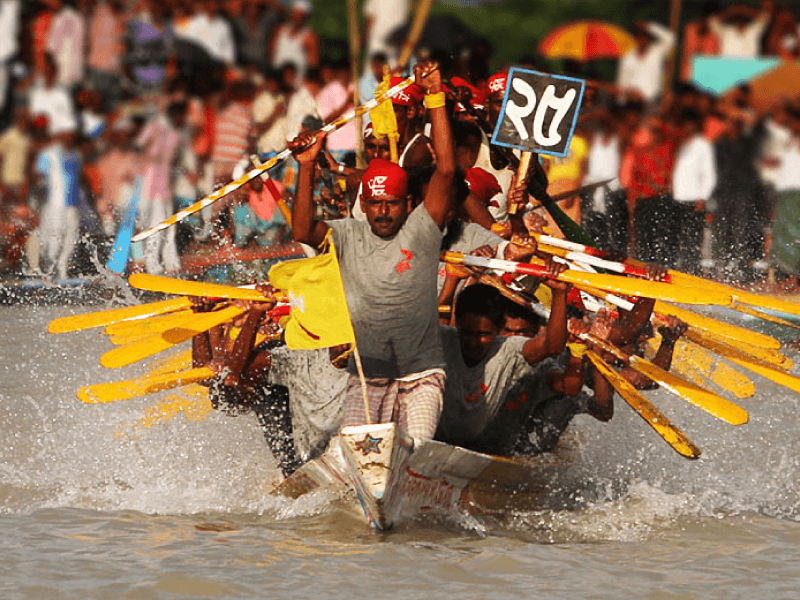
Boat Race (Nouka Baich)
Hear drums and sari gaan drive long racing boats across Bangladesh’s monsoon-fed rivers
Explore More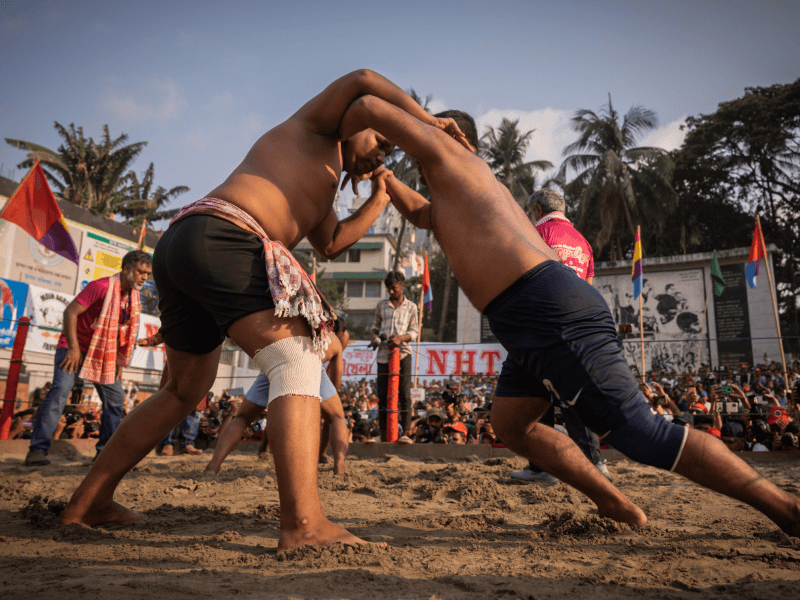
Jobbarer Boli Khela
Enter Laldighi for Chattogram’s historic Boishakh wrestling and three-day fair
Explore More