

Heritage Pottery Villages: Craft, Art, and Community in Dhamrai
Where clay has been shaped by the same families for generations
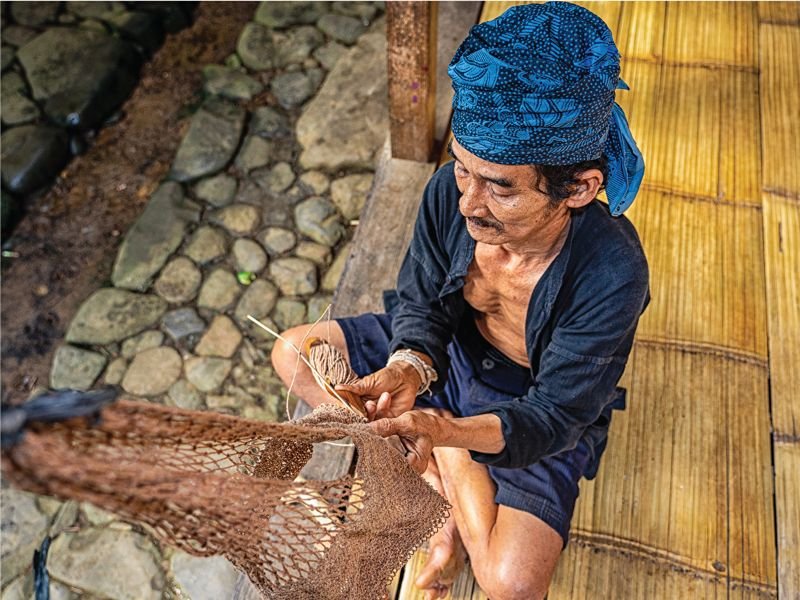
Kilns older than living memory Dhamrai's Kumor potter villages, an hour from Dhaka.
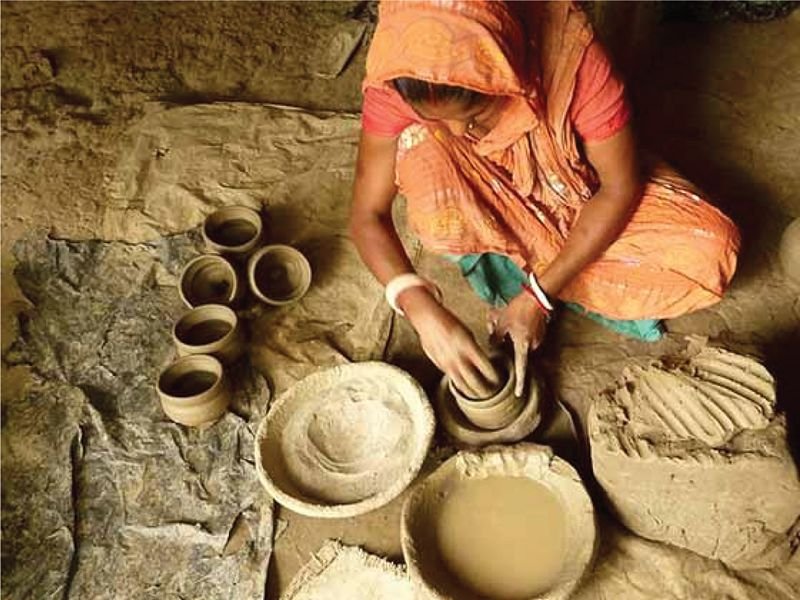
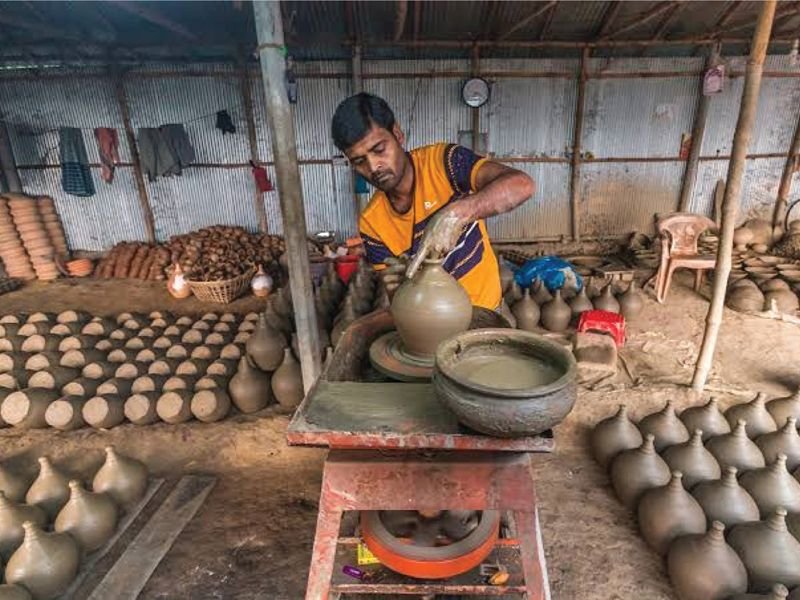
Roughly 39 km northwest of Dhaka, along the banks of the Bangshi River, Dhamrai has been one of Bangladesh's most storied craft towns for centuries, home to potter villages where the Kumor (or Pal) community has shaped clay by hand across generations. In villages like Kagojipara, Shimulia Pal Para, and Kakran—reached from Nayarhat Bazar by a short boat ride—entire families still work the trade: men typically shape pots on the wheel while women handle finishing and decoration, following a labor-intensive process of digging, kneading, drying, and firing that has changed little over time, even as the craft itself struggles to compete economically with modern manufacturing.
Dhamrai is equally known for its metal-casting artisans, who produce brass and bronze statues and ritual objects using the ancient lost-wax technique, a tradition tracing back to the Pala Dynasty (800–1100 AD) when both Buddhist and Hindu settlements flourished in the area. The town comes alive each year during Rath Jatra, a major Hindu chariot festival held in the Bengali month of Ashar (June–July), when the massive wooden Rath—visible in Dhamrai year-round—takes center stage. Visiting Dhamrai means walking through working pottery villages, watching brass castings take shape in small workshops, and understanding a craft economy that is genuinely at risk of fading within a generation or two.
Immersive Experience
No 360° Videos available
Destination Gallery
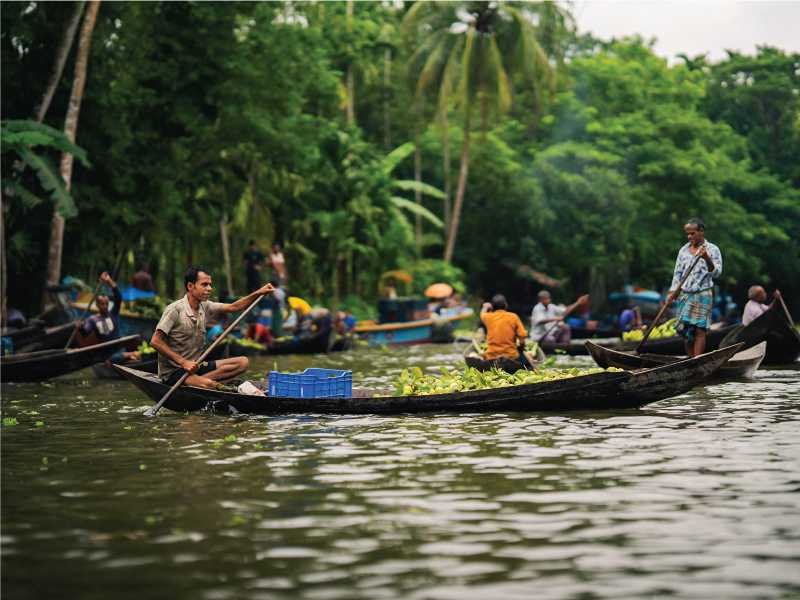
Traditional Floating Agriculture and Village Life in Barisal
A UN-recognized farming tradition, centuries in the making
Explore More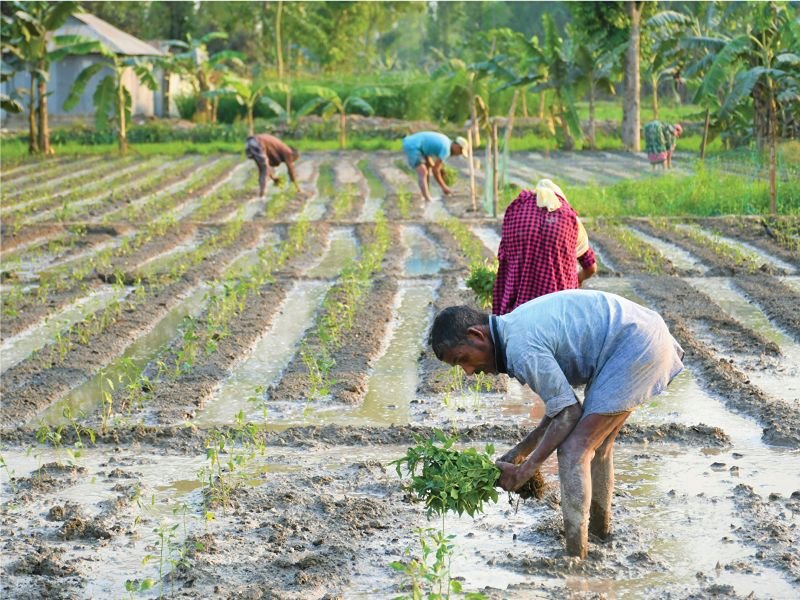
Authentic Rural Life: Homestays and Organic Farming
Becoming, for a few days, part of the family
Explore More