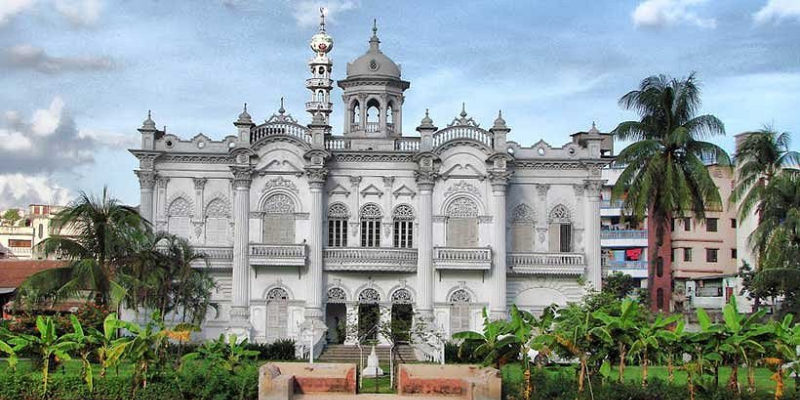

Curzon Hall
In the heart of Dhaka University,
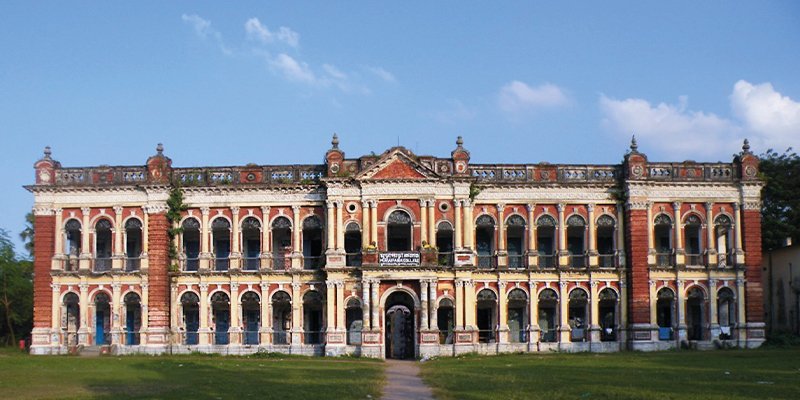
the stately red-brick facade of Curzon Hall stands not only as an architectural
masterpiece but also as a silent, powerful witness to the birth of a nation's
linguistic identity. Its foundation stone was laid in 1904 by Lord Curzon, the
Viceroy of India, with the original intention of serving as a town hall for the
new capital of the partitioned province of East Bengal and Assam. This origin
story is why the building exudes such a deliberate, formal grandeur. When the partition
was annulled in 1911, the building was repurposed, first for Dhaka College and
later, in 1921, as the first home for the science faculty of the newly
established University of Dhaka—a role it proudly continues to fulfill today.
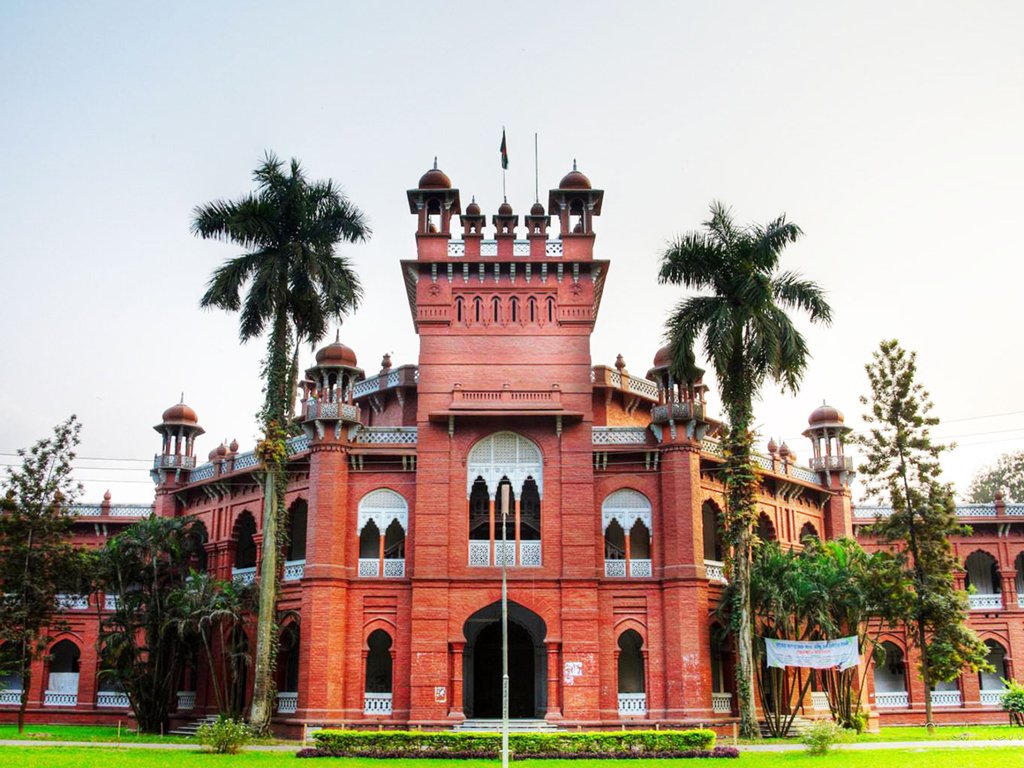
Architecturally, Curzon Hall is a captivating dialogue between two worlds. It is one of the finest examples of the Indo-Saracenic Revival style in Dhaka, a "happy blend of European and Mughal elements". As you approach, your eye is drawn to the magnificent projecting northern facade, a masterclass in fusion where European-style horseshoe arches sit comfortably beside traditional Indian cusped arches. The building's warm red color, intended to mimic Mughal red sandstone, is complemented by ornate brackets, deep protective eaves, and domed roof pavilions known as chhatris, all elements deliberately borrowed from the Mughal architectural lexicon. Yet, it is not the bricks and arches that define this building's soul. In 1948, it was on these very grounds that students of Dhaka University raised their voices in the first defiant "No" to Mohammed Ali Jinnah's declaration that Urdu would be the sole state language of Pakistan. This act of courage marks Curzon Hall as the birthplace of the Language Movement, making it a cornerstone of Bangladesh's cultural and political heritage.
Immersive Experience
No 360° Videos available
Destination Gallery