

Guavas of Barisal
Board a wooden boat and enter a floating harvest of guavas, canals and village trade.
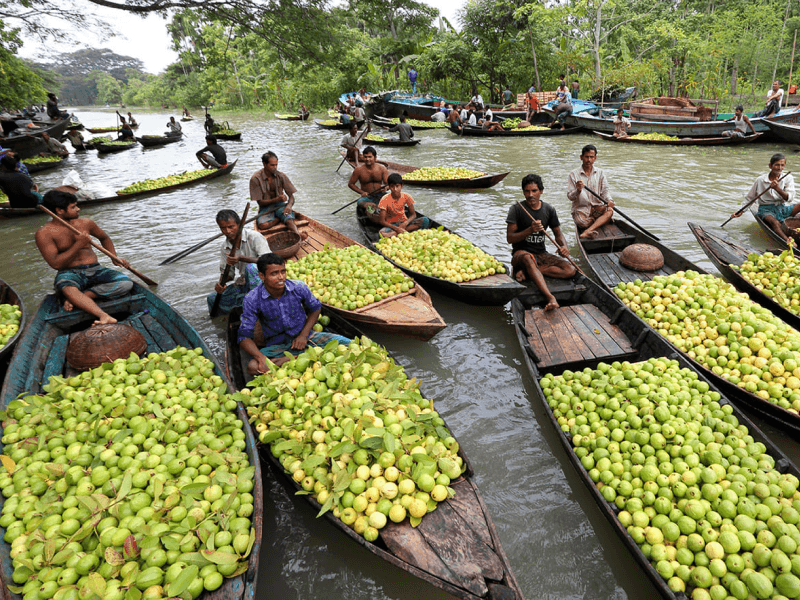
Reach Bhimruli at dawn, before the water market scatters.
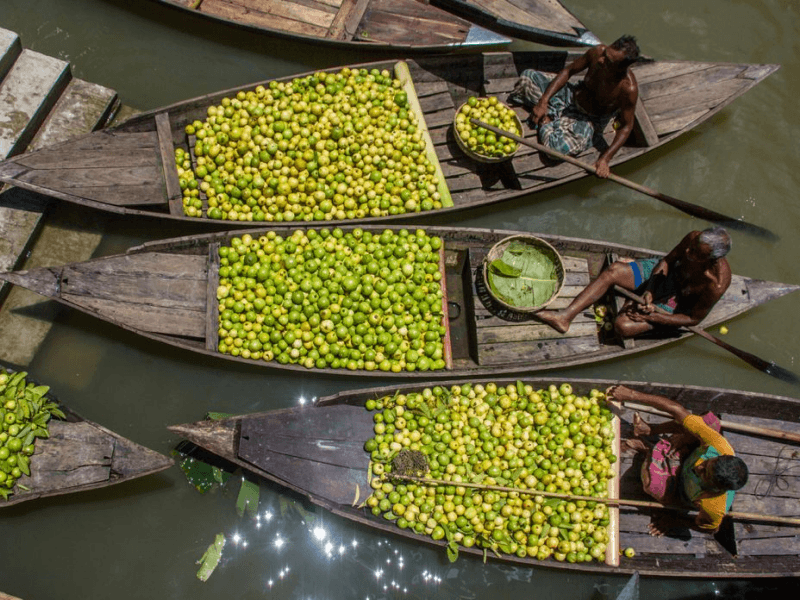
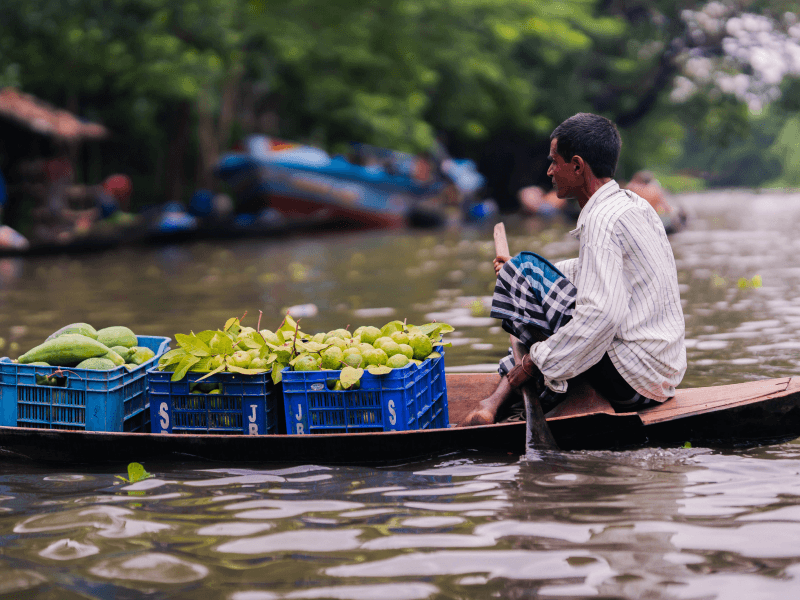
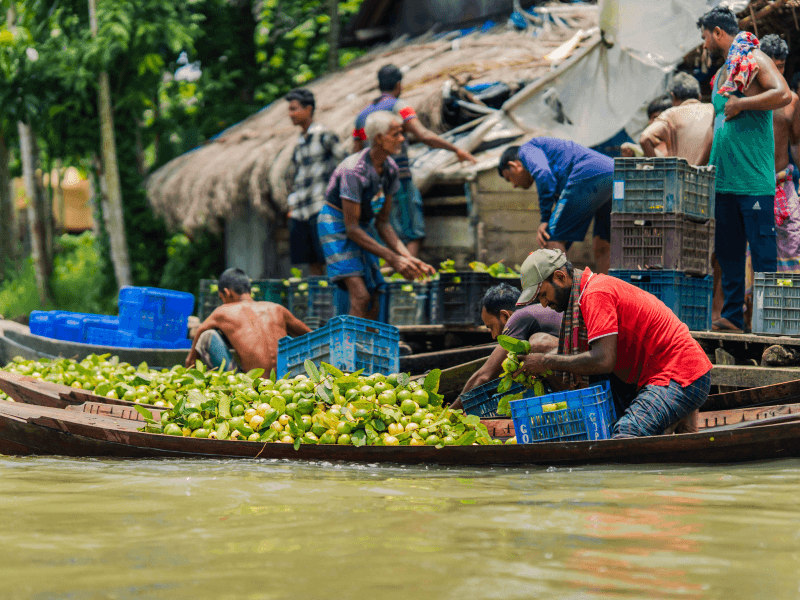
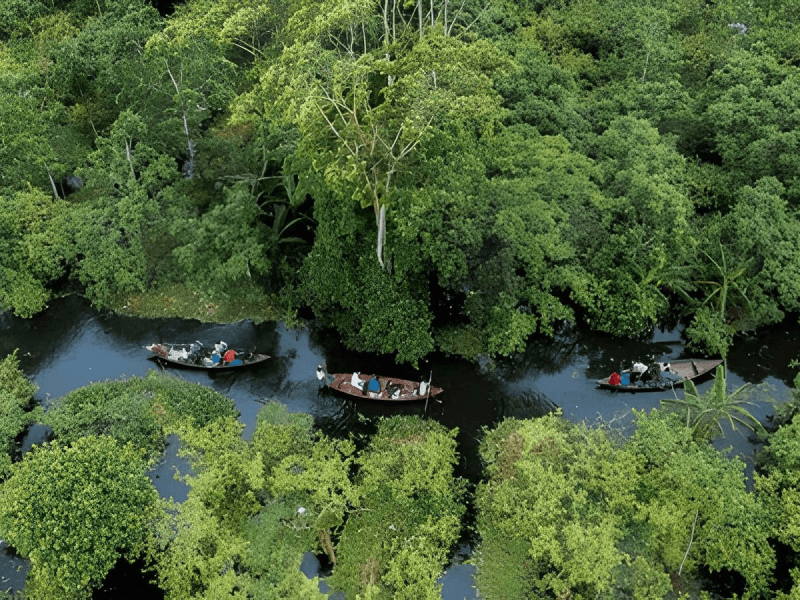
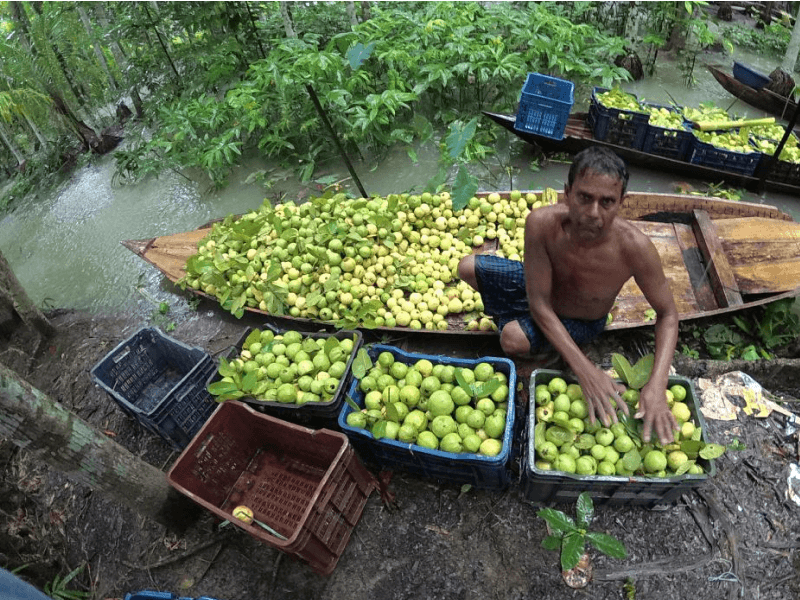
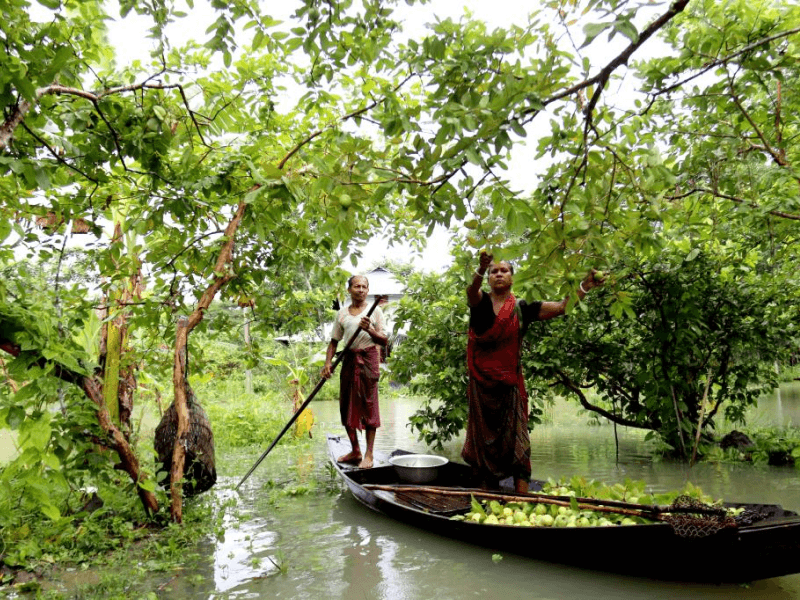
The guava country of greater Barisal is a waterborne adventure. Around Bhimruli in Jhalokati and the neighbouring canal networks of Pirojpur, trees grow on raised land while boats carry fruit through narrow waterways. During the monsoon harvest, farmers paddle in with green guavas and traders bargain from one vessel to another, creating a working floating market rather than a staged attraction. The wider region is often promoted under “Barisal,” but travellers should identify the actual district, landing point and route.
June to September is the broad season, with July and August commonly offering the busiest atmosphere. Arrive early, when trading is active, light is soft and heat is lower. A local boatman can guide visitors through the market and, when permission is secured, along orchard canals. Conditions change with tide, rain and crop volume; no operator should guarantee a fixed number of boats.
The market belongs first to growers and buyers. Keep the central channel clear, do not block a working boat for photographs and ask before photographing individuals at close range. Agree the passenger limit, route, duration and price before boarding. Wear a life jacket, sit balanced, protect cameras from rain and avoid loud music or plastic litter. Buying fruit directly and paying a fair boat fare spreads value through the community.
Barishal city offers the most dependable rated accommodation, while Jhalokati or Swarupkathi provides a closer but simpler local base. Allow generous road and river time rather than forcing the market into a rushed day. Add nearby heritage or village food only when arranged respectfully. The essential experience is already complete: a paddle dipping into brown water, boats meeting under low branches and fresh guavas moving through a delta economy built around canals.
Travel with patience when canals are crowded. Waiting for traders to pass protects their work and often creates a better view than pushing the boat into the centre of the market.
Immersive Experience
No 360° Videos available
Destination Gallery
Watermelon from Khulna
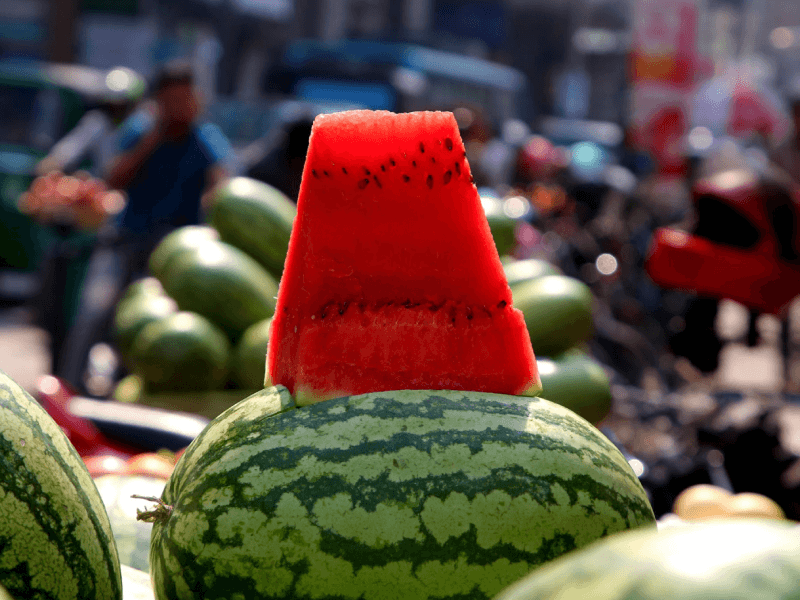
Cross the southern fields where coastal resilience ripens into cool red sweetness.
Explore More