

Dhanmondi Lake & Rabindra Sarobar
Waterfront recreation and cultural life in residential Dhaka
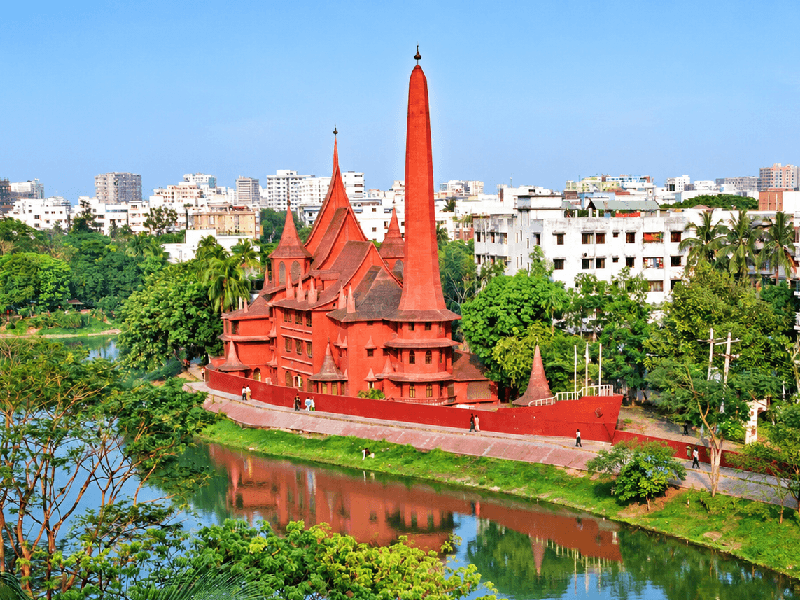
Urban Rhythm by the Lake. Walk, Gather, Eat, and Listen.
Dhanmondi Lake threads water and public space through one of Dhaka's best-known residential neighborhoods. The lake began as part of an abandoned channel of the old Karwan Bazar River system, and urban development gradually transformed the surrounding area after the creation of the Dhanmondi residential district in the 1950s.
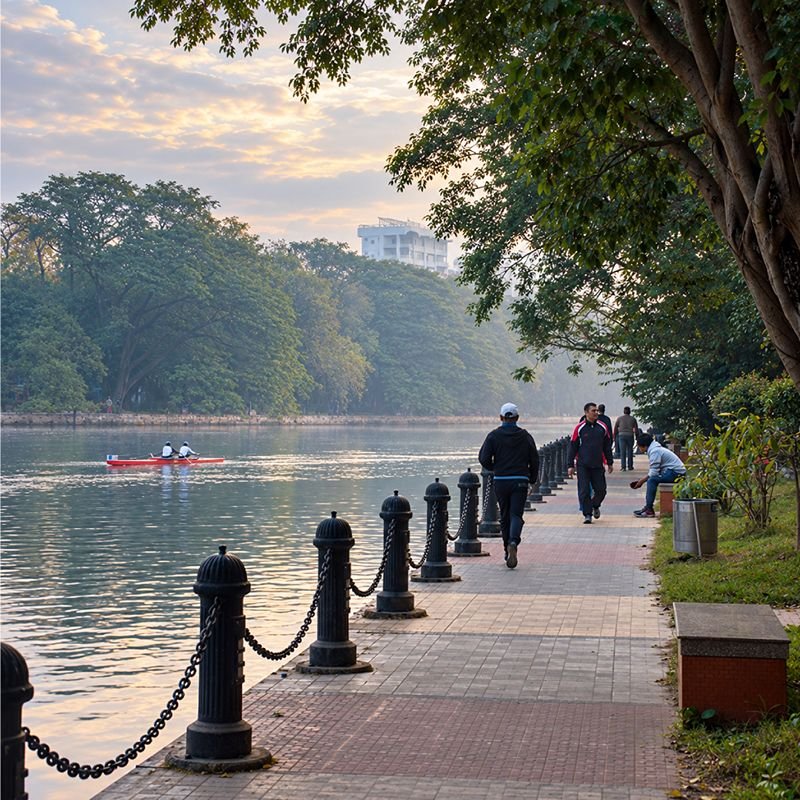
The lake stretches for about 3 kilometers, from the Jigatola side toward the northern part of Dhanmondi. It still performs a drainage function while also providing walking areas, trees, gathering spaces, bridges, and views across the water.
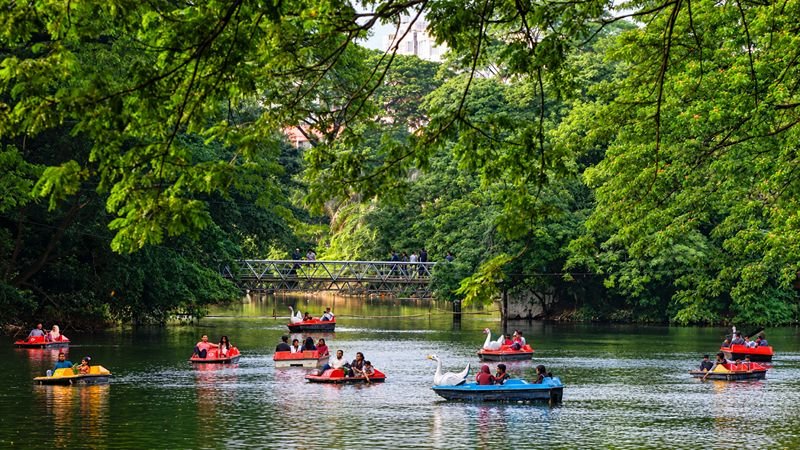
Morning and evening bring different rhythms. Early walkers and exercise groups use the paths before the city heats up. Later in the day, students, families, couples, food sellers, and groups of friends fill the most accessible sections of the waterfront.
Rabindra Sarobar gives Dhanmondi Lake an important cultural dimension. The open-air stage has hosted music, poetry, theater, spring celebrations, civic programs, and other cultural gatherings for many years. It should not be described as hosting performances every evening, but it remains one of Dhaka's established open-air cultural venues.
Food forms another part of the lake experience. Vendors around the busier sections sell fuchka, chotpoti, tea, snacks, and other popular foods. The area has a strong street-food reputation, although individual stalls and quality can change.
Dhanmondi Lake is also entering another period of physical change. In 2026, authorities advanced restoration, waterlogging-management, environmental, and cultural-infrastructure projects for the lake. Recent plans include repairs to deteriorated facilities and additional cultural space. Visitors should therefore expect that construction or maintenance may affect particular sections.
One important visitor update concerns Dhanmondi Road 32. The former Bangabandhu Memorial Museum was heavily demolished in February 2025 and should no longer appear on a current list of operating museum attractions.
Immersive Experience
No 360° Videos available
Destination Gallery
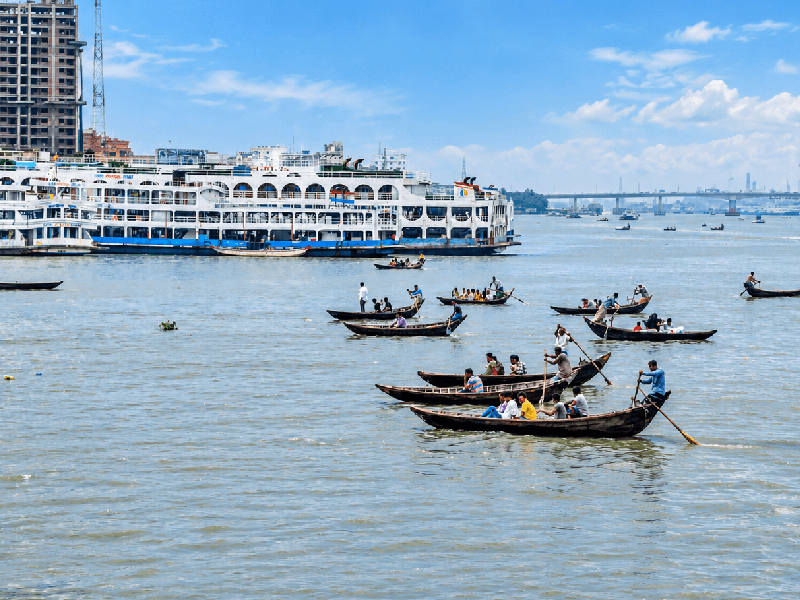
Sadarghat River Port & Buriganga Boat Rides
Dhaka's historic river gateway in a changing transport era.
Explore More