
Rakhine
Theravada Keepers of the Southern Coasts
The Maritime Pioneers of the Mangrove Frontiers
Discover an extraordinary coastal community defined by elevated wooden palaces, master handlooms, and vibrant water-splashing rituals.
Residing along the sweeping coastlines of southern Bangladesh, particularly in the districts of Coxs Bazar, Patuakhali, and Barguna, the Rakhine people add a deeply maritime dimension to the national cultural landscape. Unlike the forest or plain dwelling communities found elsewhere, their lifestyle is intimately shaped by the ocean winds and sandy shores. A visit to a Rakhine settlement offers a tranquil journey into a world defined by deep spiritual devotion, remarkable coastal adaptation, and extraordinary artisanal skills. Their unique presence provides an incredibly rich, coastal contrast to the inland diversity of the country.
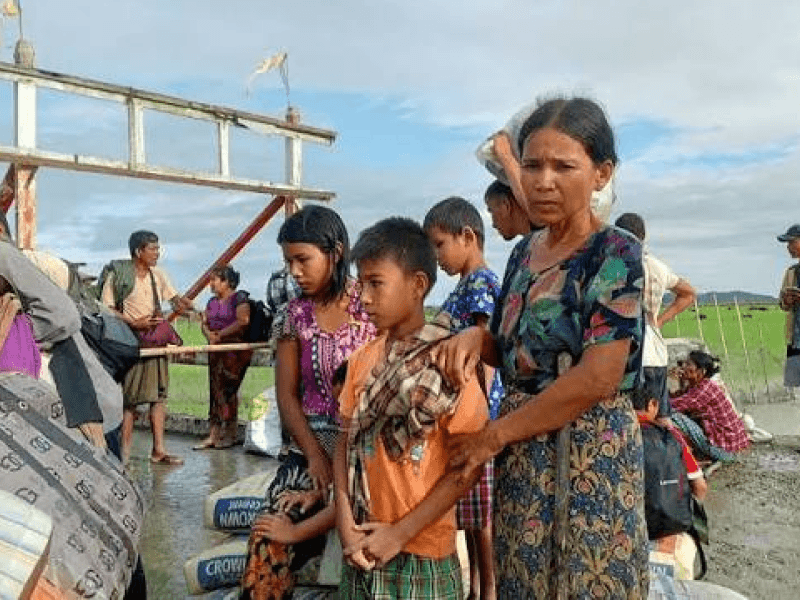
The narrative of this community is an inspiring tale of maritime migration and survival. During the late eighteenth century, facing severe political turbulence in their ancestral homeland of Arakan, early settlers embarked on a demanding journey across the Bay of Bengal. They eventually found safe refuge along the untamed southern coastlines of Bengal. Settling in these remote coastal tracts required immense courage and adaptability. They systematically cleared dense mangrove forests to establish secure villages and cultivate arable lands.
Today, their adaptation to the coastal environment is a shining example of human resilience. They possess a profound mastery of coastal agriculture, skillfully cultivating saline resistant rice varieties and managing expansive betel nut orchards that thrive in the salty sea air. Alongside farming, they have developed highly sophisticated coastal fishing techniques. They are particularly famous nationwide for their expertise in producing high quality dried fish, utilizing the abundant maritime resources and intense coastal sun to sustain their local economy. Their neighborhoods are typically laid out in neat, linear patterns, featuring sturdy wooden houses built on raised platforms to protect against high tides and monsoon surges.
Spirituality forms the absolute core of their daily existence. The Rakhine people are devout followers of Theravada Buddhism, and their religious dedication is beautifully manifested in their magnificent village architecture. The center of every settlement is anchored by a stunning wooden monastery, locally known as a Kiyang. These Buddhist temples are true architectural marvels, frequently featuring multi tiered roofs, intricate wood carvings, and soaring pillars that perfectly reflect their historical Arakanese heritage. Inside these serene sanctuaries, massive statues of the Buddha create an atmosphere of profound peace.
The monasteries serve as much more than mere places of worship. They function as the educational and social epicenters of the community. Resident monks play a crucial role in society, teaching the younger generation their native Rakhine language, which belongs to the Tibeto Burman family, and imparting fundamental moral values. This continuous religious education ensures that their distinct linguistic and spiritual identity remains incredibly robust over the centuries.
Beyond their agricultural and architectural achievements, the community is celebrated nationwide for its exquisite textile craftsmanship. A traditional wooden loom is an essential fixture in nearly every Rakhine household. The women are absolute masters of the handloom, meticulously weaving vibrant and highly durable fabrics that are cherished by locals and global visitors alike. They produce a wide variety of beautiful garments, including the traditional female dress consisting of an elegantly patterned wrap around skirt and a matching tailored blouse. The intricate geometric motifs woven into the fabrics often reflect the waves of the sea and local floral patterns.
Their cultural vibrancy reaches its absolute peak during communal celebrations. The most anticipated event of the year is Sangrai, the traditional New Year festival celebrated in mid April. During Sangrai, the community partakes in joyous water splashing ceremonies, symbolizing the washing away of the past years impurities and welcoming a fresh start. The festival is a spectacular display of unity, featuring vibrant street processions, traditional dances, and the preparation of special coastal delicacies. Through their stunning wooden temples, exceptional handloom mastery, and joyful coastal traditions, the Rakhine people ensure that the southern shores of Bangladesh remain a place of profound cultural beauty.
Immersive Experience
No 360° Videos available
Destination Gallery